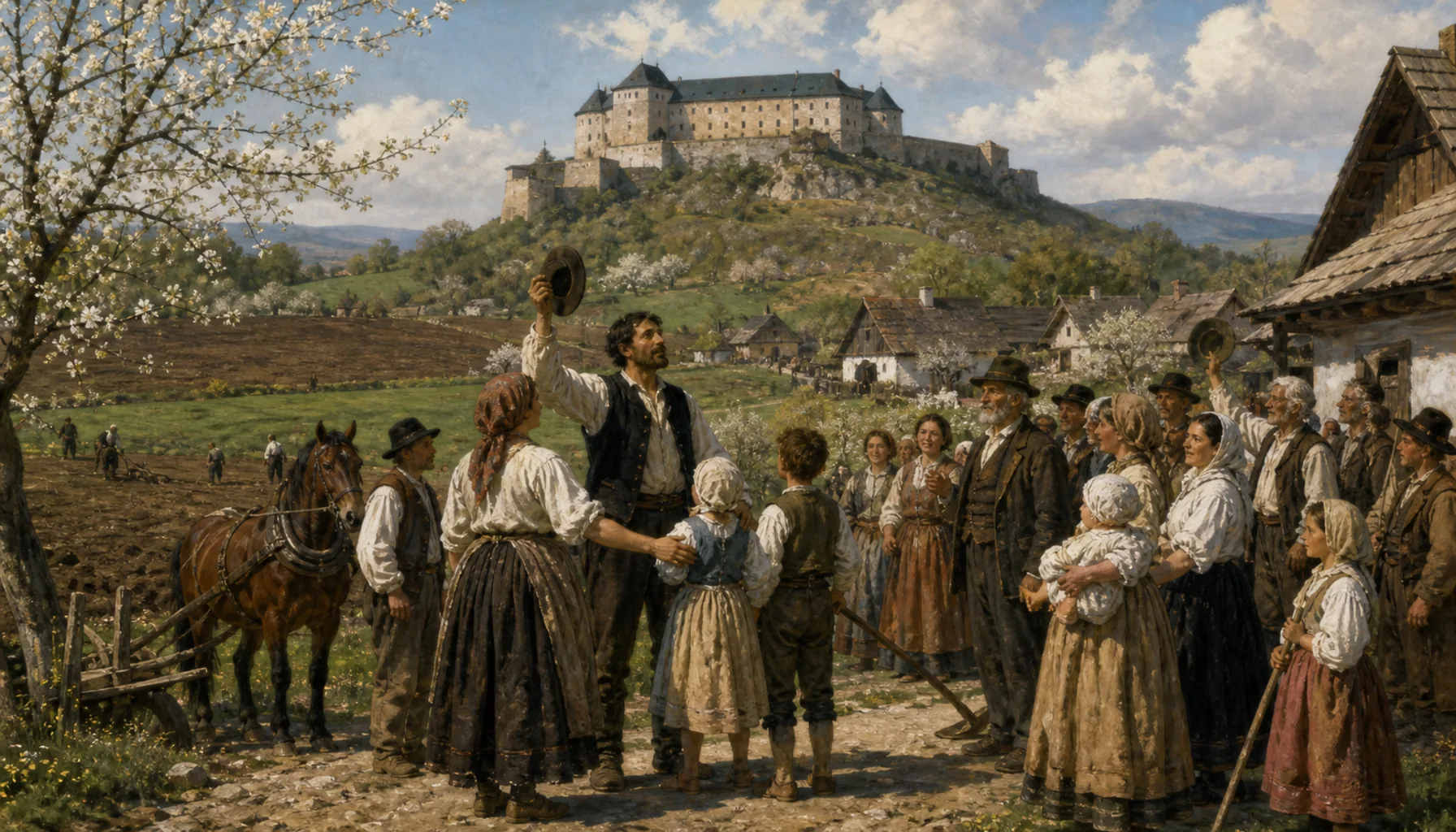
In the revolutionary spring of 1848 the Hungarian parliament abolished serfdom — the system under which a peasant family held its land from a lord and paid for it in labour, rent and a share of the harvest. For Červený Kameň this was the biggest change since the Fuggers: the villages of the estate stopped owing the castle work, dues and wine, and the families who had farmed the plots became their owners. The Pálffys kept their forests, their fields and the castle itself, so the family stayed rich and the building stayed lived in — but it was now a country house with an estate, not the head of a small world. Everything nineteenth-century about the place follows from that: fewer people came up the hill because they had to, and more because they were invited.V revolučnom jari 1848 zrušil uhorský snem poddanstvo — systém, v ktorom sedliacka rodina držala pôdu od zemepána a platila zaň robotou, dávkami a podielom z úrody. Pre Červený Kameň to bola najväčšia zmena od čias Fuggerovcov: dediny panstva prestali hradu odvádzať robotu, dávky aj víno a rodiny, ktoré pôdu obrábali, sa stali jej vlastníkmi. Pálfiovcom ostali lesy, veľkostatok aj samotný hrad, takže rodina zostala bohatá a budova obývaná — bola to však už vidiecka rezidencia, nie hlava malého sveta. Celé devätnáste storočie sa tu odvíja práve od toho: menej ľudí chodilo hore kopcom preto, že museli, a viac preto, že ich pozvali.