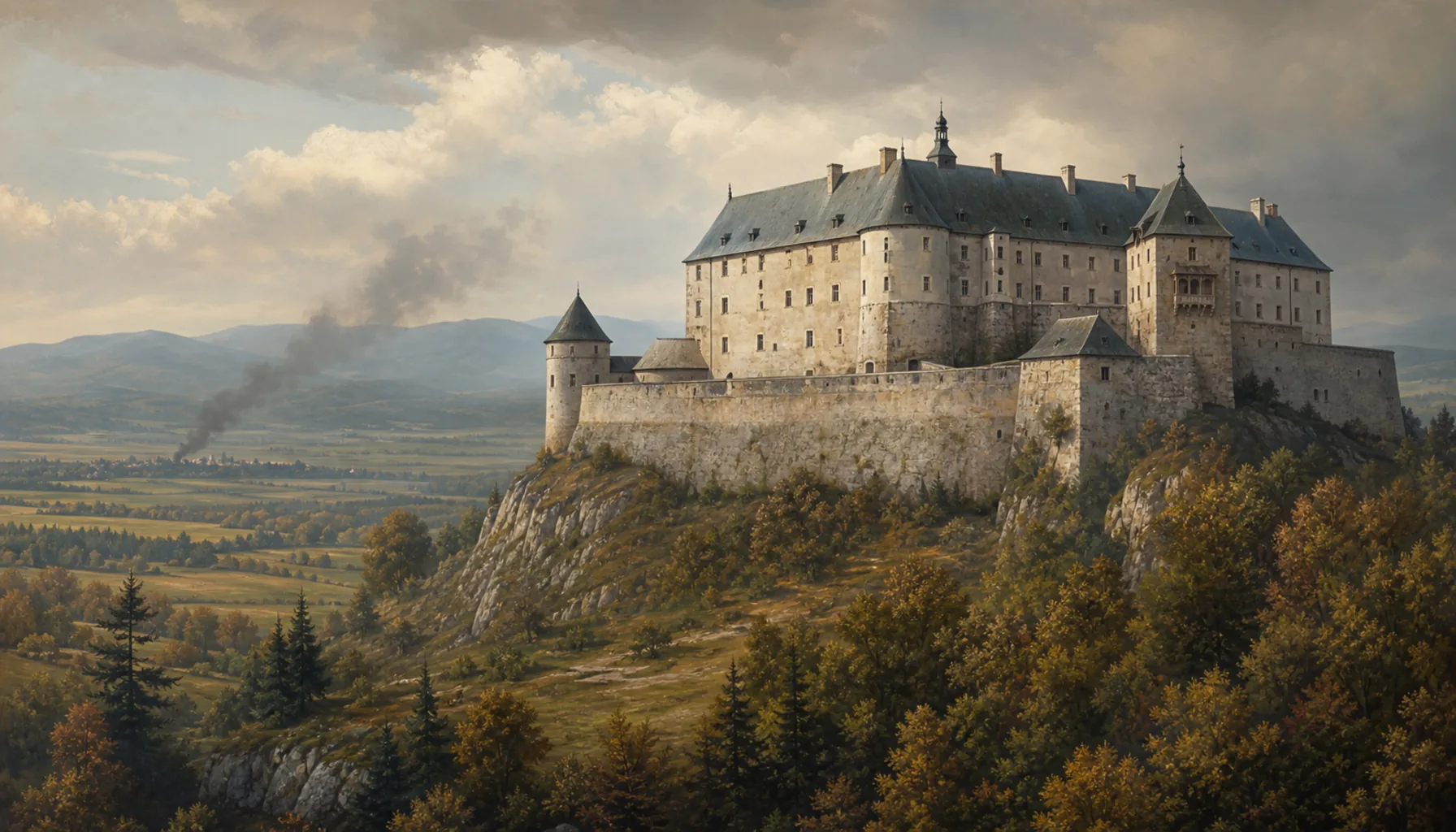
For forty years Hungary was torn by uprisings of its own nobles against the Habsburg emperor — first Imre Thököly's kuruc armies, then Francis Rákóczi's. The Pálffys chose the emperor's side and never left it. In July 1683, as an Ottoman army marched on Vienna, Thököly's kuruc troops took Bratislava, and Hungarian accounts say Červený Kameň went with it and was recovered soon afterwards by a trick rather than a siege. The loyalty paid: around 1700 the emperor ordered dozens of Hungarian castles blown up so that rebels could never hold them again, and Červený Kameň was left standing. The boy born in this castle on 20 August 1664, Ján Pálffy, grew up to be the imperial field marshal who negotiated with Rákóczi and signed the peace at Szatmár at the end of April 1711 that ended the last of the uprisings.Štyridsať rokov trhali Uhorskom povstania vlastnej šľachty proti habsburskému cisárovi — najprv kuruci Imricha Tököliho, potom Františka Rákócziho. Pálfiovci si vybrali stranu cisára a už ju nikdy neopustili. V júli 1683, keď osmanské vojsko tiahlo na Viedeň, obsadili Tököliho kuruci Bratislavu a maďarské pramene uvádzajú, že s ňou padol aj Červený Kameň — späť ho vraj získali lesťou, nie obliehaním. Vernosť sa vyplatila: okolo roku 1700 dal cisár desiatky uhorských hradov vyhodiť do vzduchu, aby ich už nikdy nemohli držať povstalci, a Červený Kameň medzi nimi nebol. Chlapec, ktorý sa v tomto hrade narodil 20. augusta 1664 — Ján Pálfi — z neho vyrástol na cisárskeho poľného maršala, ktorý rokoval s Rákóczim a koncom apríla 1711 podpísal satmársky mier, ktorý ukončil posledné z povstaní.