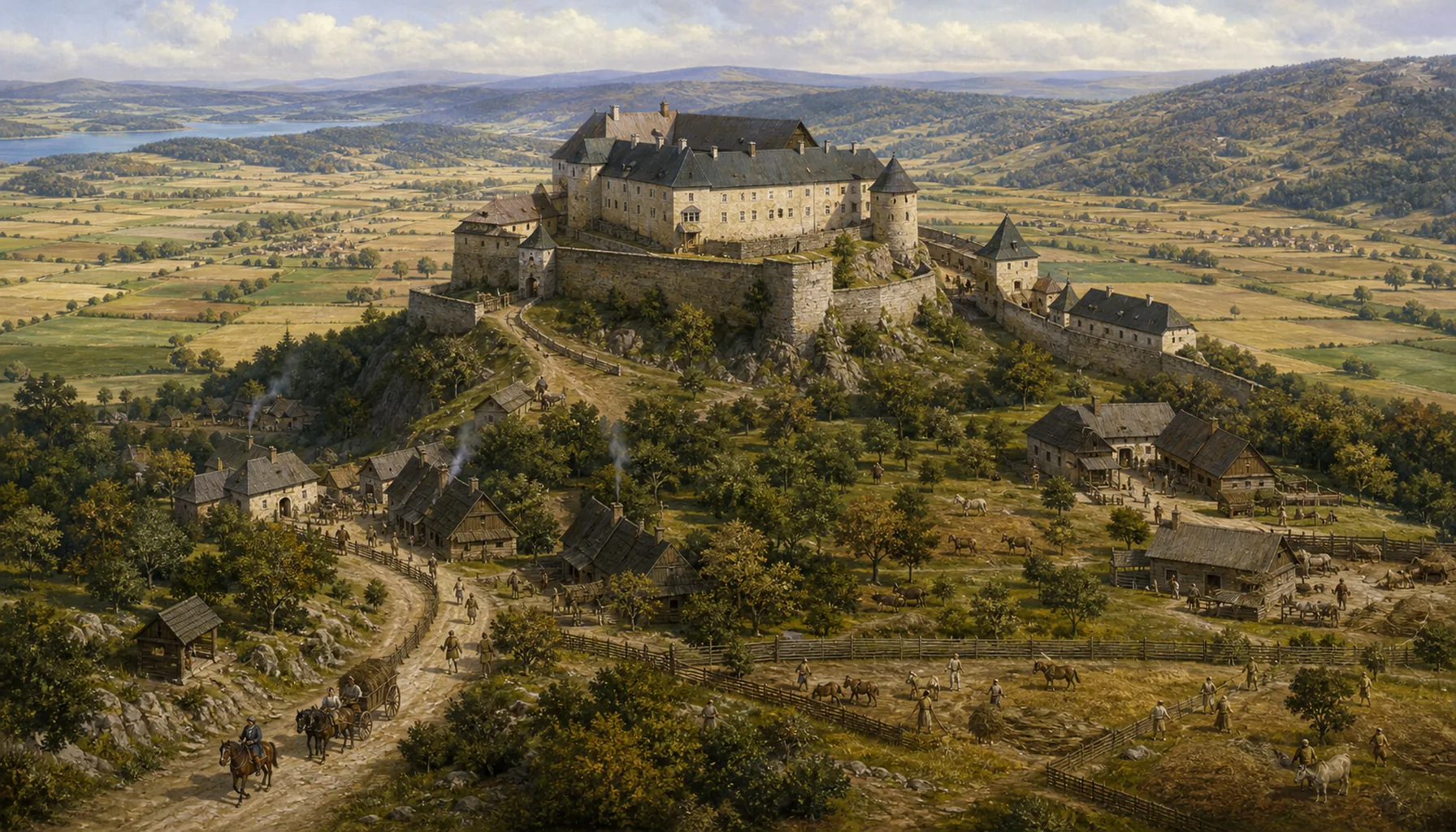
A medieval castle was the head of a property. Below Červený Kameň lay a ring of villages that belonged to it, and the people in them owed the castle labour, grain and wine; Častá, the village at its foot, was drawn into the estate in the second half of the thirteenth century and appears in writing in 1296. The hill was also worth holding for another reason: the road that climbs from the Danube through the Little Carpathian passes towards Moravia ran below it. Whoever held the castle watched and taxed that road, which is why it kept being inherited, pledged and fought over by powerful families instead of being left to fall down. And the place carried three names at once, because the kingdom had many languages: Červený Kameň in Slovak, Vöröskő in Hungarian, Bibersburg in German.Stredoveký hrad nebol len stavba, ale hlava majetku. Pod Červeným Kameňom ležal veniec dedín, ktoré k nemu patrili, a ľudia v nich hradu odvádzali robotu, obilie aj víno; Častá, obec priamo pod hradom, sa do panstva dostala v druhej polovici 13. storočia a v listinách sa objavuje roku 1296. Kopec sa oplatilo držať aj z druhého dôvodu: popod hrad viedla cesta, ktorá stúpa od Dunaja cez malokarpatské priesmyky smerom na Moravu. Kto držal hrad, ten cestu strážil aj zdaňoval — a práve preto sa hrad ďalších dvesto rokov dedil, zálohoval a bojovalo sa oň, namiesto toho, aby spustol. Miesto malo naraz tri mená, lebo kráľovstvo malo veľa jazykov: Červený Kameň po slovensky, Vöröskő po maďarsky, Bibersburg po nemecky.