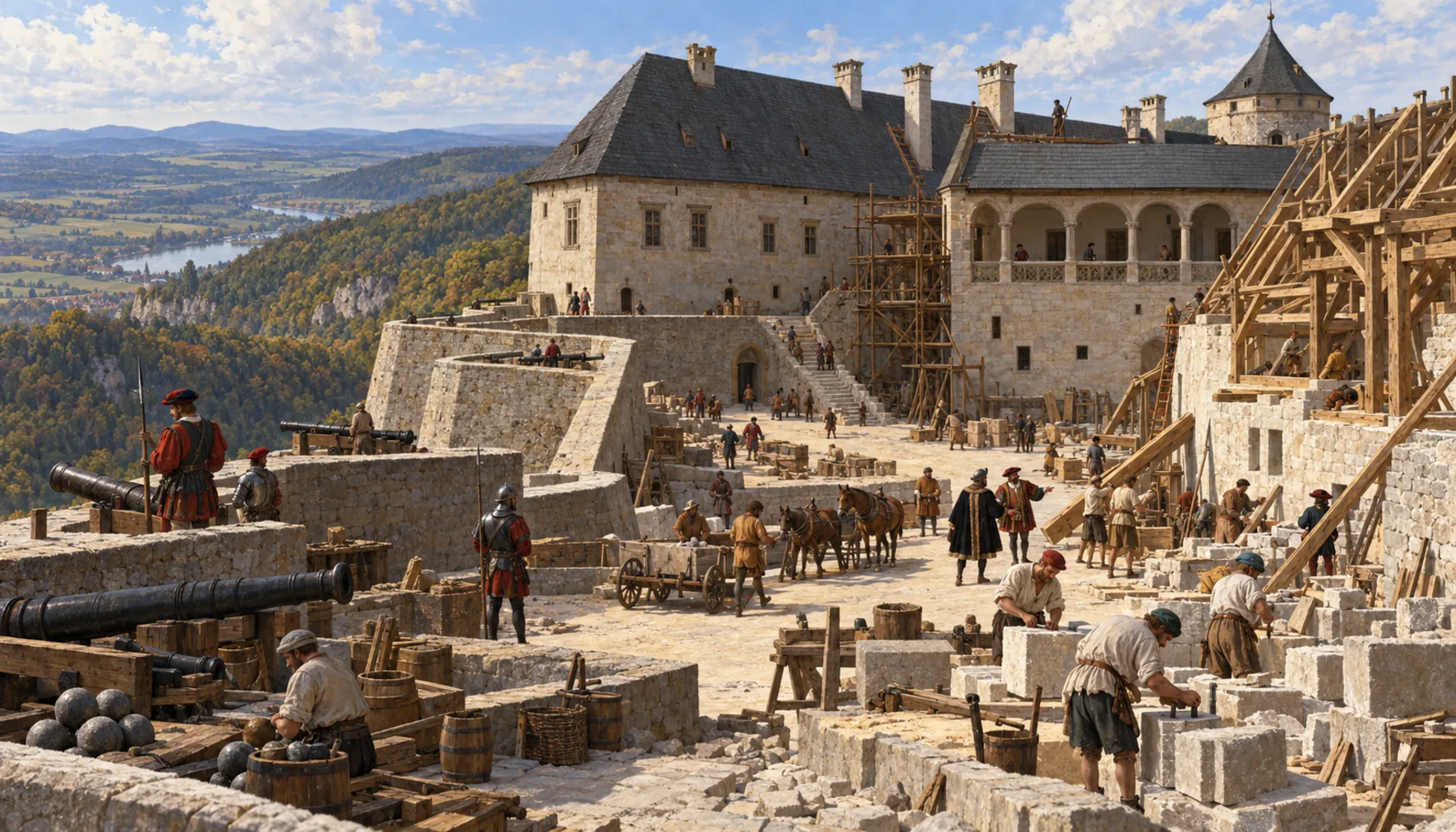
A hundred years after the first bastion was laid, the Pálffys began turning the warehouse into somewhere to live. They hired Filiberto Lucchese, an Italian architect and engineer who worked for the emperor in Vienna, and from 1655 the painter Carpoforo Tencalla was frescoing rooms here. It is the generation that produced the castle's most famous room, the sala terrena or garden hall — a grotto built indoors, worked from floor to vault in stucco shells, figures and foliage. Hold two pictures in your head at once: in 1644 a fire in the village below burned everything but six houses, and while those families were rebuilding in wood, Italian craftsmen a few hundred metres uphill were modelling seashells on a ceiling.Sto rokov po tom, čo položili prvú baštu, začali Pálfiovci meniť sklad na bývanie. Najali si Filiberta Luccheseho, talianskeho architekta a inžiniera v cisárskych službách vo Viedni, a od roku 1655 tu maľoval fresky Talian Carpoforo Tencalla. Z tejto generácie pochádza najslávnejšia miestnosť hradu — sala terrena, záhradná sála: jaskyňa postavená v interiéri, od podlahy po klenbu pokrytá štukovými mušľami, postavami a rastlinstvom. Držte si v hlave dva obrazy naraz: roku 1644 zhorela dedina pod hradom tak, že z nej ostalo šesť domov, a kým si tie rodiny stavali nové z dreva, o pár sto metrov vyššie modelovali talianski majstri na strope morské mušle.