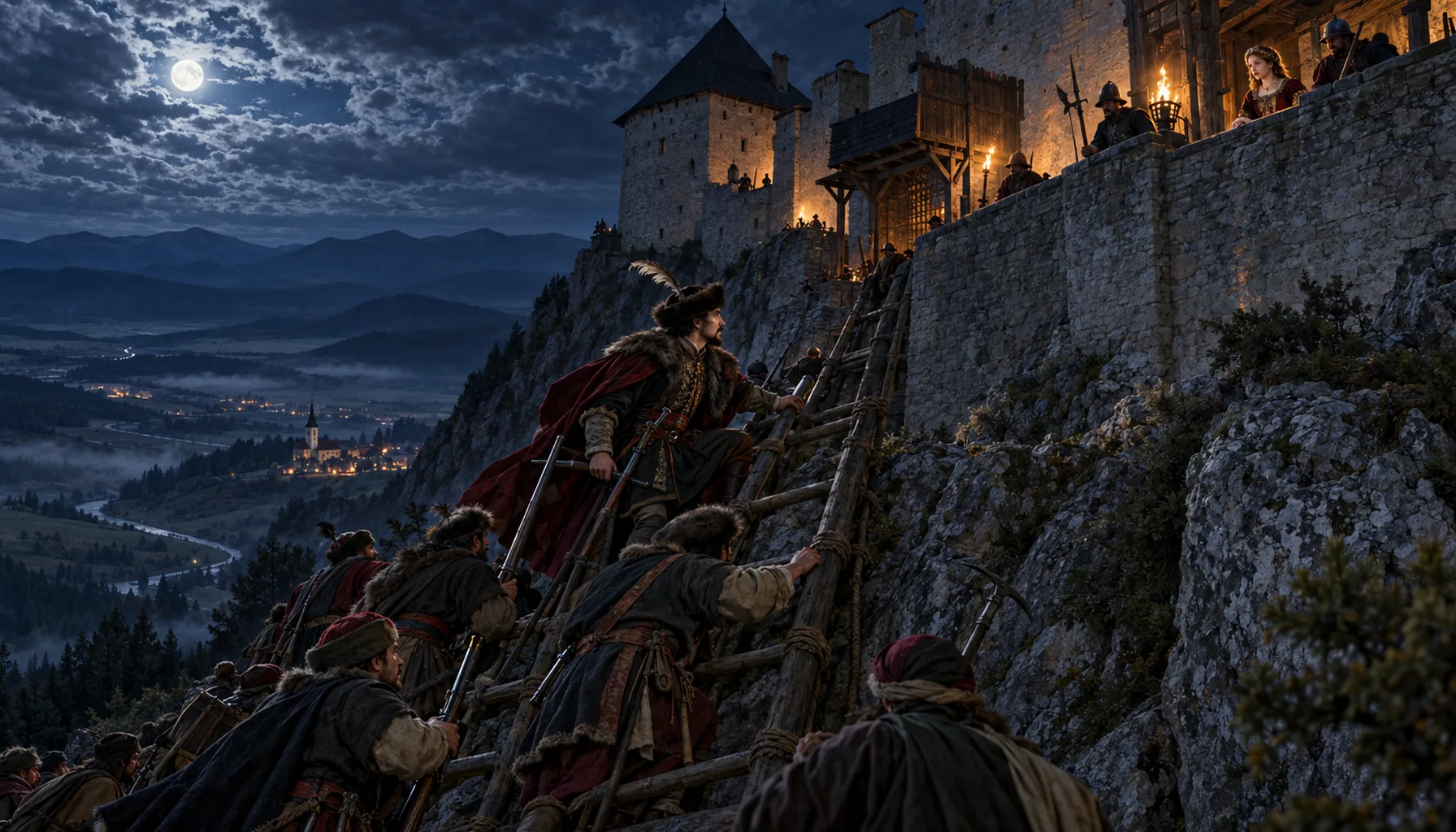
In 1644 Ferenc Wesselényi took Muráň by a night escalade and married its heiress, Mária Séčiová; twenty years later he was the leading figure in a great noble conspiracy against the Habsburg emperor. Wesselényi died before it was discovered, and his widow held the castle until imperial troops took it after five days in 1670. The estate, Revúca with it, was confiscated by the crown. For the town this was the ordinary experience of the uprisings that ran on until 1711: whoever won, the valley fed, quartered and paid for the armies that came through it.Roku 1644 dobyl František Vešeléni Muráň nočným prepadom a oženil sa s jeho dedičkou Máriou Séčiovou; o dvadsať rokov neskôr stál na čele veľkého šľachtického sprisahania proti habsburskému cisárovi. Vešeléni zomrel skôr, než sa sprisahanie prezradilo, a jeho vdova držala hrad, kým ho roku 1670 po piatich dňoch nedobyli cisárske vojská. Panstvo aj s Revúcou zhabala koruna. Pre mesto to bola bežná skúsenosť povstaní, ktoré trvali až do roku 1711: nech vyhral ktokoľvek, dolina vojská živila, ubytovala a zaplatila.