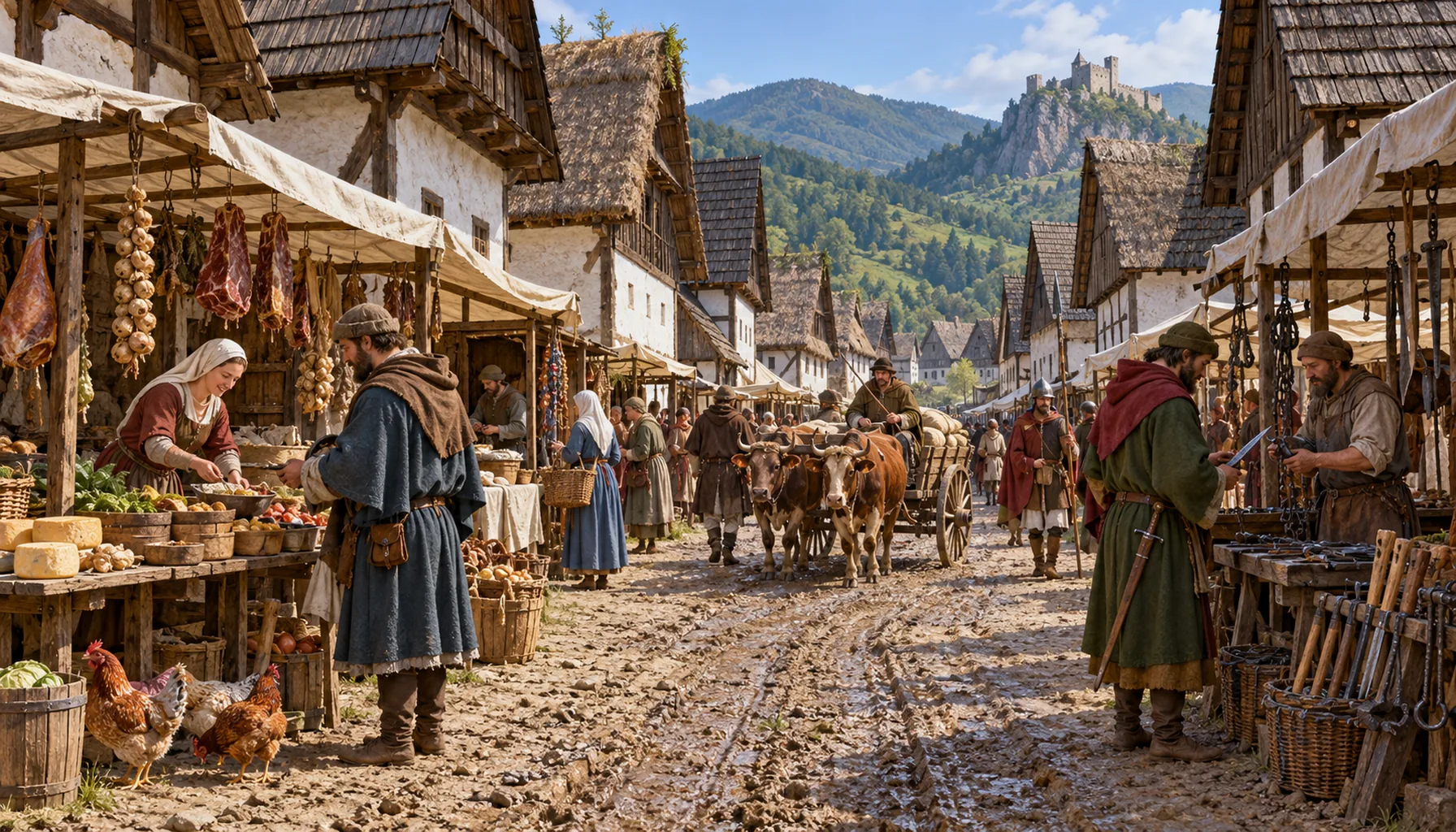
Revúca appears in writing in the fourteenth century; 1357 is the year usually given, though some accounts push the first mention back to the Muráň valley grant of 1243. It was never a free royal town. It belonged to the Muráň lordship, which meant its people owed dues and labour to whoever held the castle, and even its licence to hold markets came from the same source. What it had instead of privileges was ore and wood: iron smelted in small furnaces, charcoal burned in the beech forests, hammer mills on the streams. The town still has the shape that trade gave it — one long market street rather than a closed square.Revúca sa v písomnostiach objavuje v štrnástom storočí; obvykle sa uvádza rok 1357, hoci časť prameňov posúva prvú zmienku až k daru Muránskej doliny z roku 1243. Slobodným kráľovským mestom nebola nikdy. Patrila k muránskemu panstvu, takže jej obyvatelia odvádzali dávky a robotu tomu, kto práve držal hrad, a aj právo trhu prichádzalo odtiaľ. Namiesto výsad mala rudu a drevo: železo tavené v malých peciach, drevené uhlie pálené v bučinách, hámre na potokoch. Mesto si dodnes zachovalo tvar, ktorý mu dal obchod — jednu dlhú trhovú ulicu namiesto uzavretého námestia.