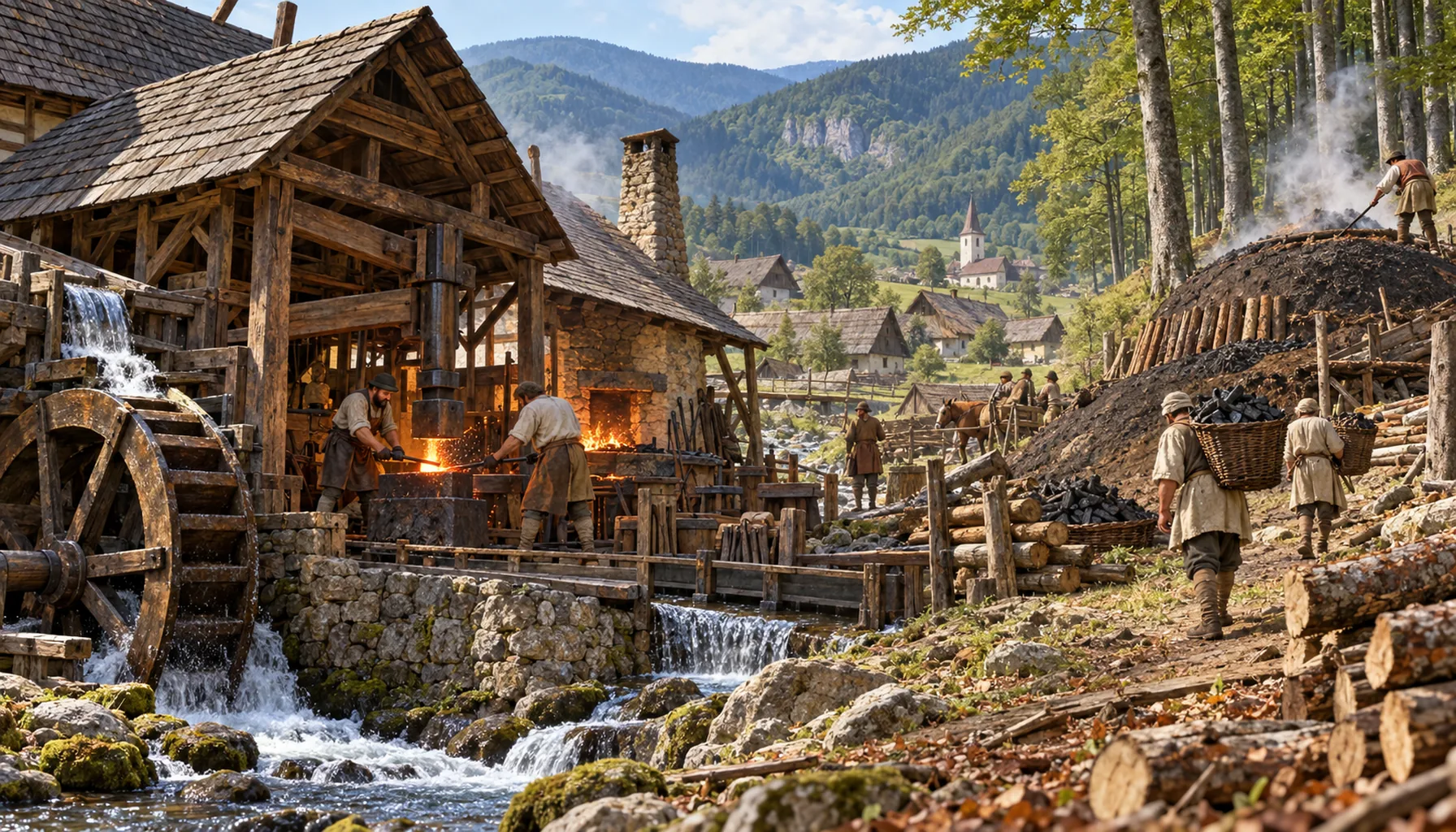
Through the sixteenth and seventeenth centuries the upper Rimava valley lived on iron worked in small hammer mills on the streams, and on the beech forests that were burned into charcoal to feed them. The Ottoman frontier ran across the open country to the south — Fiľakovo fell in 1554 — while the villages up here were poor, hard to reach and correspondingly left alone. Like the rest of Malohont the valley went over to the Lutheran Reformation in this period, which is why a small industrial town in a mainly Catholic country still has a Lutheran church on its main street.V šestnástom a sedemnástom storočí žila horná Rimavská dolina zo železa spracúvaného v malých hámroch na potokoch a z bučín, ktoré sa na ich živenie pálili na drevené uhlie. Osmanská hranica viedla otvorenou krajinou na juhu — Fiľakovo padlo roku 1554 — kým dediny tu hore boli chudobné, ťažko dostupné, a preto ich väčšinou obchádzali. Ako celý Malohont prijala aj táto dolina v tom čase luteránsku reformáciu, a preto má malé priemyselné mesto v prevažne katolíckej krajine dodnes na hlavnej ulici evanjelický kostol.