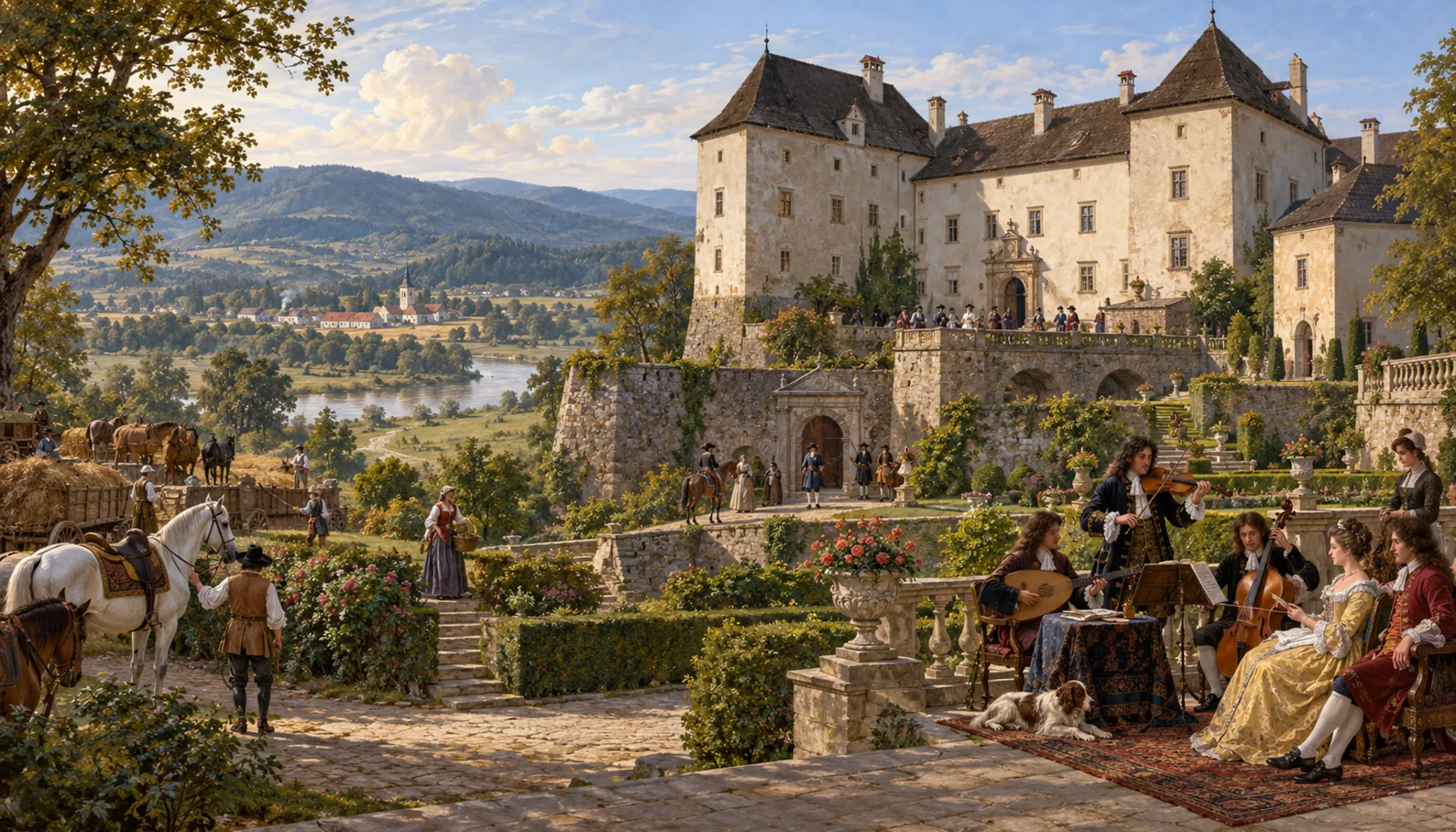
Under the Esterházy the frontier had moved away and the castle no longer needed to be a castle. During the eighteenth century they rebuilt it into a comfortable Baroque hradný kaštieľ — a fortified house turned country seat — adding a third wing, so that very little of the medieval building survived above ground apart from the Gothic chapel and part of the sixteenth-century fortification. The lordship was hard, and the region answered in the only way it could: Podpoľanie produced more songs of revolt than anywhere else in Slovakia, along with outlaws, poachers and the deep voice of the fujara. At the end of the century shepherds' cheese-makers from Stará Turá came here and founded the first bryndza dairies.Za Esterháziovcov sa hranica vzdialila a hrad už nemusel byť hradom. V 18. storočí ho prestavali na pohodlný barokový hradný kaštieľ — z opevneného domu sa stalo vidiecke sídlo — a pristavali tretie krídlo, takže zo stredovekej stavby zostalo nad zemou len málo: gotická kaplnka a časť opevnenia zo 16. storočia. Panstvo bolo tvrdé a kraj odpovedal jediným spôsobom, aký mal: v Podpoľaní vzniklo najviac vzdorovitých piesní na Slovensku a s nimi zbojníctvo, pytliactvo a hlboký hlas fujary. Na konci storočia sem prišli bryndziari zo Starej Turej a založili tu prvé bryndziarne.