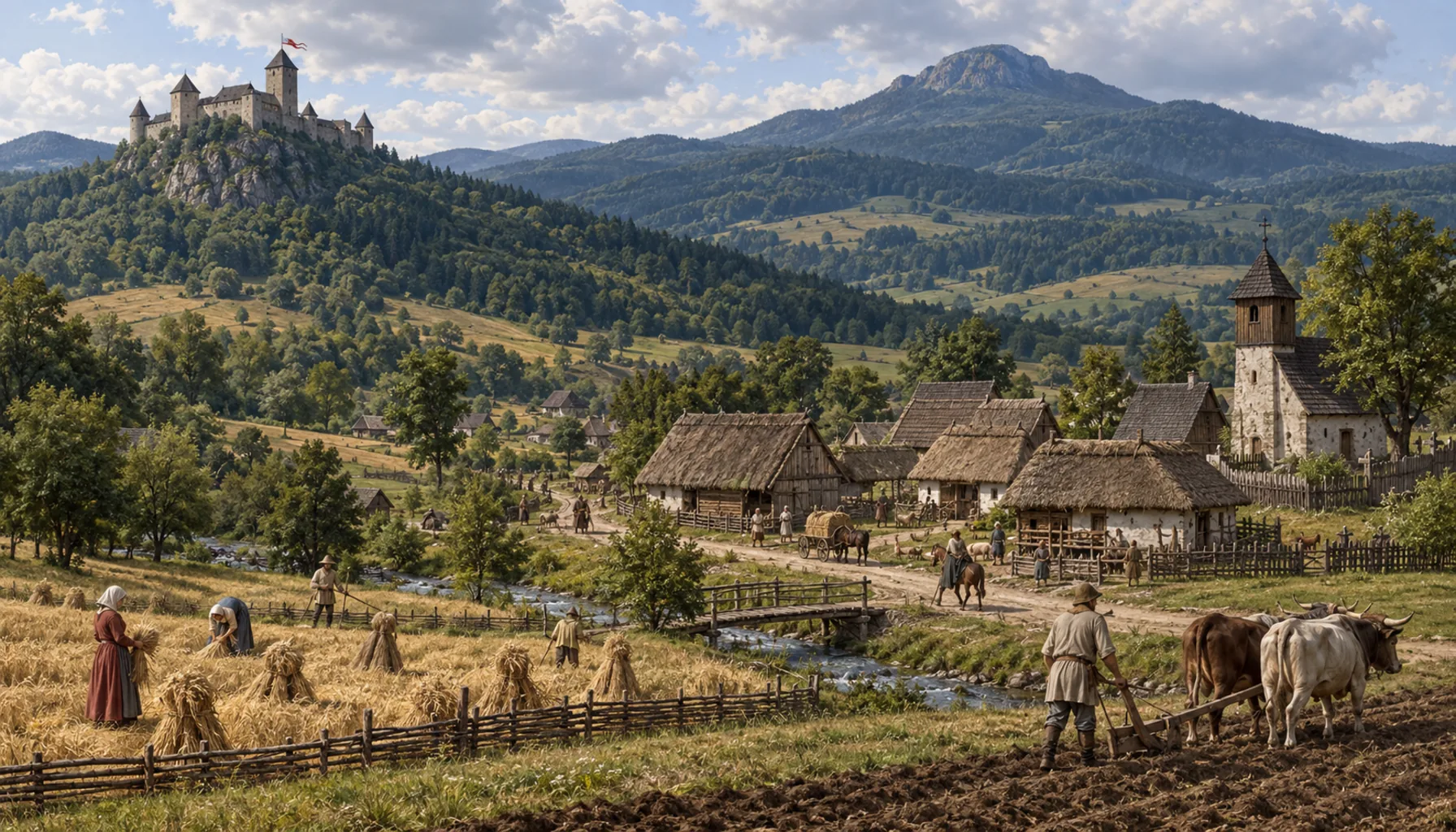
In 1472 the village belonged to the estate of Čabraď, a castle on the Krupina plateau to the south; when that estate was divided in the sixteenth century, Svätý Anton passed to the estate of the castle on Sitno, directly above it. This is the ordinary condition of a Slovak village for most of its history: it did not govern itself, it belonged to a castle, and which castle it belonged to could change without anyone here being asked. The sixteenth century made the arrangement matter. After 1526 the Ottomans held the middle of the kingdom, their raiding parties reached into these hills, and the practical point of belonging to a castle was that there was somewhere to run to when the alarm went up.V roku 1472 patrila obec panstvu hradu Čabraď na Krupinskej planine na juhu; keď sa toto panstvo v šestnástom storočí rozdelilo, Svätý Anton pripadol panstvu hradu na Sitne priamo nad ním. To je bežný stav slovenskej dediny pre väčšinu jej dejín: nespravovala sa sama, patrila hradu — a ktorému, to sa mohlo zmeniť bez toho, aby sa tunajších ľudí niekto pýtal. V šestnástom storočí začalo na tom naozaj záležať. Po roku 1526 držali Osmani stred kráľovstva, ich nájazdné oddiely prenikali aj do týchto vrchov a praktickým zmyslom príslušnosti k hradu bolo, že bolo kam utiecť, keď sa strhol poplach.