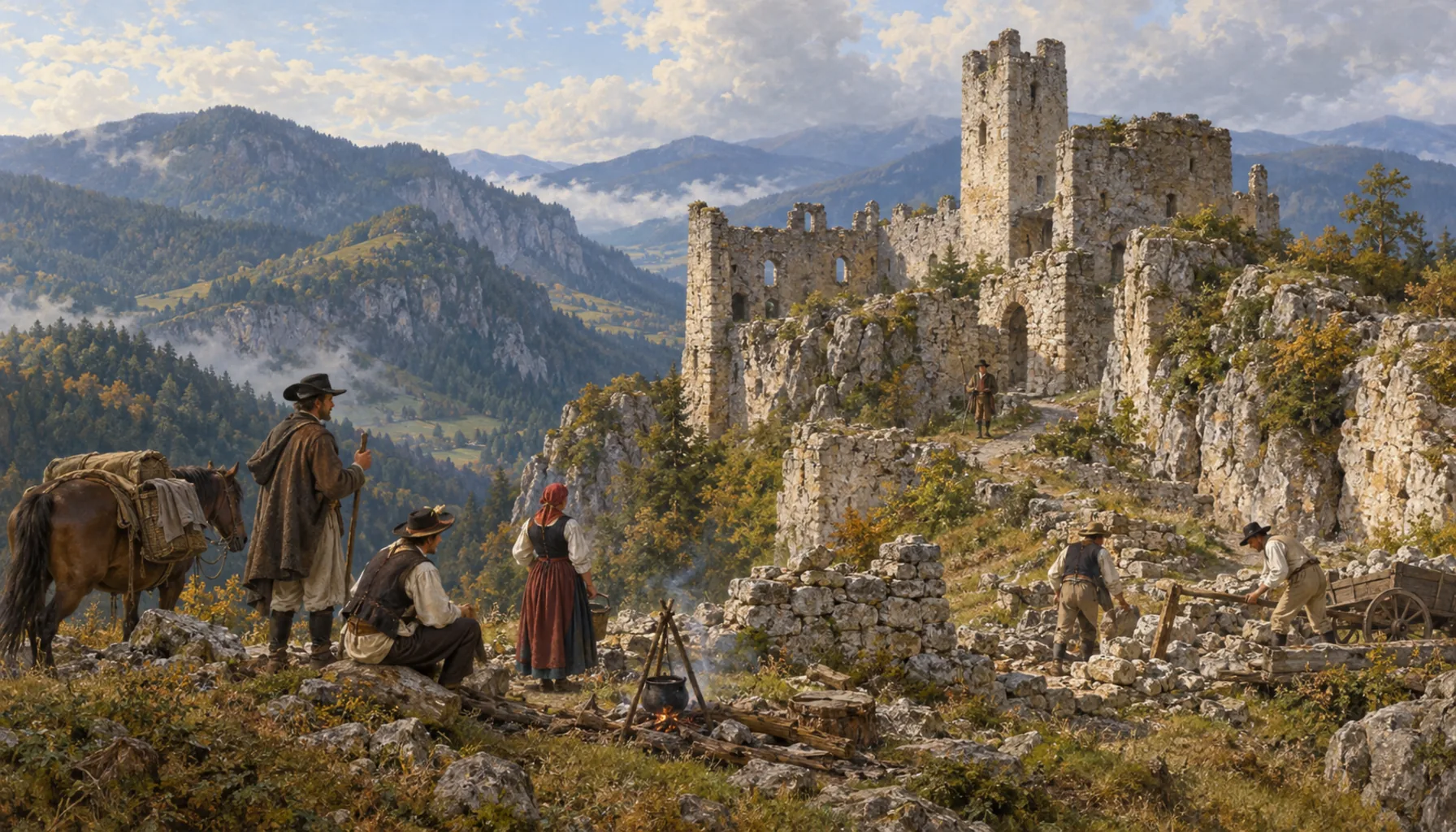
Here is something about ruins worth understanding. The castle had stood empty for fifty years, but the estate that carried its name was very much alive: the villages below still owed the lord of Muráň labour days and dues, because that is what being a subject meant. The revolution of 1848 abolished serfdom across the Habsburg lands, and the farmers of the Muráň valley stopped owing anything to anyone and became owners of the strips they had always worked. It took decades of surveying and lawsuits to settle who owned which strip, but the change itself was the biggest in the everyday life of these villages in five hundred years — and it happened long after the castle above them had gone silent. A castle can be a ruin and a power at the same time.Pri zrúcaninách sa oplatí pochopiť jednu vec. Hrad stál päťdesiat rokov prázdny, ale panstvo, ktoré nieslo jeho meno, žilo naplno: dediny pod ním stále dlžili muránskemu pánovi robotu a dávky, lebo to znamenalo byť poddaným. Revolúcia v roku 1848 zrušila v habsburských krajinách poddanstvo a gazdovia v Muránskej doline prestali byť komukoľvek čokoľvek dlžní a stali sa vlastníkmi rolí, ktoré odjakživa obrábali. Kým sa vymeralo a vysúdilo, komu ktorý pás patrí, prešli desaťročia — no samotná zmena bola najväčšia v každodennom živote týchto dedín za päťsto rokov. A prišla dávno po tom, čo hrad nad nimi stíchol. Hrad môže byť zrúcaninou a mocou naraz.