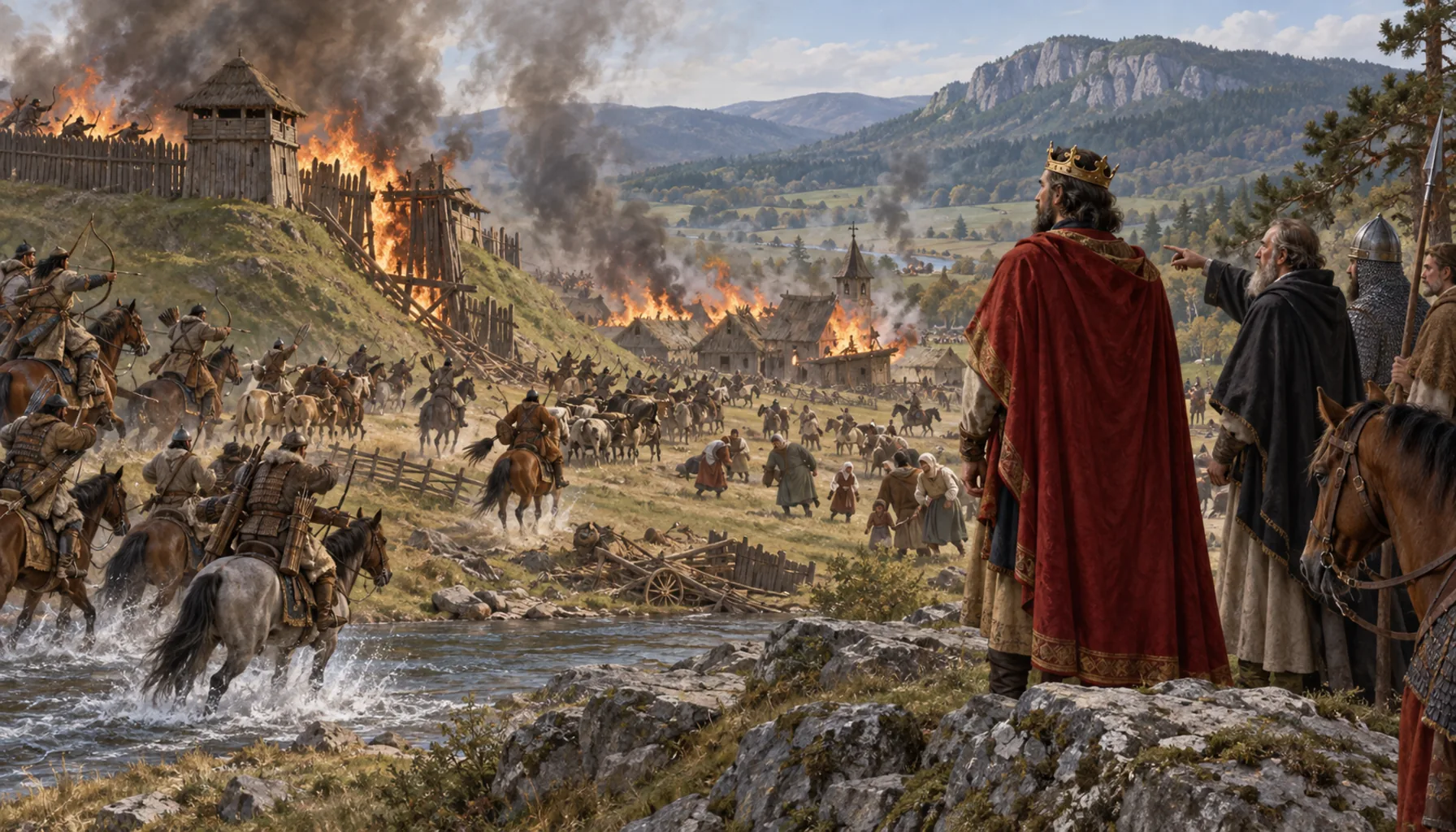
In the spring of 1241 the Mongol army destroyed the army of the Kingdom of Hungary and rode across the country, and King Béla IV came out of hiding convinced that wooden forts on earth banks were worth nothing. His answer was stone on high rock, and Muráň belongs to that generation: a royal castle raised in the thirteenth century and first named in a document of 1271. What the first castle looked like we do not know, because it was rebuilt in the first half of the fifteenth century and the rebuild covered the older work over. What we can still read is the choice of site — 935 metres up on the edge of the plateau, with cliffs doing most of the defending — and that choice was made by people who had just watched a cavalry army ride through a kingdom. The village below the rock appears in writing fifty years later, in 1321, as a settlement by the castle's home farm.Na jar 1241 rozdrvilo mongolské vojsko armádu Uhorského kráľovstva a prehnalo sa krajinou; kráľ Belo IV. vyšiel z úkrytu s presvedčením, že drevené hrádky na hlinených valoch nie sú na nič. Jeho odpoveďou bol kameň na vysokej skale a Muráň patrí presne k tejto generácii: kráľovský hrad postavený v trinástom storočí, prvý raz písomne doložený v roku 1271. Ako vtedy vyzeral, nevieme — v prvej polovici pätnásteho storočia ho prestavali a prestavba staršiu podobu prekryla. Čo sa dá čítať dodnes, je výber miesta: 935 metrov vysoko na hrane planiny, kde väčšinu obrany zastanú bralá. Takto uvažovali ľudia, ktorí práve videli jazdecké vojsko prejsť celým kráľovstvom. Dedina pod skalou sa v písomnostiach objavuje o päťdesiat rokov neskôr, v roku 1321, ako osada pri hradnom majeri.