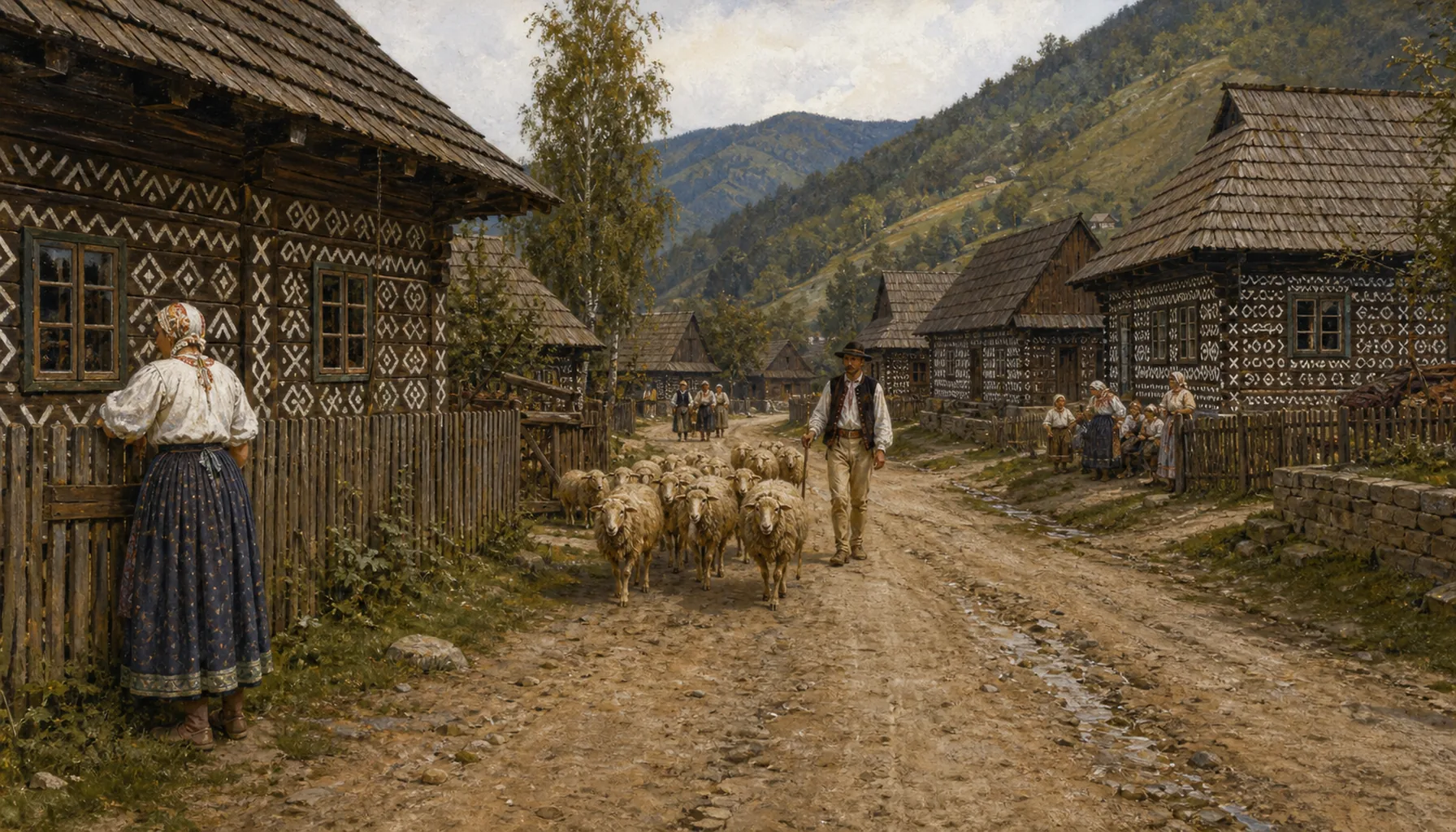
Here is the honest record. In the nineteenth century the marks on the walls were simple: lime wash, or a thin clay slurry, brushed onto the corners of the house where the logs cross and the weather eats hardest. It was maintenance with a decorative edge, not the dense pattern language visitors photograph today. The village became known outside its own valley in 1895, when the architect Dušan Jurkovič built a Čičmany homestead for the great Czechoslavic ethnographic exhibition in Prague and put the place on the map of people who collect folk culture.A teraz to, čo naozaj vieme. V 19. storočí boli znaky na stenách jednoduché: vápno alebo riedky hlinený kal sa nanášali na rohy domu, kde sa zrub spája a kde počasie hlodá najviac. Bola to údržba s ozdobným nádychom, nie hustá reč vzorov, akú dnes návštevníci fotia. Mimo vlastnej doliny sa obec preslávila v roku 1895, keď architekt Dušan Jurkovič postavil čičmiansku usadlosť na veľkej Národopisnej výstave českoslovanskej v Prahe a dostal tak Čičmany do povedomia ľudí, ktorí zbierali ľudovú kultúru.