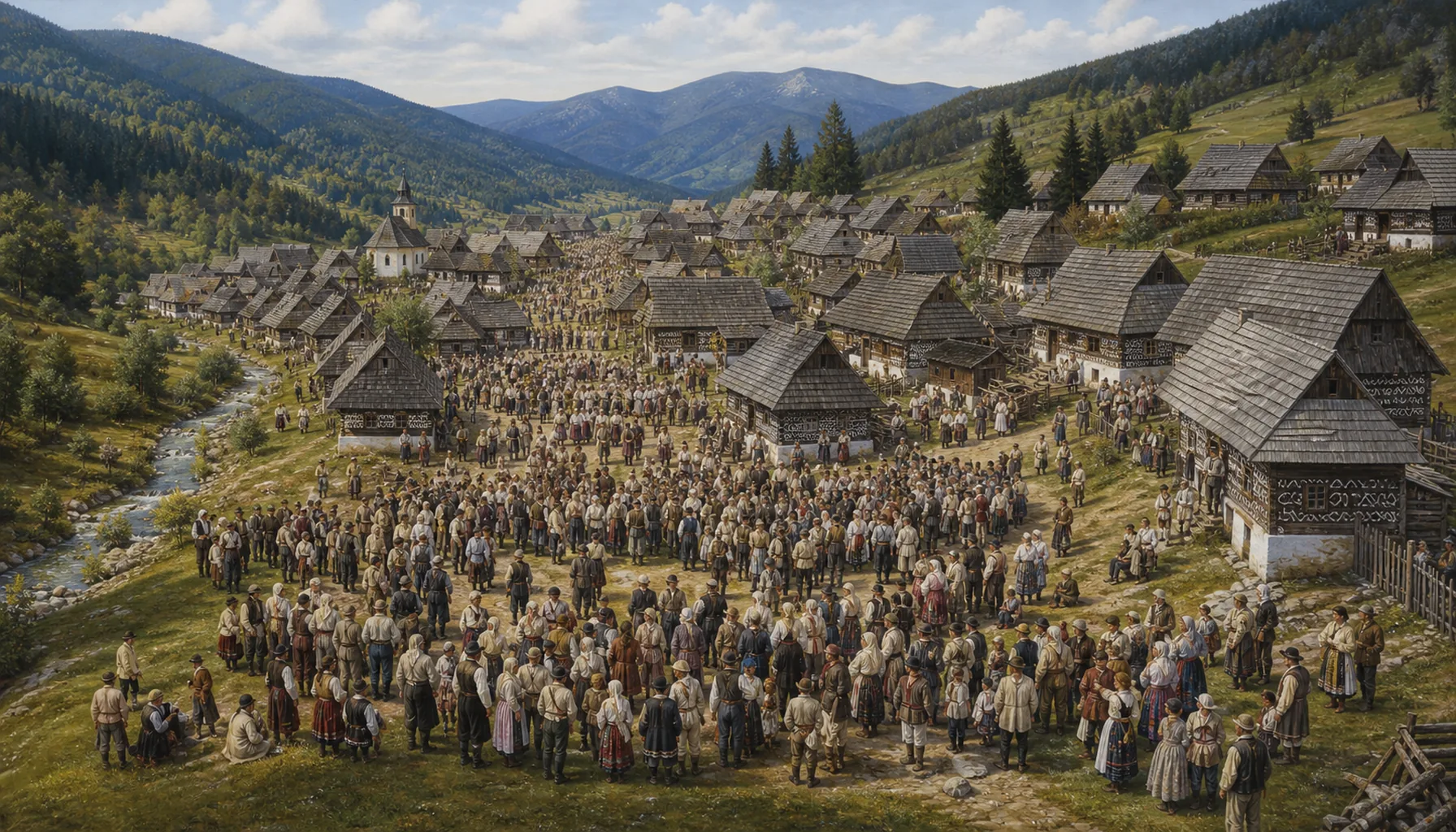
In 1828 Čičmany held 127 houses and 1,507 inhabitants — roughly ten times what lives there today. That crowding is why the houses are the way they are: two full storeys of logs, often with a gallery running under the eaves of the upper floor, steep shingle roofs, small windows, timber weathered nearly black. They are the tallest folk buildings in this part of Slovakia, and they are tall because there was no room to build outwards. The wood came off the surrounding hills and the whole thing could be raised by neighbours in a season.V roku 1828 mali Čičmany 127 domov a 1 507 obyvateľov — zhruba desaťnásobok toho, čo tu žije dnes. Práve táto stiesnenosť je dôvodom, prečo sú domy také, aké sú: dve plné podlažia zrubu, často s pavlačou pod odkvapom horného poschodia, strmé šindľové strechy, malé okná a drevo zvetrané takmer do čierna. Sú to najvyššie ľudové stavby v tejto časti Slovenska a vysoké sú preto, že do šírky nebolo kam stavať. Drevo pochádzalo z okolitých kopcov a susedia dokázali taký dom postaviť za jednu sezónu.