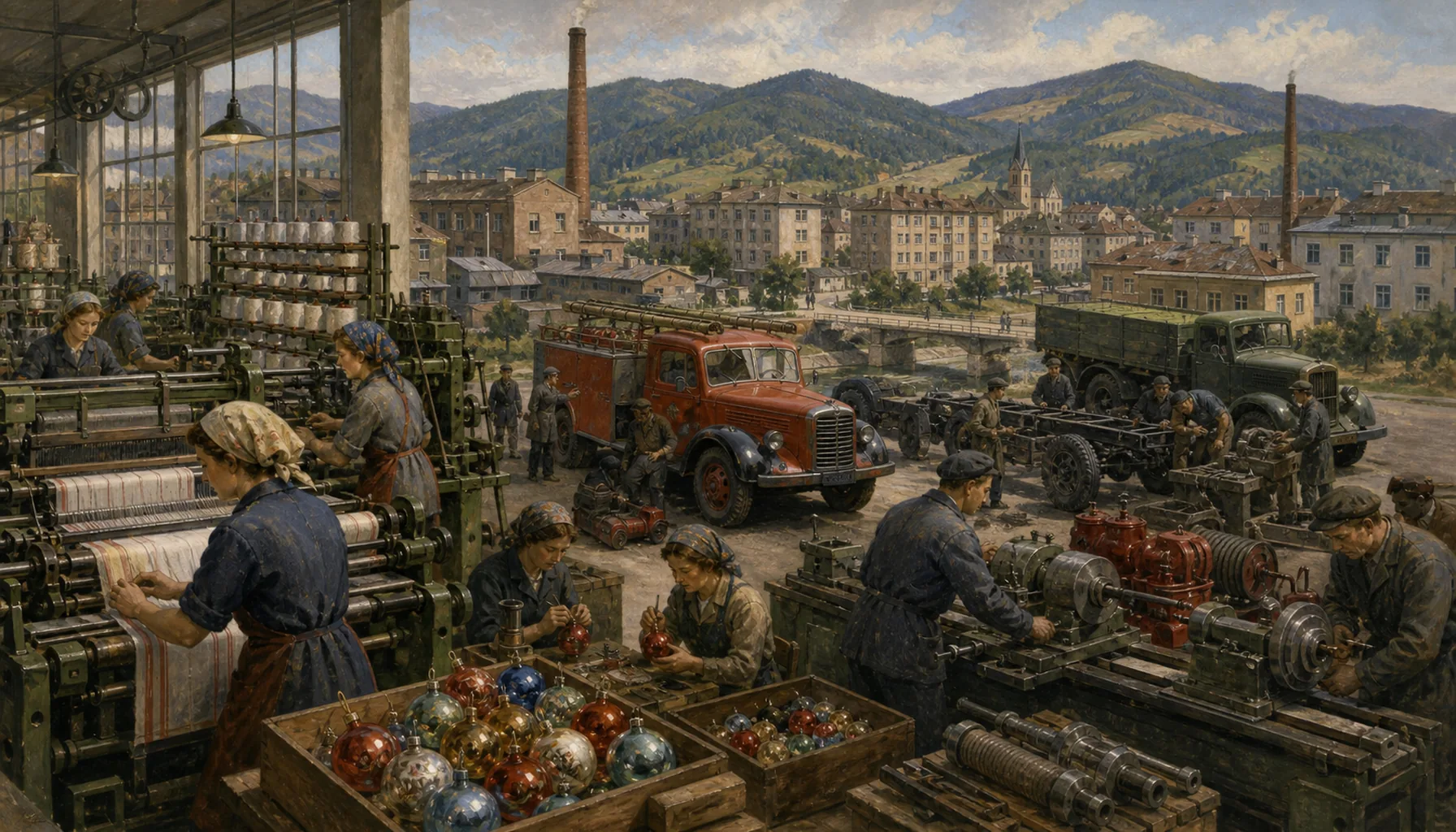
Textile production restarted in 1946, and the planned economy then handed the town work that had nothing to do with the valley: fire-fighting equipment, and later components for Tatra lorries. The strangest of them was the Okrasa co-operative, which blew and silvered glass Christmas ornaments in Čadca and sold them far outside Czechoslovakia. Housing estates went up around the works and the population climbed, because for the first time in four centuries a Kysuce man could earn a wage without leaving home. In 1960 the district of Kysucké Nové Mesto was abolished and its territory added to the district of Čadca, which made this town the administrative centre of the whole valley. The Kysuce Museum, in the town, is where the older valley — the wire, the sheep, the emigration — is kept on the record.Textilná výroba sa obnovila v roku 1946 a plánované hospodárstvo potom mestu pridelilo prácu, ktorá s dolinou nemala nič spoločné: hasiacu techniku a neskôr komponenty pre nákladné autá Tatra. Najzvláštnejšia z nich bola družstevná Okrasa, ktorá v Čadci fúkala a striebrila sklenené vianočné ozdoby a predávala ich ďaleko za hranice Československa. Okolo závodov vyrástli sídliská a počet obyvateľov stúpal, lebo Kysučan si prvý raz po štyroch storočiach mohol zarobiť bez toho, aby odišiel z domu. V roku 1960 zrušili okres Kysucké Nové Mesto a jeho územie pripojili k okresu Čadca, čím sa toto mesto stalo správnym centrom celej doliny. Staršiu dolinu — drôt, ovce, vysťahovalectvo — drží v pamäti Kysucké múzeum priamo v meste.