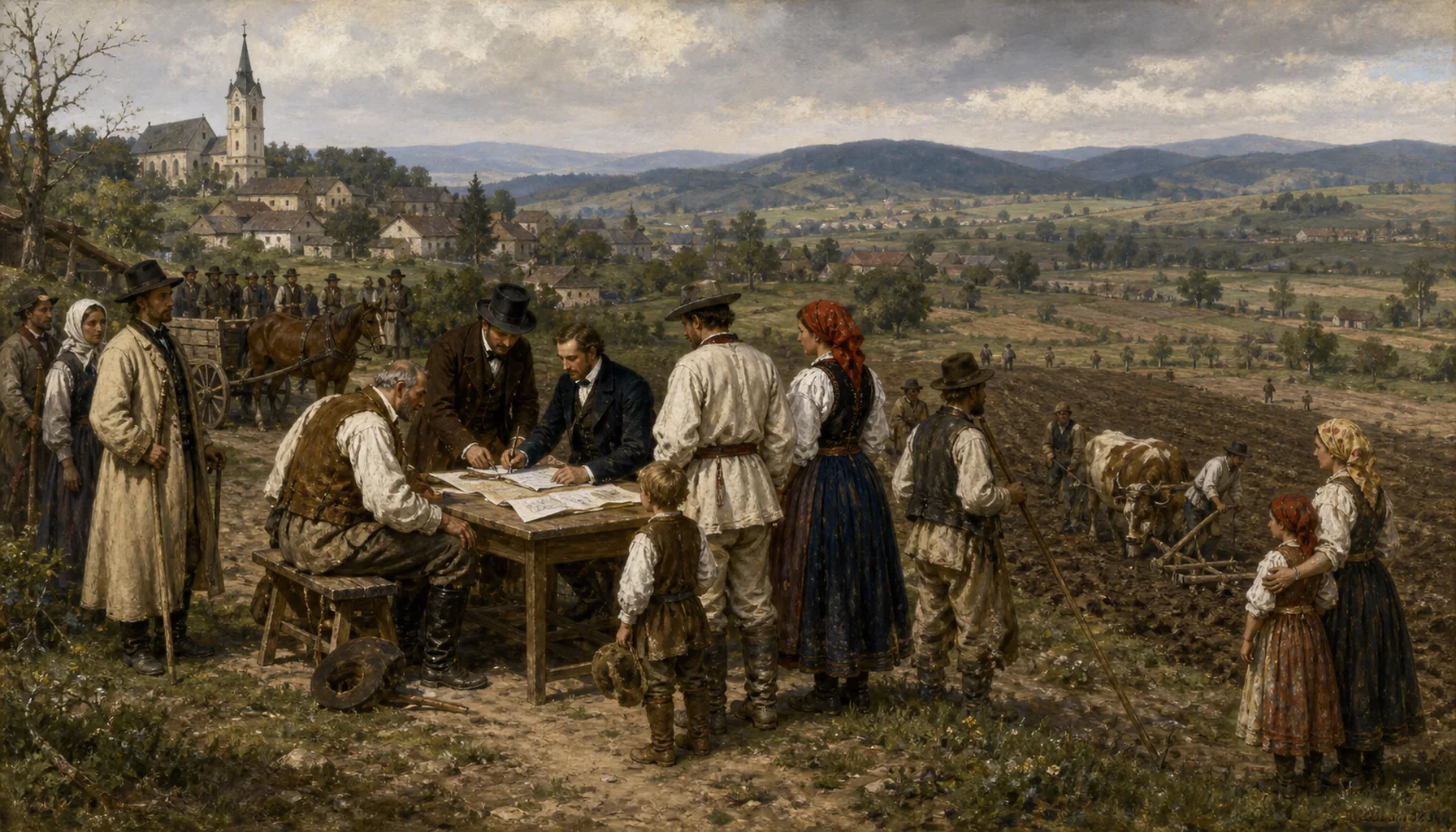
The revolution of 1848 abolished serfdom across the kingdom, and the laws sorting out who now owned which field ran on into the 1850s. Until then a family in Bytča owed the estate labour, dues and a share of the harvest, written down in an urbár — the register that fixed exactly what every household owed its lord. Afterwards the château was still the largest landowner in the valley, but it was a business with employees instead of a lordship with subjects. This is the largest single change in the lives of ordinary people in the town's history, and it is completely invisible: there is no building to point at.Revolúcia roku 1848 zrušila poddanstvo v celom kráľovstve a zákony, ktoré potom riešili, komu vlastne patrí ktorý kus poľa, sa tiahli do päťdesiatych rokov. Dovtedy dlhovala rodina v Bytči panstvu robotu, dávky a časť úrody — všetko zapísané v urbári, teda v súpise, ktorý presne určoval, čo je každá domácnosť svojmu pánovi povinná. Potom bol zámok síce stále najväčším vlastníkom pôdy v doline, ale bol to podnik so zamestnancami, nie panstvo s poddanými. Je to najväčšia zmena v živote obyčajných ľudí v dejinách mesta — a je úplne neviditeľná: niet budovy, na ktorú by sa dalo ukázať.