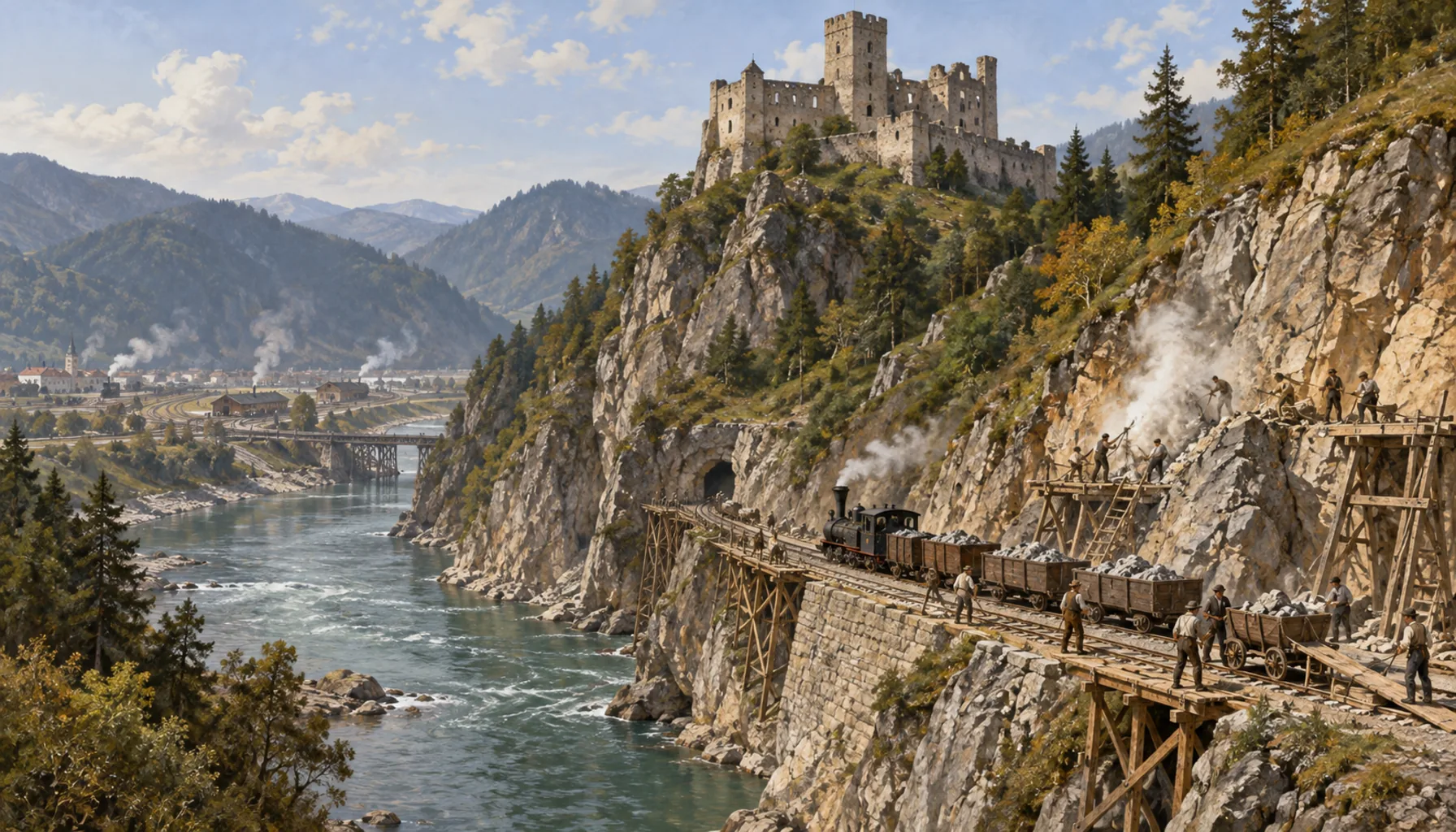
In the early 1870s the Košice–Bohumín railway was driven through the gorge, blasted into the rock below the castle, and Žilina became a junction where lines met. The effect on the river trade was immediate and fatal. A raft took days, could only run when the water was high enough and killed men in a bad season; a goods wagon ran all year and did not care about the rocks. Within two generations rafting was finished as a livelihood, and today rafts run below Strečno only in summer, for visitors — the same trip with the danger taken out.Začiatkom sedemdesiatych rokov 19. storočia prerazila tiesňavou Košicko-bohumínska železnica, odstrelená do skaly priamo pod hradom, a zo Žiliny sa stal uzol, kde sa trate stretávajú. Na riečny obchod to zapôsobilo okamžite a smrteľne. Plť išla niekoľko dní, mohla vyraziť len pri dostatočnej vode a v zlej sezóne brala životy; nákladný vagón chodil po celý rok a na kamene v koryte sa nepýtal. Do dvoch generácií pltníctvo ako obživa skončilo a dnes plte pod Strečnom premávajú len v lete, pre návštevníkov — tá istá cesta, z ktorej vybrali nebezpečenstvo.