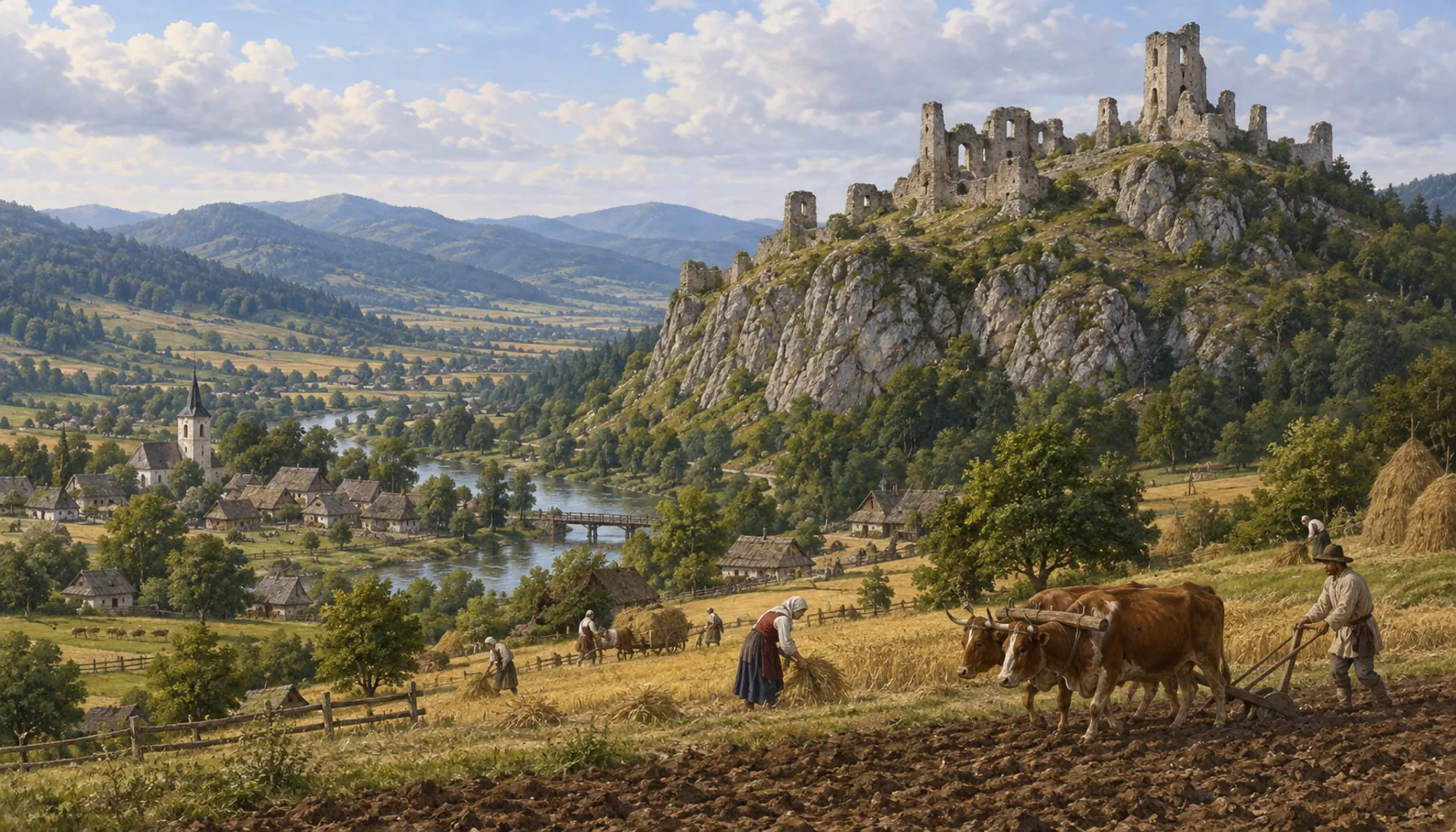
Below the empty walls the valley went on working. Timber from Orava and Liptov came down the river on rafts steered by pltníci, past the great bend called the Domašínsky meander and into the narrows, which the raftsmen rated the worst water on the Váh. Then in the early 1870s the Košice–Bohumín railway was blasted through the gorge, and freight that had taken days by water took hours by rail. The rafting trade died within two generations. The ruin above it, having nothing left to lose, carried on doing nothing at all.Pod prázdnymi múrmi dolina ďalej pracovala. Drevo z Oravy a Liptova schádzalo po rieke na pltiach, ktoré viedli pltníci, popri veľkom oblúku zvanom Domašínsky meander a ďalej do úžiny, ktorú pltníci pokladali za najhoršiu vodu na Váhu. Začiatkom sedemdesiatych rokov 19. storočia potom tiesňavou prerazila Košicko-bohumínska železnica a náklad, ktorý po vode putoval dni, prešiel po koľajniciach za hodiny. Pltníctvo do dvoch generácií zaniklo. Zrúcanina nad ním už nemala čo stratiť, a tak ďalej nerobila vôbec nič.