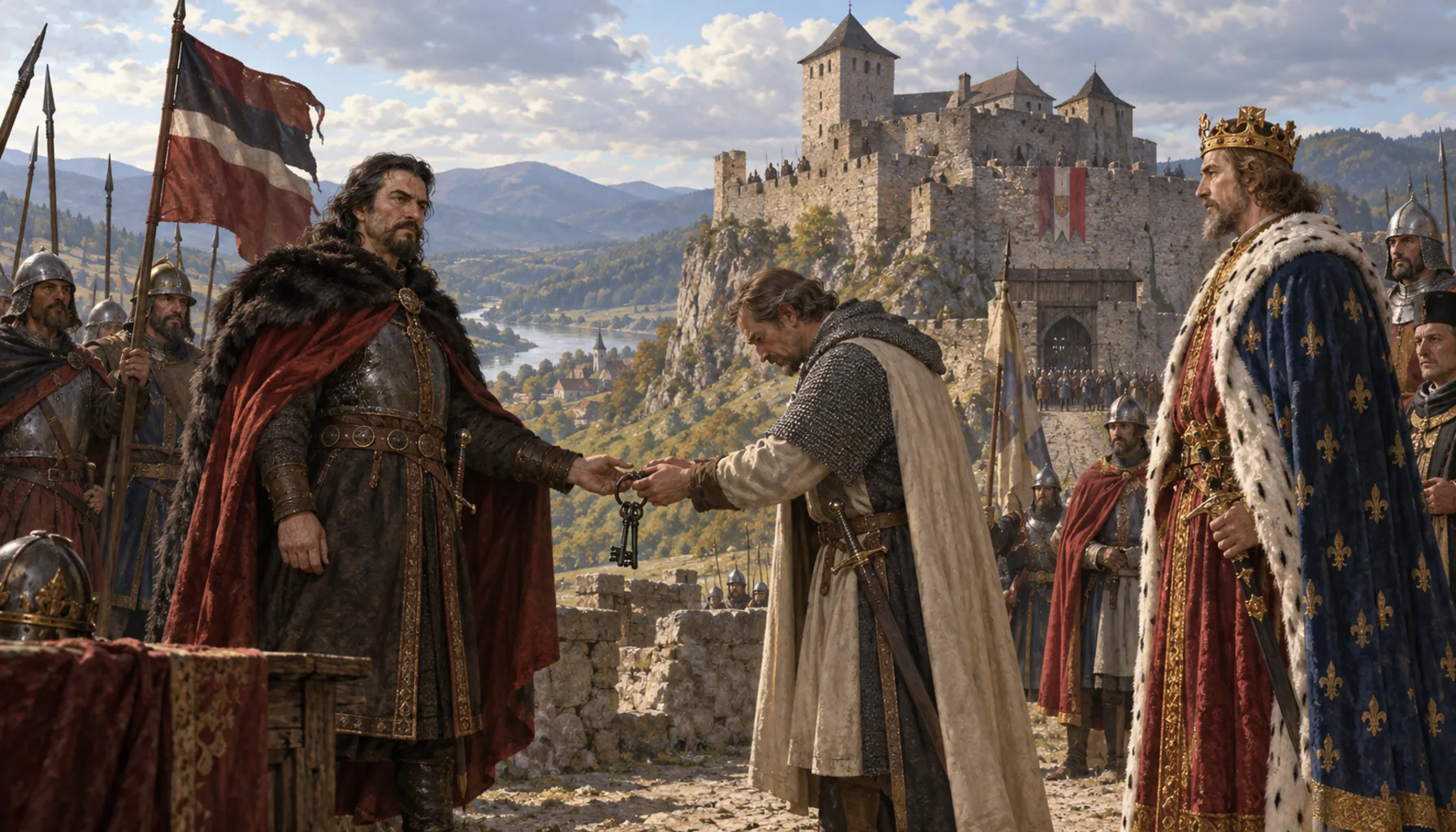
In the early fourteenth century the castle fell to Matúš Čák of Trenčín, the oligarch who ran the north-west of the kingdom as though it were his own country. After his power collapsed it was held in 1323 by Donč, the king's ispán — the royal officer in charge of a county — and then it went to the crown itself. A royal captain sat here with a garrison, and living quarters and farm buildings were put up inside the walls to keep them fed. The job never changed: watch the road, and take the toll from whoever used it.Začiatkom štrnásteho storočia pripadol hrad Matúšovi Čákovi Trenčianskemu, oligarchovi, ktorý severozápad kráľovstva spravoval, akoby to bola jeho vlastná krajina. Po páde jeho moci ho roku 1323 držal Donč, kráľovský župan — teda úradník, ktorý spravoval stolicu — a potom prešiel priamo do rúk koruny. Sedával tu kráľovský kapitán s posádkou a za múrmi pribudli obytné a hospodárske budovy, aby sa tá posádka mala z čoho živiť. Úloha sa nemenila: strážiť cestu a vyberať mýto od každého, kto po nej šiel.