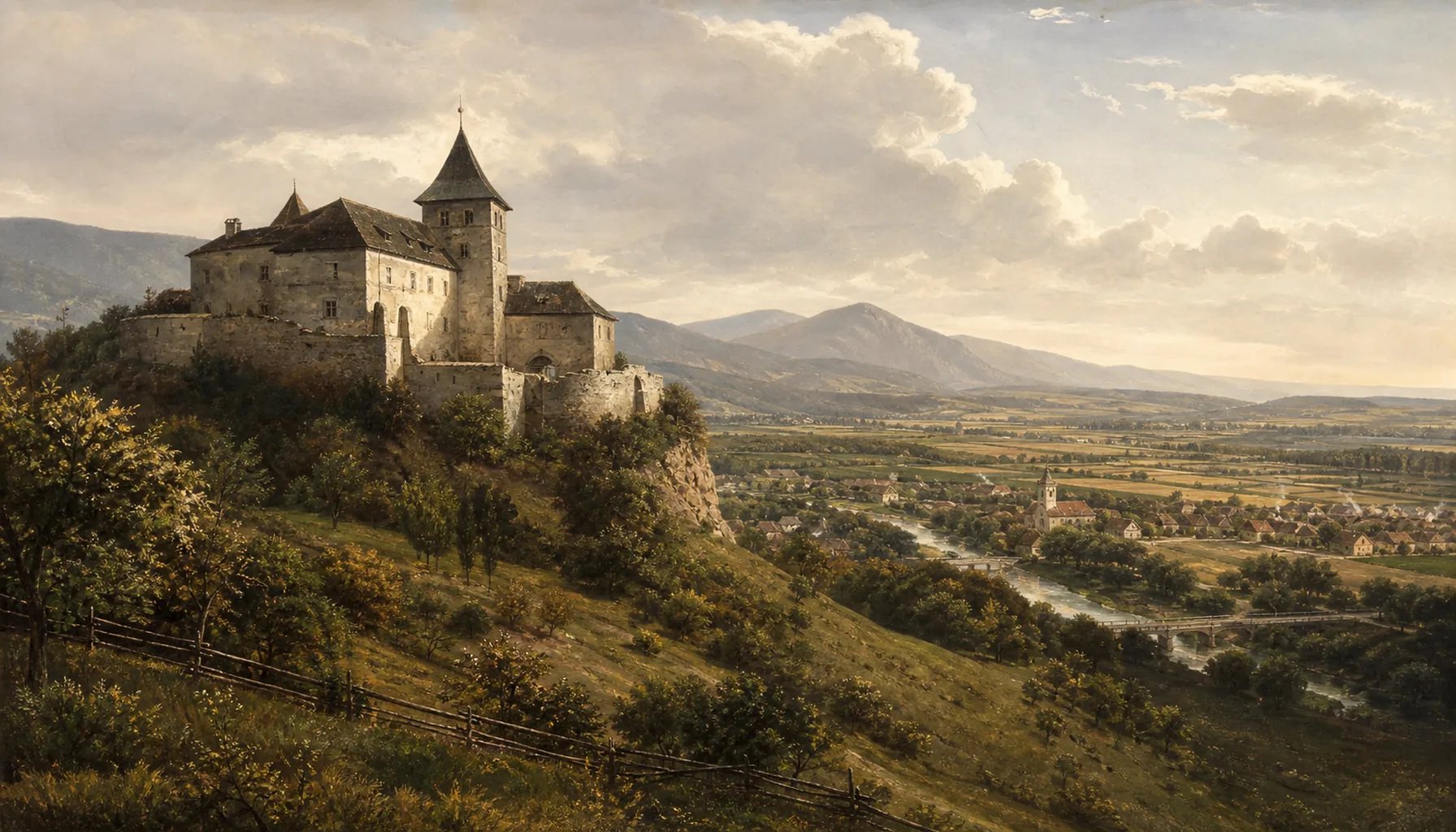
Turiec was a county unusually full of small noble families, which meant a lot of literate, land-owning people with opinions and no great fortunes. It was in Martin — the town that had taken over this castle's business — that the Slovak national movement settled. On 6 and 7 June 1861 the Memorandum of the Slovak Nation was adopted there, asking that Slovaks be recognised as a nation, with their own schools and their own administration. Matica slovenská, the national cultural institution, followed on 4 August 1863, paid for partly by public collections. The Hungarian government banned Matica in 1875 and confiscated its property; it could not reopen until after the First World War.Turiec bol stolicou s nezvyčajne veľkým počtom drobných zemianskych rodov, čo znamenalo množstvo gramotných ľudí s pôdou, názormi a bez veľkého majetku. A práve v Martine — v meste, ktoré prevzalo agendu tohto hradu — sa usadilo slovenské národné hnutie. 6. a 7. júna 1861 tu prijali Memorandum národa slovenského, ktoré žiadalo, aby boli Slováci uznaní za národ s vlastnými školami a vlastnou správou. 4. augusta 1863 nasledovala Matica slovenská, národná kultúrna ustanovizeň, financovaná sčasti z verejných zbierok. Uhorská vláda Maticu v roku 1875 zakázala a jej majetok skonfiškovala; obnoviť činnosť mohla až po prvej svetovej vojne.