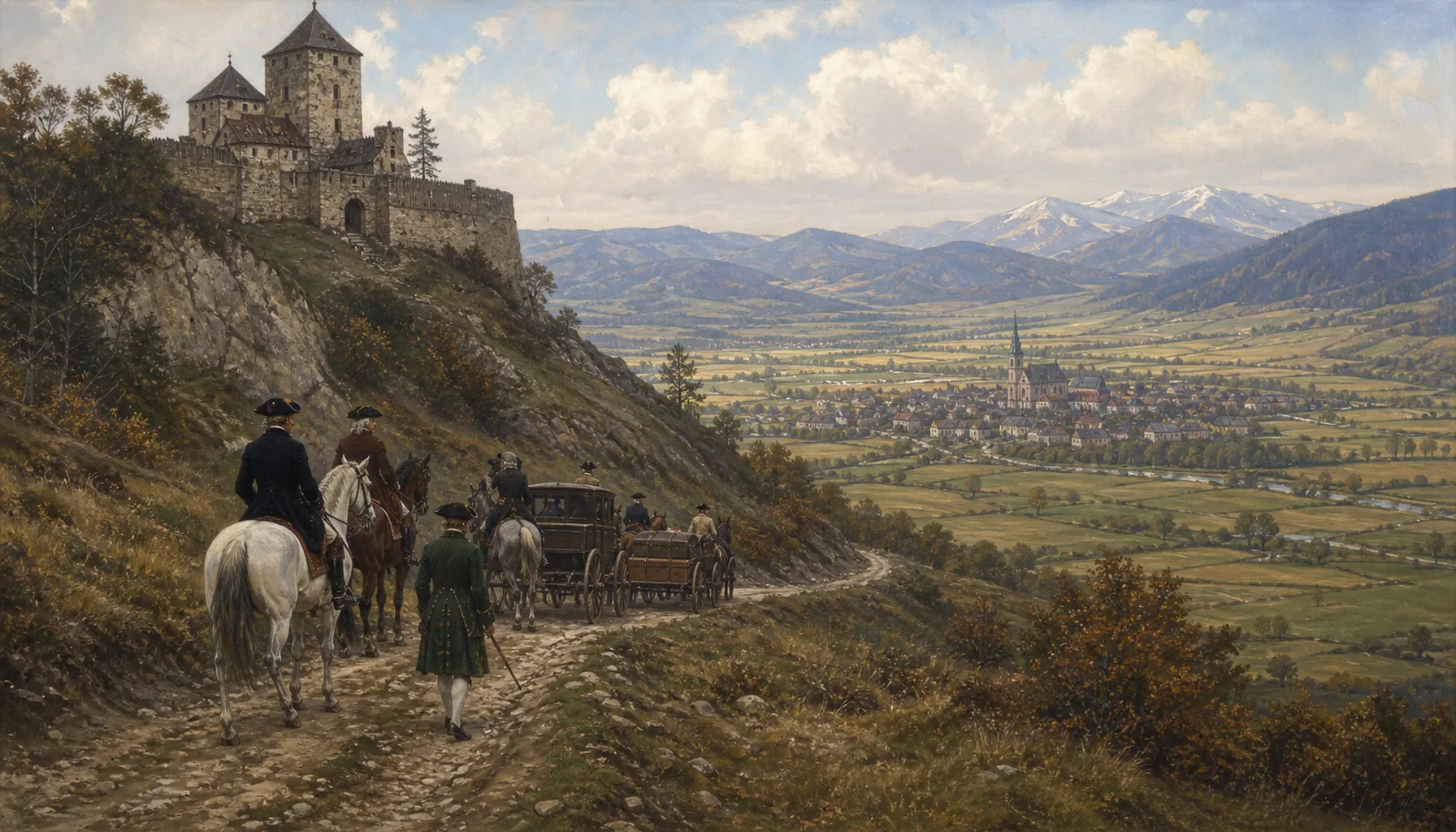
Around the middle of the eighteenth century the county administration left the castle and moved down into the basin, to the market town of Turčiansky Svätý Martin — today simply Martin. The reason was ordinary and practical: nobody needed a defensible rock to keep papers on any more, and a county office works better where the roads meet than at the top of a climb. The Révays kept their manor and went on living in it, but the fortress around it now had no job to do, and a building with no job stops being repaired. Martin's later career as the chosen address of Slovak national culture begins in this handover, with the business the castle passed down to it.Okolo polovice 18. storočia opustila stoličná správa hrad a presťahovala sa dolu do kotliny, do mestečka Turčiansky Svätý Martin — dnes jednoducho Martin. Dôvod bol celkom prozaický: brániteľná skala už na uskladnenie papierov nebola potrebná a stoličný úrad funguje lepšie tam, kde sa stretávajú cesty, než na konci stúpania. Révaiovci si kaštieľ ponechali a naďalej v ňom bývali, no pevnosť okolo neho už nemala čo robiť — a budova bez úlohy sa prestáva opravovať. Neskoršia dráha Martina ako zvolenej adresy slovenskej národnej kultúry sa začína práve týmto odovzdaním, agendou, ktorú mu hrad zanechal.