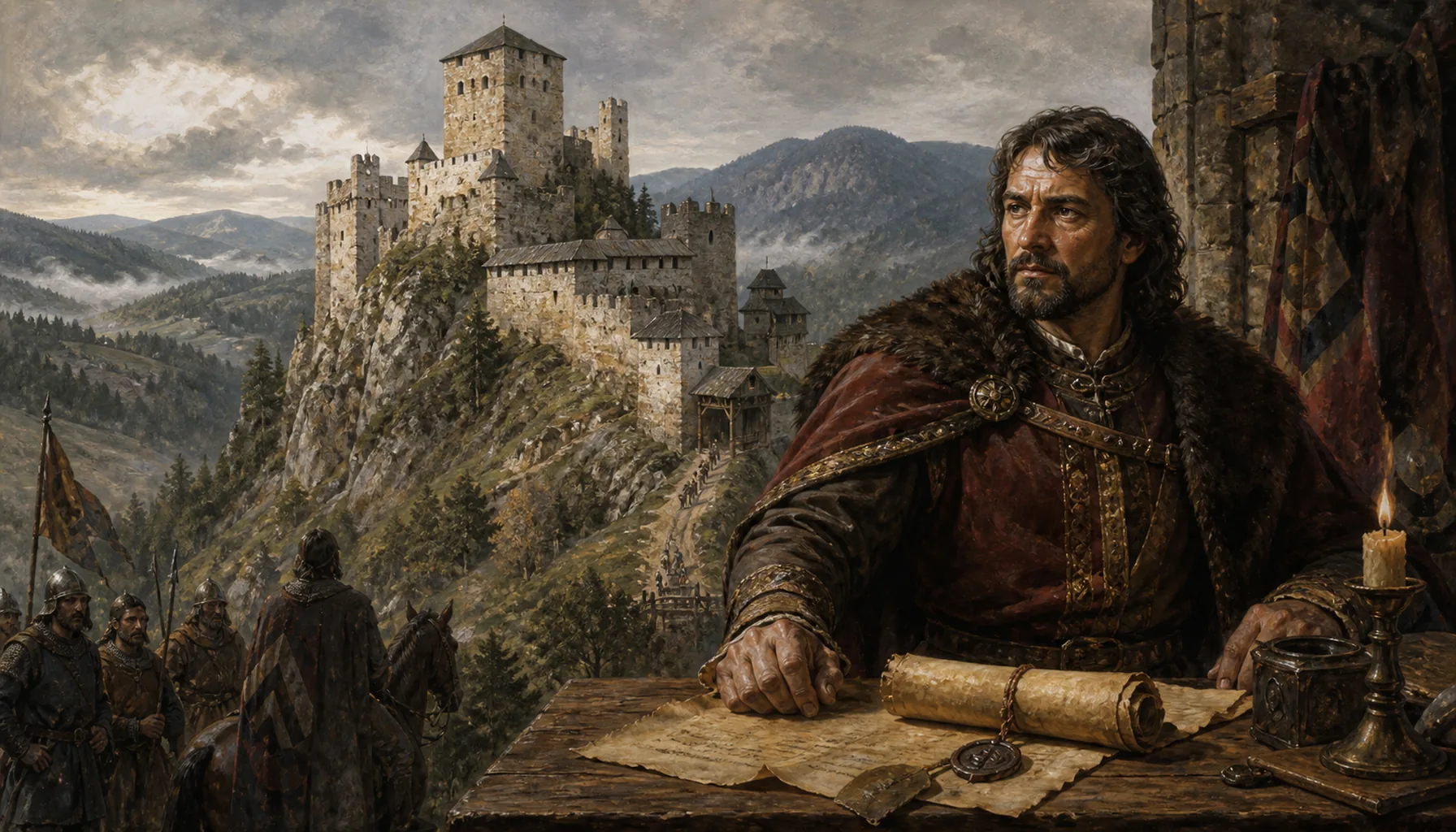
The oldest written mention of Lietava comes from 1318 — worth pausing on, because a first mention is a fact about a surviving document and not about when the walls went up. By then the crest lay inside the reach of Matúš Čák of Trenčín, the oligarch who for a generation ran most of what is now western Slovakia as though it were his own country, taking notice of the king only when it suited him. He died in 1321 and his lordship fell apart within months; the troops of King Charles I took the castle back and it returned to the Balassas. Seen from the valley the walls still read as an outcrop rather than a building, which is exactly what made the site worth fighting over.Najstaršia písomná zmienka o Lietave pochádza z roku 1318 — a oplatí sa pri tom zastaviť, lebo prvá zmienka je fakt o zachovanej listine, nie o tom, kedy vyrástli múry. Vtedy už hrebeň patril do sféry Matúša Čáka Trenčianskeho, oligarchu, ktorý celú jednu generáciu spravoval väčšinu dnešného západného Slovenska ako vlastnú krajinu a kráľa bral do úvahy, len keď sa mu to hodilo. Zomrel roku 1321 a jeho panstvo sa v priebehu mesiacov rozsypalo; hrad získali vojská kráľa Karola Róberta a vrátil sa Balašovcom. Z údolia pôsobia hradby dodnes skôr ako skalné bralo než ako stavba — a práve preto stálo za to o toto miesto bojovať.