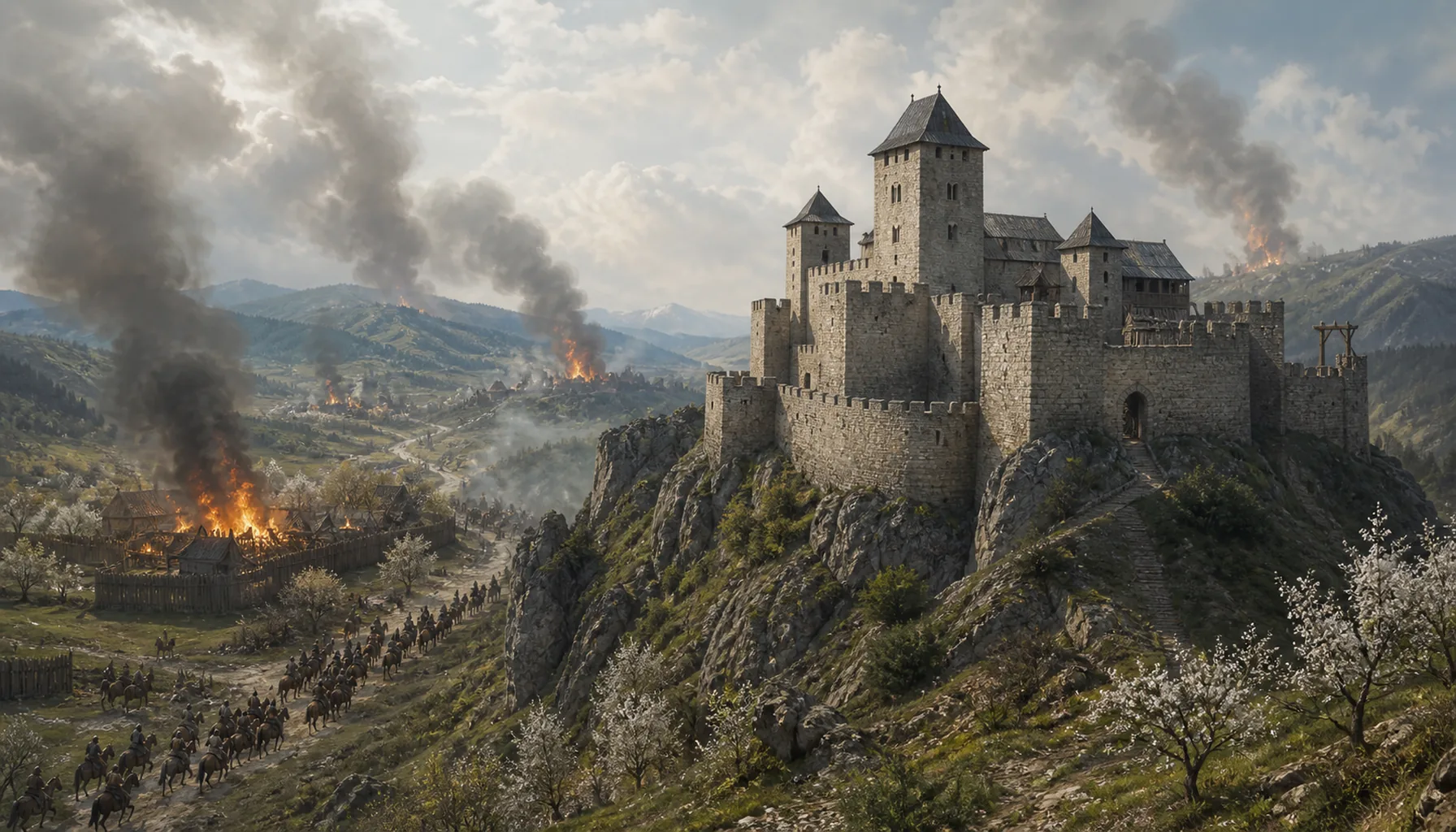
In the spring of 1241 a Mongol army destroyed the Hungarian royal host at Muhi and rode through the kingdom; what burned was mostly wood, because most fortification in the country still was wood. King Béla IV's answer was a programme of stone castles on rock, and Lietava is one of the castles that came out of it — the sources place its building after 1241, on a limestone crest that barely needed a mason's help to be defensible. Nothing here fell to the Mongols for the simple reason that nothing here was standing yet. Slovak accounts credit the work to the Balassa family; whoever laid the first stone, the shape of this place is the shape of the fear that came out of 1241.Na jar roku 1241 rozdrvilo mongolské vojsko uhorskú kráľovskú armádu pri Mohi a prehnalo sa kráľovstvom; horelo najmä drevo, lebo väčšina vtedajších opevnení bola drevená. Odpoveďou kráľa Bela IV. bol program kamenných hradov na skalách a Lietava je jedným z hradov, ktoré z neho vzišli — pramene kladú jej stavbu do obdobia po roku 1241, na vápencový hrebeň, ktorý na obranu takmer nepotreboval murára. Mongolom tu nepadlo nič, a to z jednoduchého dôvodu: nestálo tu ešte nič. Slovenské pramene pripisujú stavbu Balašovcom; nech už prvý kameň položil ktokoľvek, tvar tohto miesta je tvarom strachu, ktorý zostal po roku 1241.