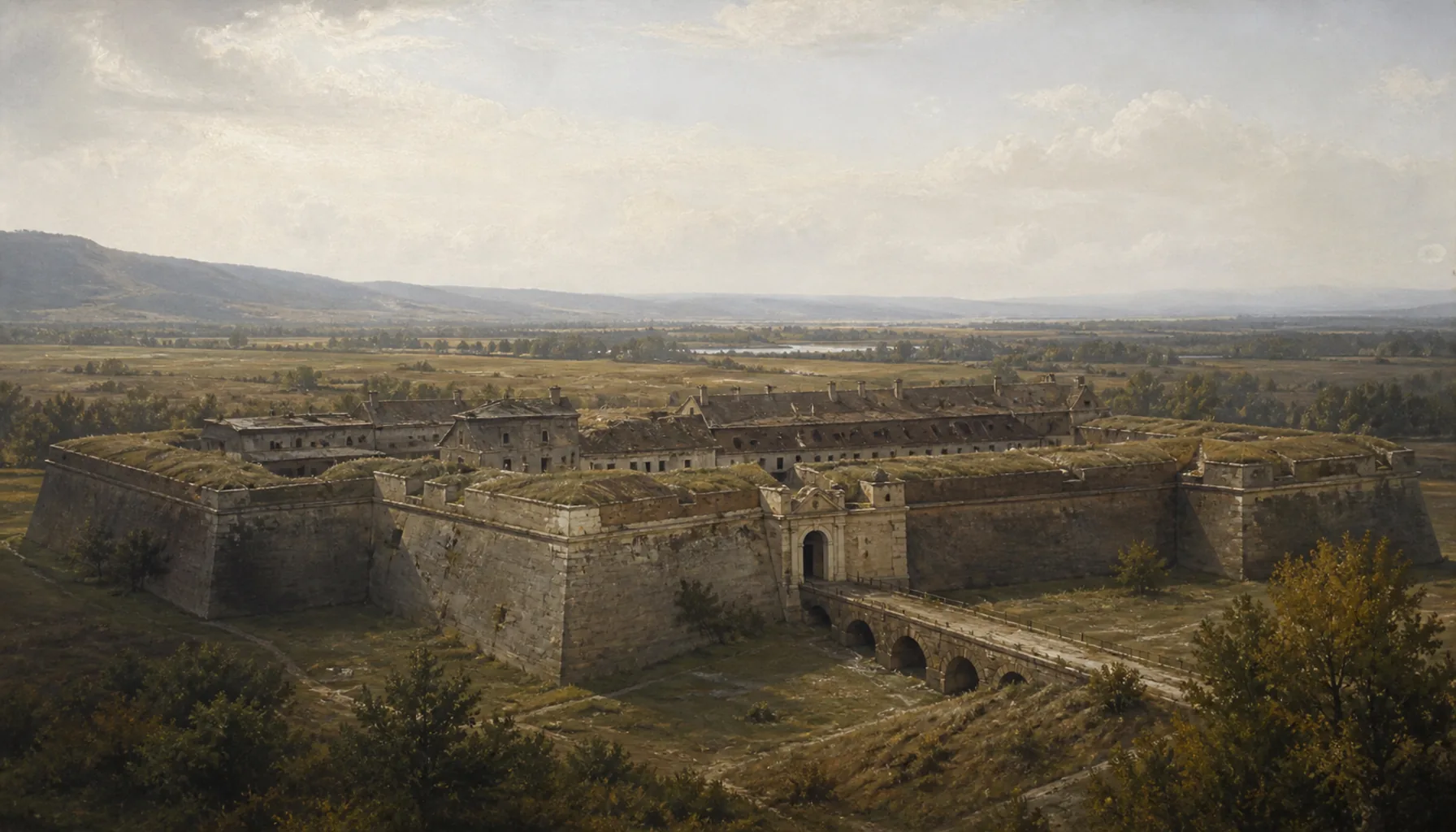
Once the Ottoman frontier had been pushed far to the south, a fortress deep behind the lines had nothing to defend. Leopoldov became barracks and military stores, and the little town outside the walls settled into the work of feeding, supplying and burying soldiers. Its Slovak name was simply Mestečko — "the little town" — while its German and Hungarian names, Neustadl and Újváros, both mean nothing grander than "new town": the fortress kept the imperial name and the settlement did not take it until the twentieth century. The parish church of St Ignatius of Loyola was built in 1712, burned in 1728, and a new church was consecrated in 1803.Keď sa osmanská hranica posunula ďaleko na juh, pevnosť hlboko v zázemí nemala čo brániť. Z Leopoldova sa stali kasárne a vojenské sklady a mestečko pod hradbami žilo z toho, že vojakov živilo, zásobovalo a pochovávalo. Po slovensky sa volalo jednoducho Mestečko, po nemecky Neustadl a po maďarsky Újváros — a oba tie cudzie názvy znamenajú to isté, nové mesto. Honosné meno si nechala pevnosť, osada ho prevzala až v dvadsiatom storočí. Farský kostol svätého Ignáca z Loyoly postavili roku 1712, roku 1728 vyhorel a nový vysvätili roku 1803.