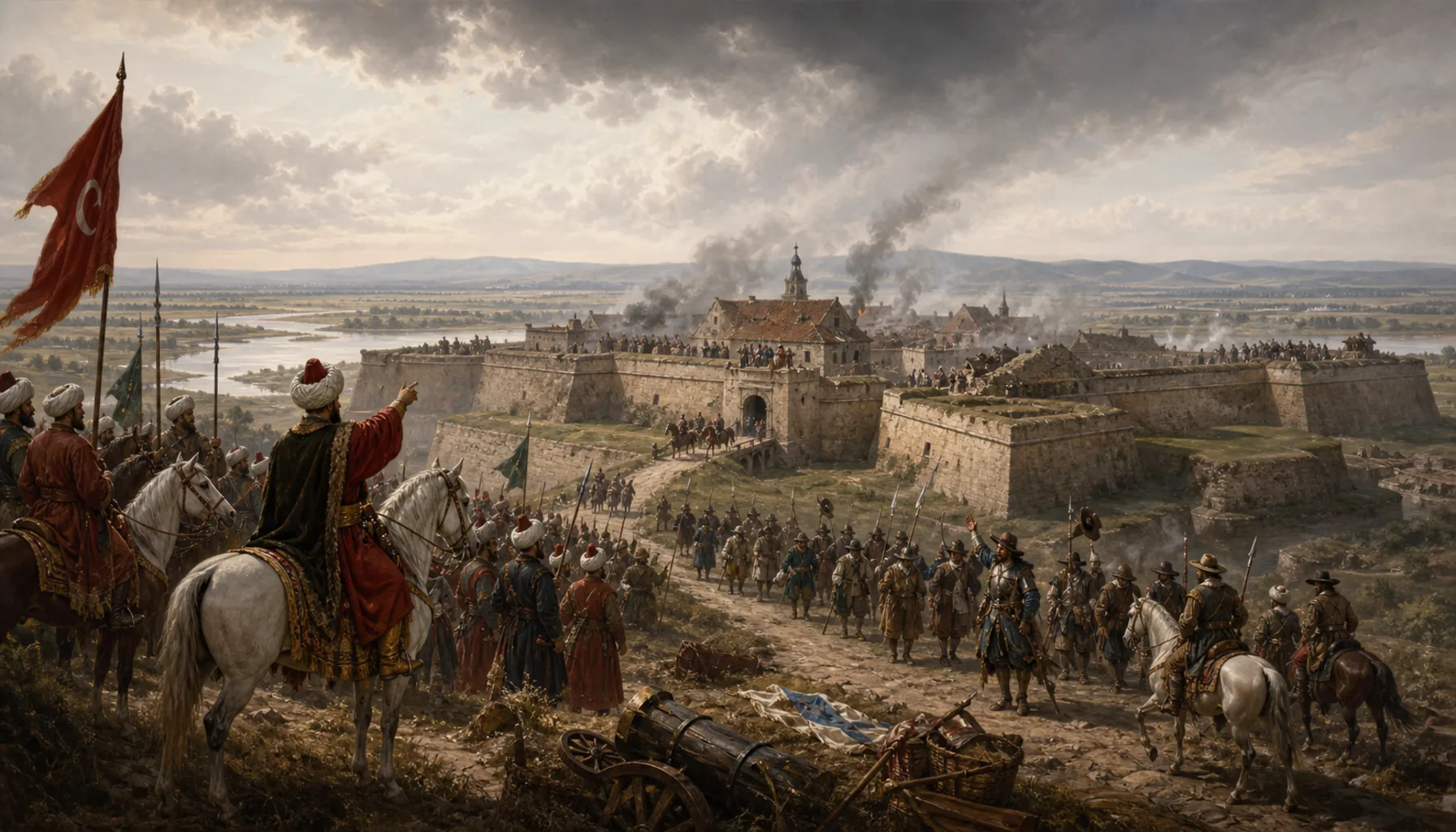
On 26 September 1663 the Ottoman army took Nové Zámky, the strongest fortress on the Habsburg frontier, and the whole defensive line of the Váh and the Nitra was suddenly open. Emperor Leopold I ordered a replacement built at once, on flat ground beside the Váh opposite the castle town of Hlohovec, where it could watch the river crossing and the road up the valley. The foundation stone was laid in September 1665 — Slovak sources give the 16th or the 19th — and the work was driven through by the imperial field marshal Louis Raduit de Souches, with the military architect Giuseppe Priami drawing the plans. The fortress was named Leopoldstadt, Leopold's town, and the Slovak form of that name is the town's today.26. septembra 1663 padli Nové Zámky, najsilnejšia pevnosť na habsburskej hranici, a obranná línia Váhu a Nitry zostala zrazu otvorená. Cisár Leopold I. dal hneď stavať náhradu — na rovine pri Váhu oproti hradnému Hlohovcu, odkiaľ bolo vidieť na brod aj na cestu hore dolinou. Základný kameň položili v septembri 1665, pramene uvádzajú 16. alebo 19. september. Stavbu presadzoval cisársky poľný maršal Louis Raduit de Souches, plány kreslil vojenský architekt Giuseppe Priami a pevnosť dostala meno Leopoldstadt, teda Leopoldovo mesto. Z neho je dnešný Leopoldov.