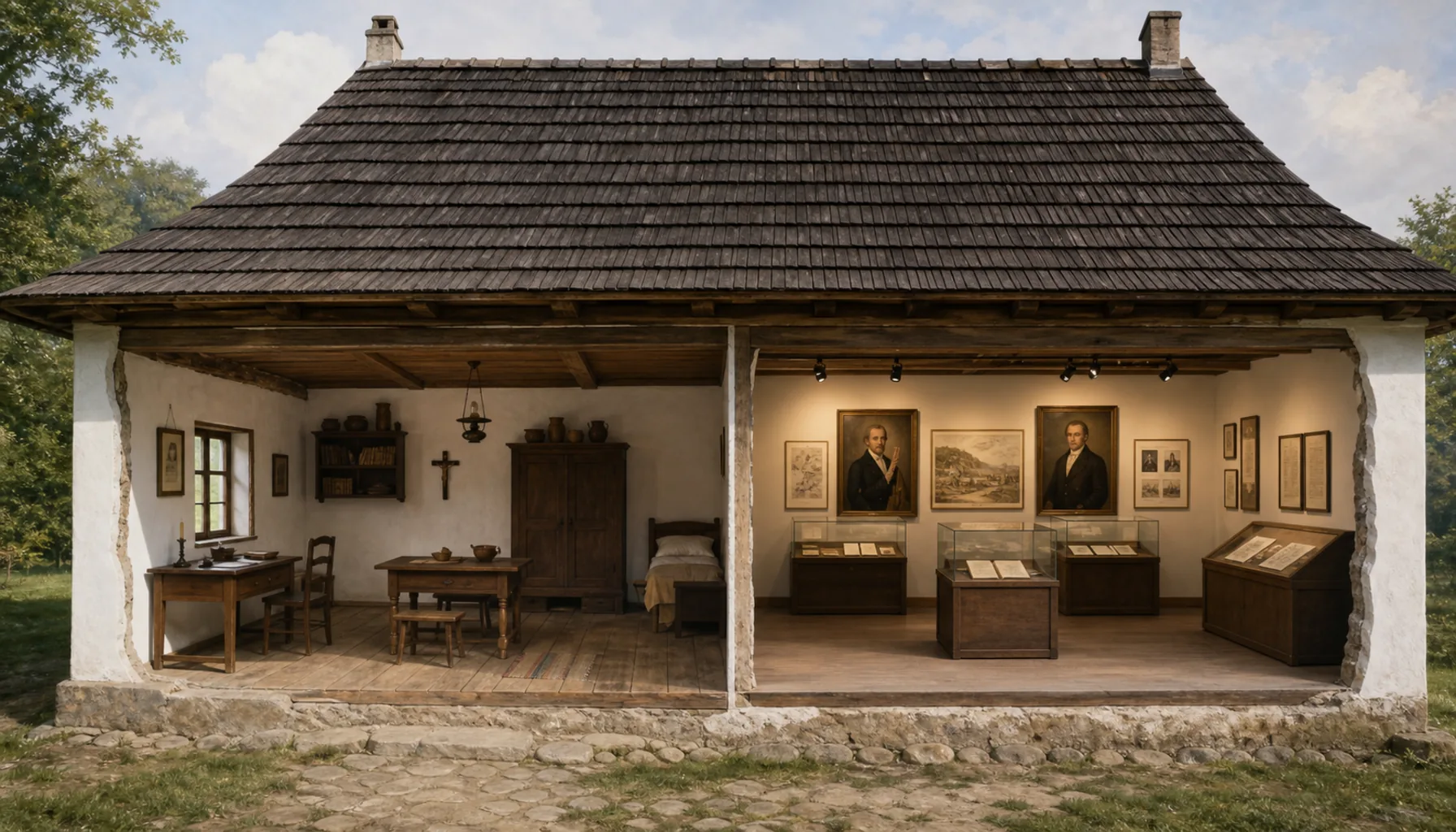
The birth house is now a museum of both men, a branch of the Trenčín museum: part of it is furnished as a village teacher's household of about 1815, the rest sets out the two lives. Nothing else like it exists in Slovakia — one ordinary building that produced the man who made the written language and the man who made 1968. Neither is settled history: Štúr's language politics and Dubček's part in what came after August 1968 are still live arguments in Slovak public life. The two-hundredth anniversary of Štúr's birth in 2015 was marked across the country and the village filled up for it; the rest of the year Uhrovec is a quiet place at the top of a valley with no railway.Rodný dom je dnes múzeom oboch mužov a pobočkou Trenčianskeho múzea: časť je zariadená ako domácnosť dedinského učiteľa okolo roku 1815, zvyšok predstavuje dva životy. Nič podobné na Slovensku niet — jedna obyčajná budova, z ktorej vyšiel muž, čo dal národu spisovný jazyk, aj muž, čo dal svetu rok 1968. Ani jedno nie je uzavretá história: Štúrova jazyková politika aj Dubčekov podiel na tom, čo prišlo po auguste 1968, sú stále živé spory. Dvesté výročie Štúrovho narodenia si v roku 2015 pripomínala celá krajina a obec sa vtedy zaplnila; po zvyšok roka je Uhrovec tichým miestom na konci doliny bez železnice.