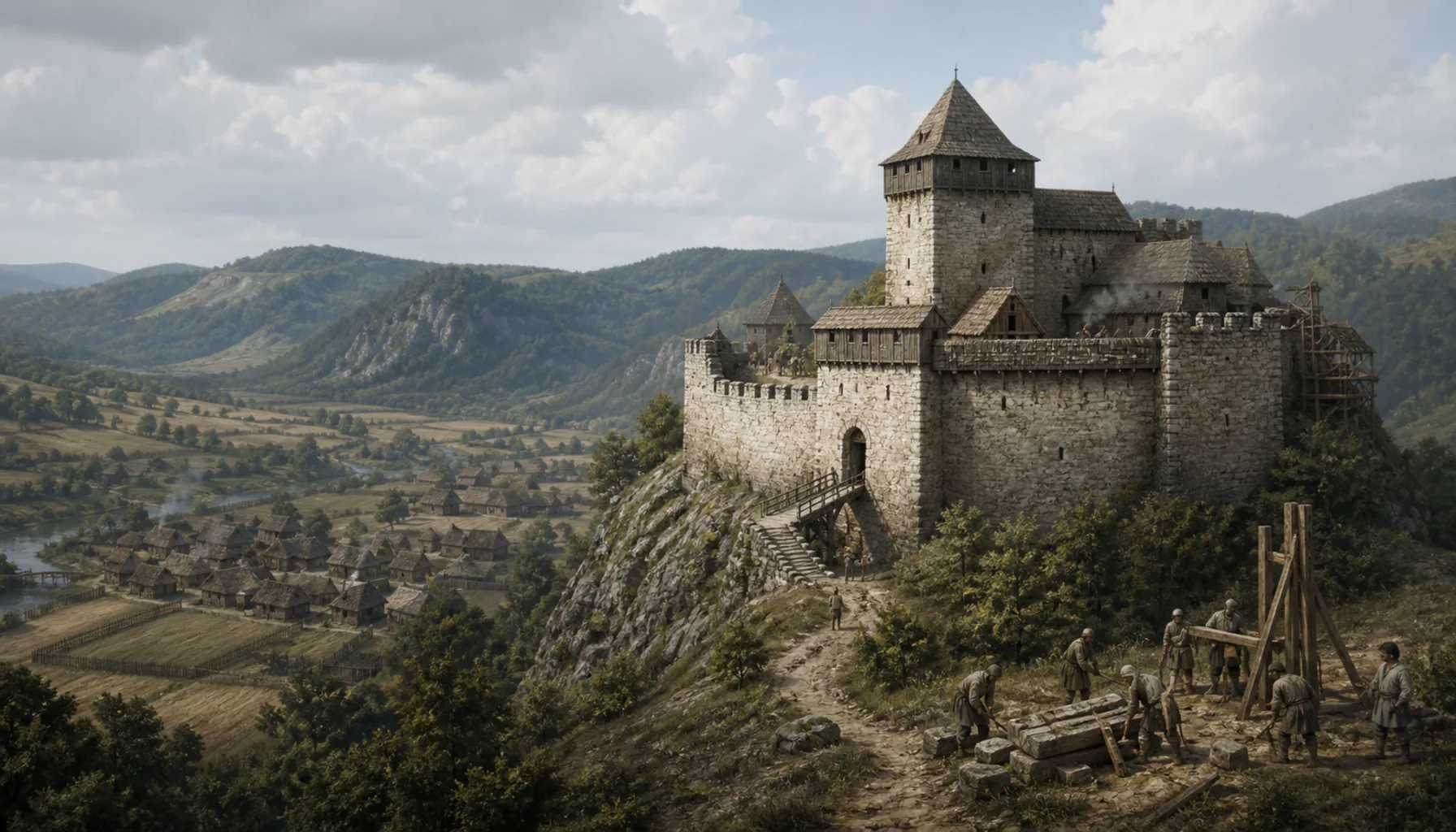
The Mongol armies broke the Kingdom of Hungary in 1241 and were gone within a year, but the fright lasted. King Béla IV concluded that the country needed castles of stone rather than forts of earth and timber, and the decades after the invasion are when most Slovak castles went up. Uhrovec is one of them: the village and its castle both first appear in writing in 1258, and the castle on the ridge above the Bebrava was built in the middle of the thirteenth century, in the late Romanesque style, on ground chosen because it was hard to reach. So the ruin above the village should not be read as something the Mongols destroyed — it is something the Mongols are the reason for.Mongolské vojská v roku 1241 rozvrátili Uhorské kráľovstvo a do roka boli preč, ľak však zostal. Kráľ Belo IV. si z toho vzal poučenie, že krajina potrebuje kamenné hrady, nie hlinené a drevené hrádky, a práve v desaťročiach po vpáde vyrástla väčšina slovenských hradov. Uhrovec patrí medzi ne: obec aj hrad sa prvý raz spomínajú v listine z roku 1258 a hrad na hrebeni nad Bebravou postavili v polovici trinásteho storočia, neskororománsky, na mieste vybranom práve pre svoju neprístupnosť. Zrúcaninu nad dedinou teda netreba čítať tak, že ju zničili Mongoli — ale tak, že Mongoli sú dôvod, prečo vôbec vznikla.