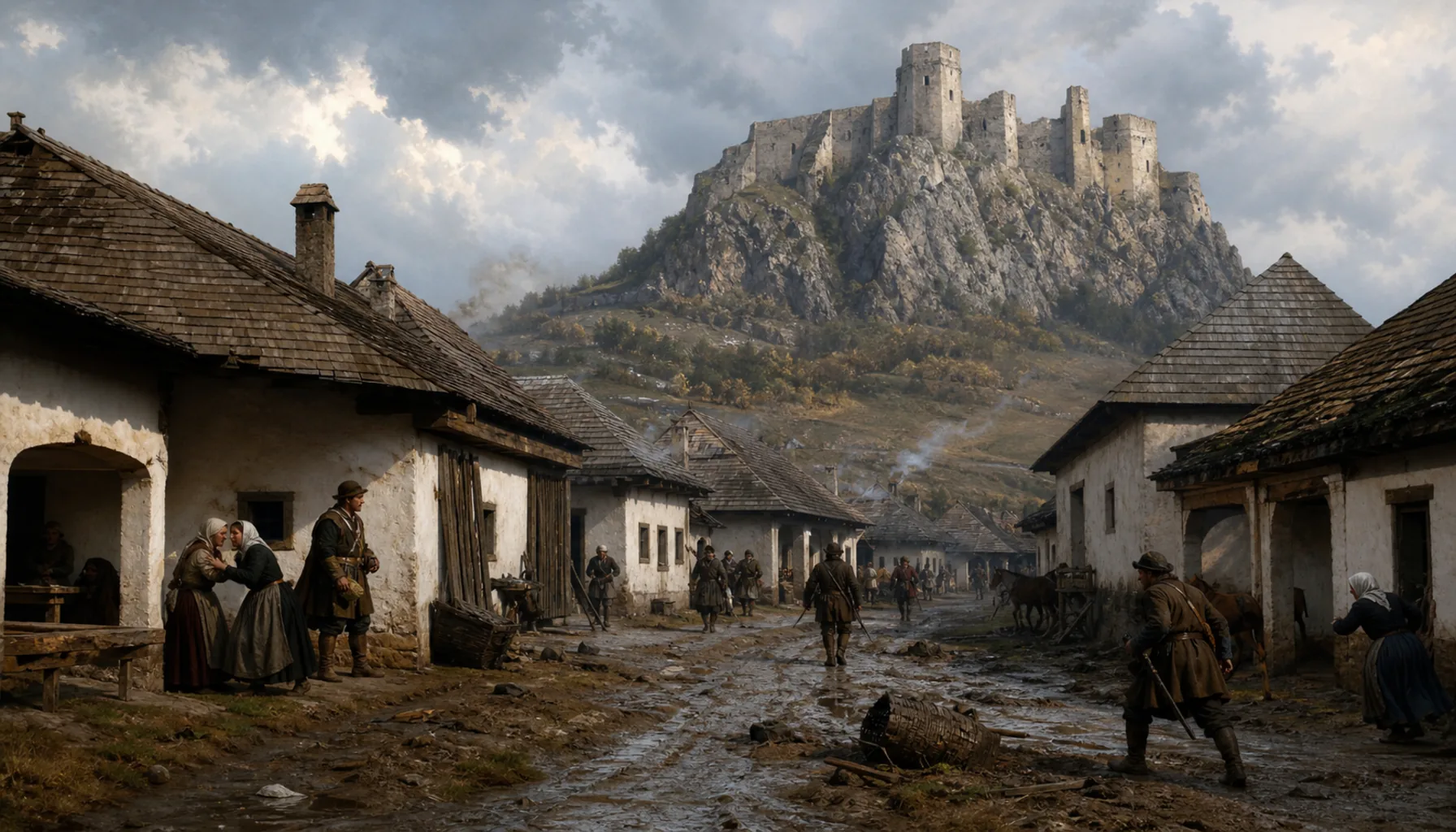
After 1526 the Ottoman frontier moved north and this whole valley learned to live with raids; in 1599 a raiding force came up the Váh and was beaten off from the castle rock, while open villages had nothing to hide behind. But the thing that really shaped Beckov's streets in these two centuries was not war — it was inheritance. The estate ended up with a crowd of co-owners, and each of them wanted a house near the castle, so the village filled with kúrie: modest one- and two-storey manor houses of the lesser nobility, not palaces. The Renaissance Kúria Dubnických dates from the middle of the sixteenth century and the Kúria Ambrovcov from about 1648, and a county orphanage from the mid-seventeenth century still stands in the street as well.Po roku 1526 sa osmanská hranica posunula na sever a celá dolina sa naučila žiť s nájazdmi; roku 1599 pritiahol povážskou dolinou nájazd, ktorý od hradného brala odrazili, kým otvorené dediny nemali za čo sa skryť. To, čo však beckovské ulice v týchto dvoch storočiach naozaj utváralo, nebola vojna, ale dedenie. Panstvo skončilo s celým zástupom spolumajiteľov a každý z nich chcel dom blízko hradu, takže sa obec zaplnila kúriami — skromnými prízemnými a poschodovými domami nižšej šľachty, nie palácmi. Renesančná Kúria Dubnických pochádza z polovice šestnásteho storočia, Kúria Ambrovcov približne z roku 1648 a v ulici stojí aj župný sirotinec z polovice sedemnásteho storočia.