The Tatras · VillagesTatry · Obce
A village at the head of the Váh valley with a show cave famous for its cave-bear bones, and a townscape that no longer exists: the timber Važec that Ladislav Medňanský painted burned in 1931.Obec v doline horného Váhu so sprístupnenou jaskyňou známou kosťami jaskynných medveďov a s obrazom dediny, ktorý už neexistuje: drevený Važec, ktorý maľoval Ladislav Medňanský, zhorel v roku 1931.
Važec lies in the upper Váh valley just west of the Štrba saddle, at the eastern end of Liptov, with the Low Tatras rising to the south and the High Tatras standing along the northern skyline. It is high, open, treeless farming country, and the two great ranges face each other across it.Važec leží v doline horného Váhu kúsok na západ od Štrbského sedla, na východnom konci Liptova, s Nízkymi Tatrami dvíhajúcimi sa na juhu a Vysokými Tatrami na severnom obzore. Je to vysoká, otvorená, bezlesá roľnícka krajina a dve veľké pohoria si cez ňu hľadia z očí do očí.
The village is medieval, and it is where it is because the valley is the road: the route between Liptov and Spiš has run this way for as long as there has been traffic. Its living came from cattle, sheep, potatoes and timber. By the nineteenth century it had a reputation of another kind as well — built almost entirely of timber and laid out along its one street, it drew painters and photographers, Ladislav Medňanský above all, who painted the village and its people repeatedly and is closely tied to the place.Obec je stredoveká a leží tam, kde leží, pretože cestou je samotná dolina: trasa medzi Liptovom a Spišom vedie tadiaľto, odkedy sa tu vôbec cestuje. Živila sa dobytkom, ovcami, zemiakmi a drevom. V 19. storočí mala aj povesť iného druhu — bola postavená takmer celá z dreva a natiahnutá pozdĺž jedinej ulice, a tak sem chodili maliari a fotografi, predovšetkým Ladislav Medňanský, ktorý obec a jej ľudí maľoval opakovane a je s ňou pevne spätý.
Then in 1931 fire took most of it. A village of log houses under shingle roofs burns as one thing, and what stands in Važec today is largely what was rebuilt afterwards. It is the plainest illustration in this corner of the country of why so few timber villages survived to be protected.V roku 1931 potom väčšinu z toho vzal požiar. Dedina zrubových domov pod šindľovými strechami horí ako jeden celok a to, čo vo Važci stojí dnes, je z veľkej časti to, čo sa postavilo potom. Je to najnázornejšia ukážka toho, prečo sa v tomto kúte krajiny zachovalo tak málo drevených dedín, ktoré by sa dali chrániť.
Under the northern edge of the village, in the limestone, a cave was found in the 1920s whose floors turned out to be full of the bones of cave bears. It was opened to visitors between the wars and has been a show cave ever since.Pod severným okrajom obce, vo vápenci, našli v 20. rokoch 20. storočia jaskyňu, ktorej dná sa ukázali byť plné kostí jaskynných medveďov. Sprístupnili ju medzi vojnami a odvtedy je otvorená verejnosti.
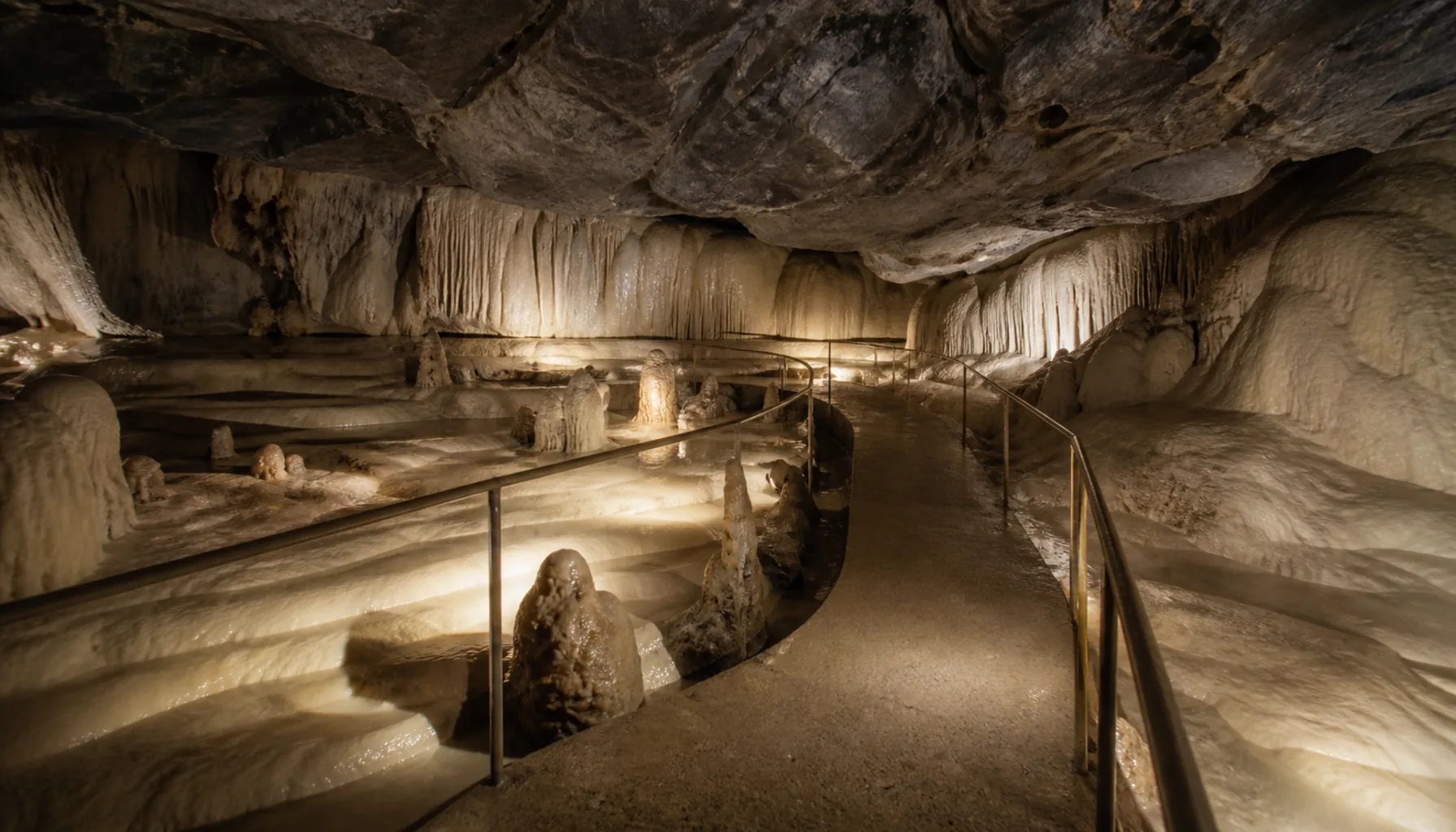
Važecká jaskyňa is what most people stop for: a short guided circuit through low chambers of pale sinter, well under an hour underground, with the bear bones displayed among the formations. It is one of the state-run show caves, so visits are guided, opening is seasonal, and the temperature inside stays in single figures whatever the month.Važecká jaskyňa je to, kvôli čomu sa väčšina ľudí zastaví: krátky prehliadkový okruh nízkymi sieňami so svetlým sintrom, výrazne menej než hodina pod zemou, a medzi útvarmi vystavené medvedie kosti. Patrí medzi štátom spravované sprístupnené jaskyne, takže sa chodí so sprievodcom, otvorené je sezónne a teplota vnútri sa drží na jednociferných hodnotách bez ohľadu na mesiac.
Above ground it is fairer to say plainly what Važec is not. It is not Ždiar; it lost its historic fabric and there is no protected street here. What survives is the setting and the plan — a long street village on a high open valley floor with a great mountain range at each end of the view — and a scattering of older buildings among the newer ones.Nad zemou je poctivejšie povedať rovno, čím Važec nie je. Nie je to Ždiar; o svoju historickú zástavbu prišiel a chránená ulica tu nie je. Zachovala sa poloha a pôdorys — dlhá ulicová dedina na vysokom otvorenom dne doliny s veľkým pohorím na oboch koncoch výhľadu — a hŕstka starších stavieb medzi novšími.
Medňanský's paintings are in galleries rather than in the village, and there is a permanent display of his work not far away, at the manor of Strážky near Spišská Belá.Medňanského obrazy sú v galériách, nie v obci, a neďaleko odtiaľto, v kaštieli Strážky pri Spišskej Belej, je stála expozícia jeho tvorby.
Važec is an ordinary working village on a busy corridor, not a heritage site, and the cave is the only thing here with opening hours. Read it that way and it holds up: a place to see one good cave, look at two mountain ranges from the middle, and understand what a single fire can take from a village.Važec je bežnou fungujúcou obcou na rušnom koridore, nie pamiatkovým miestom, a jaskyňa je tu jediná vec s otváracími hodinami. Ak sa naň takto pozeráte, obstojí: miesto, kde uvidíte jednu dobrú jaskyňu, pozriete si dve pohoria zo stredu medzi nimi a pochopíte, čo dokáže jediný požiar vziať dedine.
Cave tours run at fixed times and in limited numbers, and the last tour of the day is earlier than people expect. Confirm the day's opening before you drive out, because there is no second attraction here to fall back on.Prehliadky jaskyne sa konajú v pevných časoch a v obmedzenom počte a posledná z nich býva skôr, než ľudia čakajú. Otváranie si overte pred cestou, lebo druhá atrakcia, na ktorú by ste sa presunuli, tu nie je.
Važec has its own station on the Žilina–Košice main line, and buses run along the valley from Liptovský Hrádok and from Poprad. By car it is a short turn off the main road up the Váh, and the cave is signposted from the village.Važec má vlastnú stanicu na hlavnej trati Žilina – Košice a dolinou premávajú autobusy z Liptovského Hrádku a z Popradu. Autom ide o krátku odbočku z hlavnej cesty hore Váhom a jaskyňa je z obce značená.
Sixteen videos for Važec.Šestnásť videí — Važec.