The town below the Dukla Pass, rebuilt almost from nothing after the battle of 1944, and the institutional centre of Rusyn and Ukrainian culture in Slovakia — a museum, an open-air village and a battlefield that runs twenty kilometres up the road.Mesto pod Duklianskym priesmykom, po bitke v roku 1944 postavené takmer nanovo, a inštitucionálne centrum rusínskej a ukrajinskej kultúry na Slovensku — múzeum, skanzen a bojisko, ktoré sa tiahne dvadsať kilometrov popri ceste.
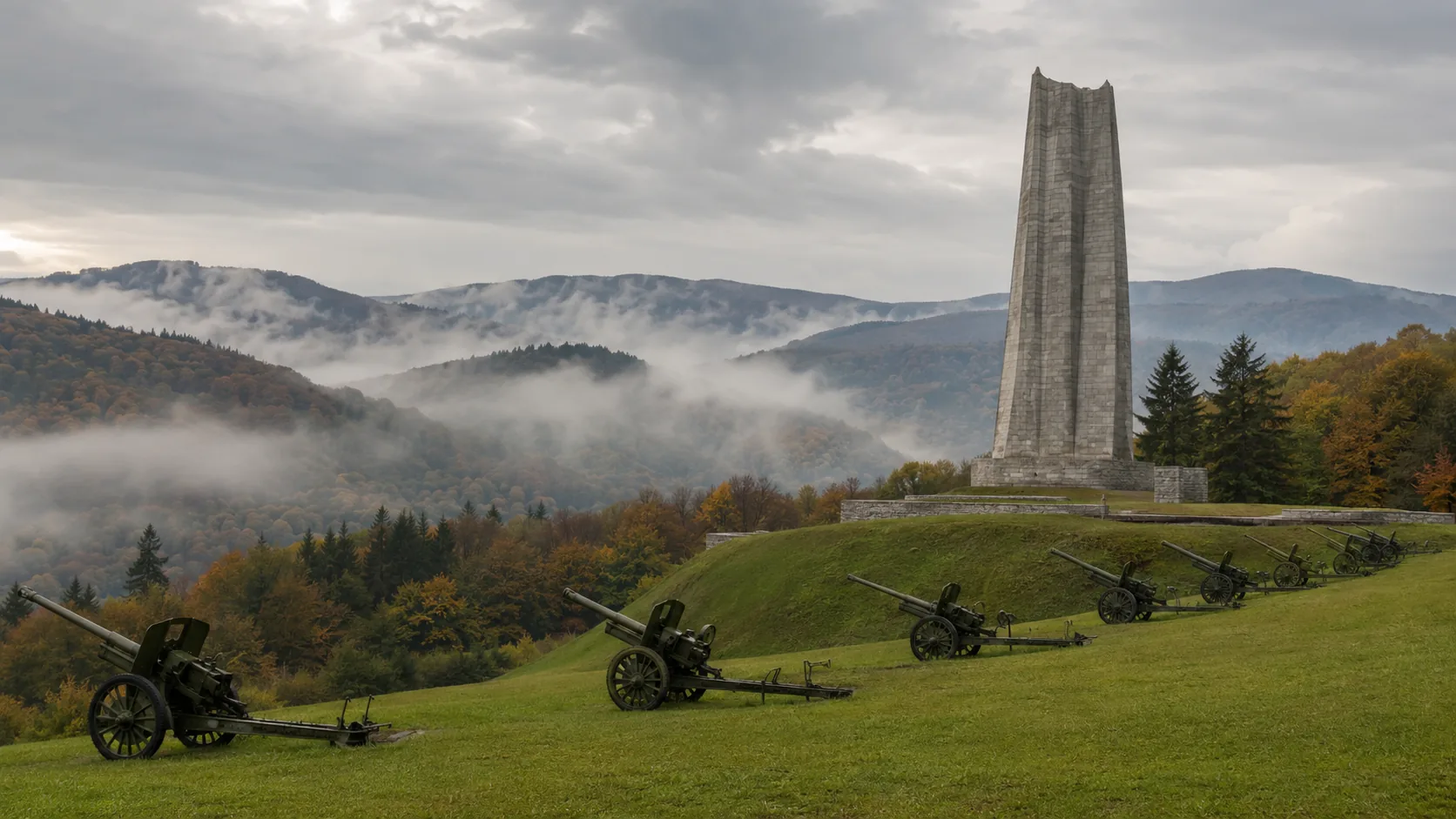
The battlefield memorial at the Dukla Pass north of SvidníkPamätník bojiska na Duklianskom priesmyku severne od Svidníka
Where it standsKde leží
Svidník stands where the Ladomirka joins the Ondava, in the rounded hill country of the Low Beskids, about fifty kilometres north of Prešov and some twenty short of the Polish border. The Dukla Pass above it is the lowest crossing of the main Carpathian ridge on the whole Slovak-Polish frontier.Svidník leží tam, kde sa Ladomirka vlieva do Ondavy, v oblej vrchovine Nízkych Beskýd, asi päťdesiat kilometrov severne od Prešova a dvadsať kilometrov pred poľskou hranicou. Dukliansky priesmyk nad ním je najnižším prechodom cez hlavný karpatský hrebeň na celej slovensko-poľskej hranici.
The villages around are Rusyn, Greek Catholic or Orthodox, and many of them have a wooden church.Okolité dediny sú rusínske, gréckokatolícke alebo pravoslávne a v mnohých z nich stojí drevený chrám.
The storyHistória
Svidník was formed from two old market villages that merged in the twentieth century. What defines it now happened in the autumn of 1944, when the Red Army and the Czechoslovak Army Corps fought their way over the Dukla Pass towards the Slovak National Uprising.Svidník vznikol spojením dvoch starých trhových obcí v 20. storočí. To, čo ho dnes určuje, sa však stalo na jeseň 1944, keď sa Červená armáda a československý armádny zbor prebíjali cez Dukliansky priesmyk na pomoc Slovenskému národnému povstaniu.
The Carpathian-Dukla operation lasted nearly two months and cost tens of thousands of casualties on both sides. The valley at Kapišová, where a German counter-attack destroyed a Soviet tank column, has been called the Valley of Death ever since. Svidník itself was almost entirely destroyed and rebuilt after the war, which is why the town looks so much younger than the country around it.Karpatsko-duklianska operácia trvala takmer dva mesiace a stála desaťtisíce mŕtvych a ranených na oboch stranách. Údolie pri Kapišovej, kde nemecký protiútok zničil sovietsku tankovú kolónu, sa odvtedy volá Údolie smrti. Samotný Svidník bol takmer úplne zničený a po vojne ho postavili nanovo — preto pôsobí oveľa mladšie než krajina okolo neho.
Since the 1950s the town has also been the institutional home of the Rusyn and Ukrainian minority, with a museum, archives and an annual festival.Od 50. rokov je mesto zároveň inštitucionálnym domovom rusínskej a ukrajinskej menšiny — s múzeom, archívmi a každoročným festivalom.
What to seeČo vidieť
The museum of Ukrainian culture holds the ethnographic and documentary collections of the region's Rusyn and Ukrainian villages, and its open-air museum on the edge of town gathers farmsteads, workshops and a wooden church brought in from the district.Múzeum ukrajinskej kultúry uchováva národopisné a dokumentačné zbierky rusínskych a ukrajinských obcí kraja a jeho skanzen na okraji mesta sústreďuje usadlosti, dielne a drevený chrám prenesený z okresu.
The military museum and the memorial with its ossuary commemorate the 1944 battle; tanks, guns and aircraft stand outside them. The battlefield continues north along the road — the Valley of Death, the Czechoslovak and German cemeteries, and the memorial and observation tower at the pass itself, on the border.Vojenské múzeum a pamätník s kostnicou pripomínajú bitku z roku 1944; pred nimi stoja tanky, delá a lietadlá. Bojisko pokračuje na sever popri ceste — Údolie smrti, československý aj nemecký cintorín a pamätník s vyhliadkovou vežou priamo v priesmyku na hranici.
The wooden churches of the district — Bodružal and Ladomirová among them, both on the World Heritage List — are within a short drive, and the road that links them is one of the finest in the region.Drevené chrámy okresu — medzi nimi Bodružal a Ladomirová, oba v zozname svetového dedičstva — sú na krátku cestu autom a cesta, ktorá ich spája, patrí k najkrajším v kraji.
Work and industryPráca a priemysel
Svidník is a district seat, and public administration, schools, health care and retail employ much of the town. Light manufacturing and timber make up the rest; the district is among the poorest in Slovakia and long-term work abroad is a fact of life.Svidník je okresným mestom a veľkú časť obyvateľov zamestnáva verejná správa, školy, zdravotníctvo a obchod. Zvyšok tvorí ľahká výroba a drevo; okres patrí k najchudobnejším na Slovensku a dlhodobá práca v zahraničí je tu súčasťou života.
Commemorative and cultural tourism is a real part of the local economy — the anniversary of the battle in autumn and the festival of Rusyn and Ukrainian culture in summer are the two dates that fill the town.Skutočnou súčasťou miestnej ekonomiky je pietny a kultúrny cestovný ruch — výročie bitky na jeseň a festival rusínskej a ukrajinskej kultúry v lete sú dva termíny, keď je mesto plné.
Getting thereAko sa tam dostať
There is no railway. The main road from Prešov to the Dukla Pass and Poland runs through the town, and buses from Prešov, Bardejov and Humenné are the way in; a car is the only practical way to reach the wooden churches, since services up the side valleys are few.Železnica sem nevedie. Mestom prechádza hlavná cesta z Prešova na Dukliansky priesmyk a do Poľska a prichádza sa autobusmi z Prešova, Bardejova a Humenného; k dreveným chrámom sa prakticky dostanete iba autom, lebo do bočných dolín ide spojov málo.
Explore SvidníkObjavujte Svidník
Every part of this place with a page of its own.Každá časť tohto miesta, ktorá má vlastnú stránku.