Svidník · Below the Dukla PassSvidník · Pod Duklianskym priesmykom
Culture in SvidníkKultúra vo Svidníku
A town rebuilt from almost nothing after 1944, holding the museums of Rusyn and Ukrainian culture, an open-air village on its edge, and a battlefield that runs twenty kilometres up the road to the pass.Mesto postavené po roku 1944 takmer od nuly, s múzeami rusínskej a ukrajinskej kultúry, so skanzenom na okraji a s bojiskom, ktoré sa tiahne dvadsať kilometrov cestou k priesmyku.
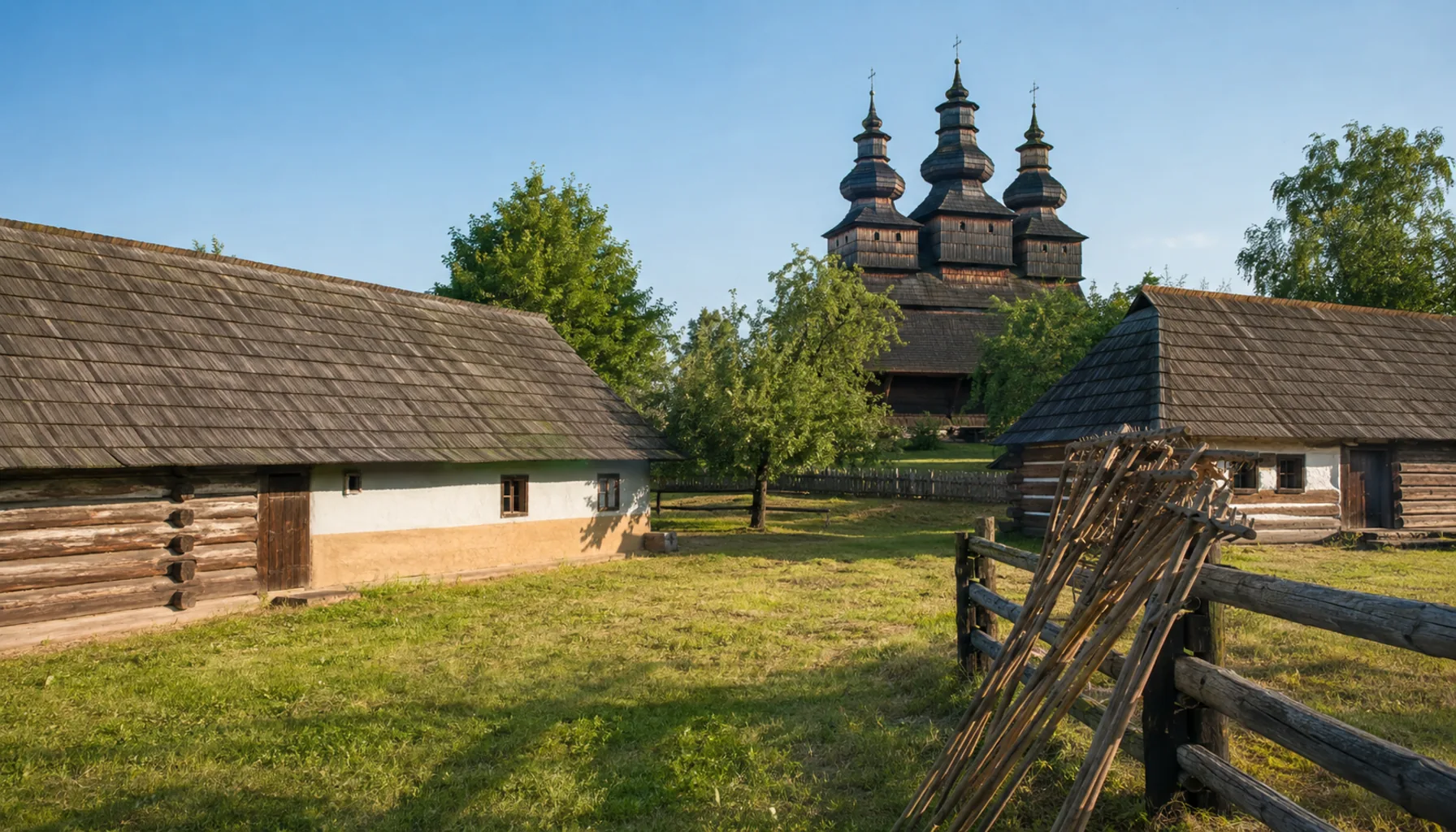
Log farmsteads and a wooden church in Svidník's open-air museum of Rusyn and Ukrainian village architecture.Zrubové usadlosti a drevený chrám vo svidníckom skanzene rusínskej a ukrajinskej dedinskej architektúry.
The year in SvidníkRok vo Svidníku
Two dates fill this town. In summer the festival of Rusyn and Ukrainian culture brings ensembles, families and returning emigrants from the whole of the north-east and from abroad; in autumn the anniversary of the 1944 battle brings a different crowd to the memorial and to the cemeteries along the road to the Dukla Pass. Between them they are a real part of the local economy, and they are the two occasions on which a district town of this size stops being quiet.Toto mesto zapĺňajú dva termíny. V lete privádzajú slávnosti rusínskej a ukrajinskej kultúry súbory, rodiny a vracajúcich sa vysťahovalcov z celého severovýchodu i zo zahraničia; na jeseň privedie výročie bojov roku 1944 celkom iné publikum k pamätníku a na cintoríny pri ceste k Duklianskemu priesmyku. Spolu tvoria skutočnú časť miestneho hospodárstva a sú dvoma príležitosťami, pri ktorých okresné mesto tejto veľkosti prestáva byť tiché.
The rest of the year is the ordinary one - market days, school and club events at the cultural centre - with the church calendars of the villages laid over it, since the district is Greek Catholic and Orthodox and the patronal feast of a village church is still the day people come home for. Programmes and dates are rebuilt annually and are worth checking against the town's and the museums' own listings rather than any page written elsewhere.Zvyšok roka je obyčajný - trhové dni, školské a záujmové podujatia v kultúrnom dome - a cez to sú prekryté cirkevné kalendáre dedín, keďže okres je gréckokatolícky a pravoslávny a odpust dedinského chrámu je stále dňom, na ktorý sa ľudia vracajú domov. Programy a termíny sa skladajú každý rok nanovo a treba si ich overiť v oznamoch mesta a múzeí, nie na stránke písanej inde.
Where culture livesKde žije kultúra
Svidník was given an institutional role in the 1950s and has kept it: this is where the Rusyn and Ukrainian culture of the north-east is collected, documented and shown. The museum was founded at Krásny Brod in 1956 and moved here in 1964, and it holds the ethnographic and documentary material of the region's villages. Its open-air museum on the edge of town opened in 1982 - ten hectares of log farmsteads, barns, a water mill, a windmill, and a wooden church of 1766 brought in from Nová Polianka.Svidník dostal v päťdesiatych rokoch inštitucionálnu úlohu a podržal si ju: práve tu sa zbiera, dokumentuje a vystavuje rusínska a ukrajinská kultúra severovýchodu. Múzeum založili v roku 1956 v Krásnom Brode a v roku 1964 ho presťahovali sem; drží národopisný a dokumentačný materiál dedín kraja. Jeho skanzen na okraji mesta otvorili v roku 1982 - desať hektárov zrubových usadlostí, stodôl, vodný mlyn, veterný mlyn a drevený kostolík z roku 1766, prenesený z Novej Polianky.
The battlefield has an institution of its own. The military museum was founded in 1965 and opened to the public on 4 October 1969, on the twenty-fifth anniversary of the fighting, with tanks, guns and aircraft standing outside it and an open-air display spread along the road towards the pass; since 2004 it has been a department of the military museum at Piešťany. Beside those two the town keeps the usual cultural centre with a hall, a library and a school of art for children.Bojisko má vlastnú inštitúciu. Vojenské múzeum založili v roku 1965 a verejnosti ho otvorili 4. októbra 1969, k dvadsiatemu piatemu výročiu bojov, s tankami, delami a lietadlami pred budovou a s vonkajšou expozíciou rozloženou pozdĺž cesty k priesmyku; od roku 2004 je oddelením vojenského múzea v Piešťanoch. Popri týchto dvoch má mesto obvyklý kultúrny dom so sálou, knižnicu a základnú umeleckú školu.
The buildings that carry itBudovy, ktoré ju nesú
Svidník has almost no old buildings, and it is worth saying why rather than apologising for it: the town was left almost entirely destroyed in 1944 and rebuilt afterwards, which is why it looks so much younger than the country around it. Its built heritage is therefore of two kinds, and neither is on the square. The first is the wooden churches of the district - Bodružal and Ladomirová among them, both on the World Heritage List - log-built, shingled, painted inside, standing in villages a short drive from the town.Svidník nemá takmer nijaké staré budovy a je lepšie povedať prečo, než sa za to ospravedlňovať: mesto zostalo v roku 1944 takmer úplne zničené a postavili ho nanovo, preto vyzerá oveľa mladšie než kraj okolo neho. Jeho stavebné dedičstvo je preto dvojaké a ani jedno nie je na námestí. Prvým sú drevené kostoly okresu - medzi nimi Bodružal a Ladomirová, oba v Zozname svetového dedičstva - zrubové, šindľové, vnútri maľované, stojace v dedinách kúsok autom od mesta.
The second is the commemorative landscape. The memorial with its ossuary on the hill above the town dates from 1954, and the battlefield itself - the cemeteries, the monuments and the memorial and observation tower at the pass on the border - is protected as a national cultural monument. Read the monuments for what they are: genuine graves, and also political statements, because under the communist state this commemoration was official and constant. Both halves of that are true at once.Druhým je pamätníková krajina. Pamätník s kostnicou na kopci nad mestom pochádza z roku 1954 a samo bojisko - cintoríny, pomníky a pamätník s vyhliadkovou vežou na priesmyku pri hranici - je chránené ako národná kultúrna pamiatka. Pamätníky treba čítať ako to, čím sú: sú to skutočné hroby a zároveň politické vyhlásenia, lebo za komunistického štátu bola táto pamiatka oficiálna a neustála. Obe polovice platia naraz.
Whose culture, and what it is calledČia kultúra a ako sa volá
The name over the museum door has changed three times, and the changes are the point. It was the Museum of Ukrainian Culture until 1993; it became the Museum of Ukrainian-Rusyn Culture when it joined the Slovak National Museum on 1 April 2002; and from 1 January 2007 it was the Museum of Ukrainian Culture again. After the war the state had treated the Rusyns of the north-east as Ukrainians, and only after 1989 could people declare Rusyn nationality again - around Svidník a great many did.Meno nad dverami múzea sa zmenilo trikrát a práve tie zmeny sú podstatné. Do roku 1993 to bolo Múzeum ukrajinskej kultúry; keď sa 1. apríla 2002 stalo súčasťou Slovenského národného múzea, premenovali ho na Múzeum ukrajinsko-rusínskej kultúry; a od 1. januára 2007 je znova Múzeom ukrajinskej kultúry. Po vojne štát považoval Rusínov severovýchodu za Ukrajincov a až po roku 1989 sa dala rusínska národnosť znova prihlásiť - v okolí Svidníka tak urobilo veľa ľudí.
The culture underneath the argument is older than either name. A school is recorded at Svidník in 1611, and its pupils later learned from primers brought in from Russia - the church here looked east, to Church Slavonic and the eastern rite, not to Latin. That is what the icon screens in the village churches, the Cyrillic on the gravestones and the ensembles at the summer festival all come out of, whatever the museum is called in a given decade. The first films were shown here in 1934; the older tradition had by then been in the valley for centuries.Kultúra pod tým sporom je staršia než ktorékoľvek z tých mien. Škola je vo Svidníku doložená v roku 1611 a jej žiaci sa neskôr učili zo šlabikárov dovezených z Ruska - cirkev tu hľadela na východ, k cirkevnej slovančine a východnému obradu, nie k latinčine. Z toho vychádzajú ikonostasy v dedinských chrámoch, cyrilika na náhrobkoch aj súbory na letných slávnostiach, nech sa múzeum v ktoromkoľvek desaťročí volá akokoľvek. Prvé filmy tu premietli v roku 1934; staršia tradícia bola vtedy v doline už stáročia.