Greek Catholic and Orthodox villages under the ridges of the far north-east, the wooden churches that are their parish churches, and a language codified as recently as the 1990s.Gréckokatolícke a pravoslávne dediny pod hrebeňmi ďalekého severovýchodu, drevené chrámy, ktoré sú ich farskými kostolmi, a jazyk kodifikovaný až v 90. rokoch.
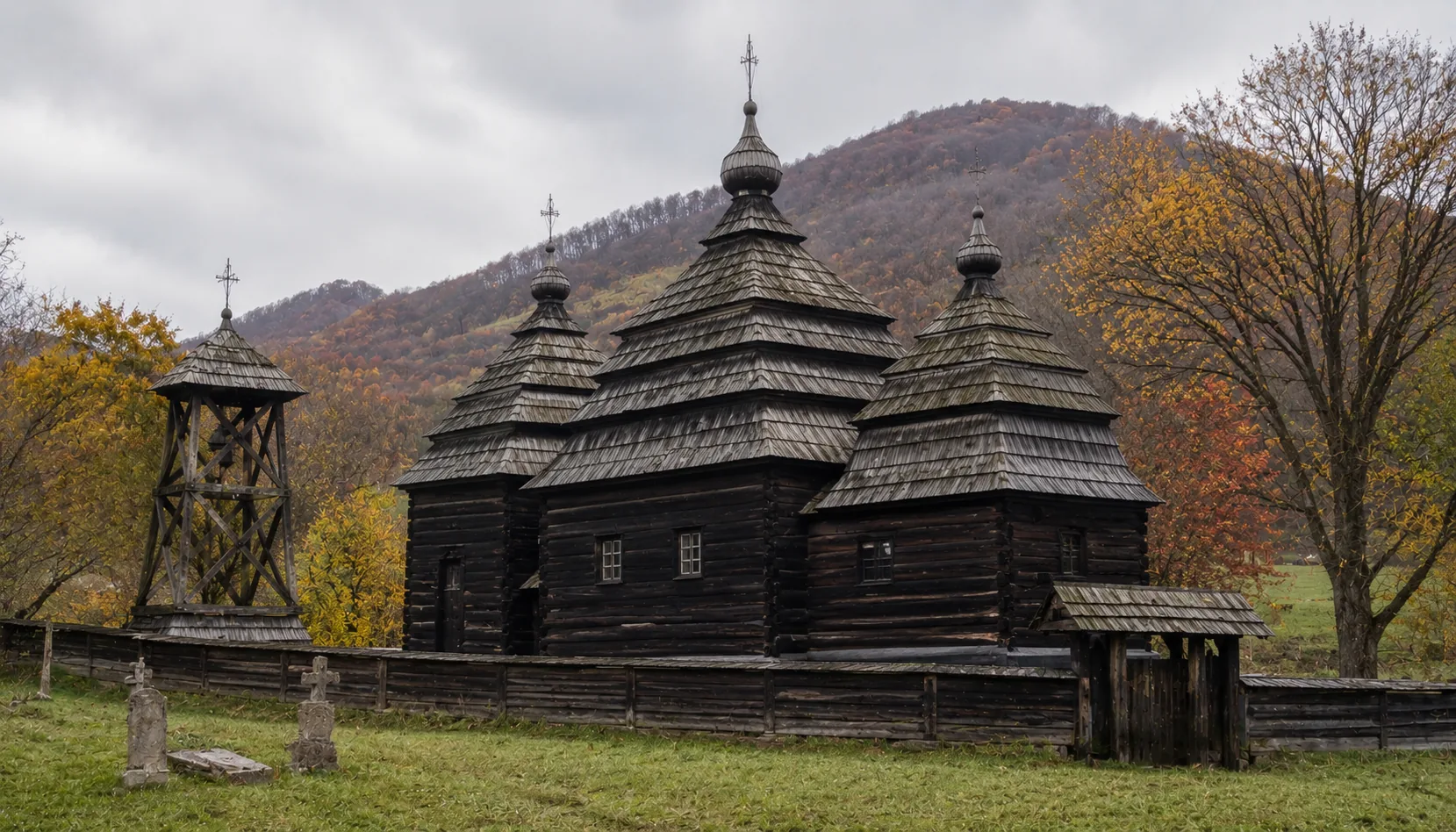
A three-towered Greek Catholic wooden church in a north-eastern villageTrojvežový gréckokatolícky drevený chrám v severovýchodnej dedine
Who and whereKto a kde
Rusyns — Carpatho-Rusyns — live in the villages of the Prešov region along the Polish and Ukrainian borders, in the districts around Svidník, Stropkov, Medzilaborce, Snina and Bardejov. They are an East Slavic people whose settlement here goes back to the medieval Wallachian colonisation of the high valleys, and whose defining institution is the Eastern-rite church.Rusíni žijú v obciach Prešovského kraja pozdĺž poľskej a ukrajinskej hranice, v okresoch okolo Svidníka, Stropkova, Medzilaboriec, Sniny a Bardejova. Sú východoslovanským spoločenstvom, ktorého osídlenie tu siaha k stredovekej valaskej kolonizácii vysokých dolín, a ich určujúcou inštitúciou je cirkev východného obradu.
Most are Greek Catholic — Eastern in liturgy, in communion with Rome — with Orthodox communities alongside them, in some villages as a result of a twentieth-century split that was as much political as religious. The Greek Catholic church was suppressed outright in 1950 and restored in 1968, and that period is still within living memory in these villages.Väčšina je gréckokatolícka — východná obradom, v jednote s Rímom — a popri nich stoja pravoslávne spoločenstvá, v niektorých obciach ako dôsledok rozkolu 20. storočia, ktorý bol rovnako politický ako náboženský. Gréckokatolícku cirkev v roku 1950 úplne zrušili a v roku 1968 obnovili — a toto obdobie je v týchto obciach stále v živej pamäti.
The wooden churchesDrevené chrámy
The wooden churches are the visible form of it. Three-part, three-towered, rising in stages from the entrance to the sanctuary, with a painted iconostasis across the interior and a bell frame beside them: Bodružal, Ladomirová and Ruská Bystrá are on the UNESCO list and there are dozens more, in villages that in some cases now have fewer residents than the church has seats.Viditeľnou podobou sú drevené chrámy. Trojdielne, trojvežové, stúpajúce v stupňoch od vstupu k svätyni, s maľovaným ikonostasom cez celý interiér a so zvonicou vedľa: Bodružal, Ladomirová a Ruská Bystrá sú v zozname UNESCO a ďalších sú desiatky — v obciach, ktoré miestami majú menej obyvateľov, než má chrám miest na sedenie.
Svidník holds the Museum of Ukrainian-Rusyn Culture and an open-air museum of relocated buildings, and the festival there each summer is the community's main public occasion. Medzilaborce has the Warhol museum, which exists because his parents emigrated from Miková a few valleys away.Vo Svidníku je Múzeum ukrajinsko-rusínskej kultúry a skanzen prenesených stavieb a tamojší letný festival je hlavnou verejnou udalosťou komunity. V Medzilaborciach je Warholovo múzeum, ktoré existuje preto, že jeho rodičia sa vysťahovali z Mikovej o pár dolín ďalej.
Emigration and identityVysťahovalectvo a identita
Two things emptied these valleys. Emigration to the United States and Canada between the 1880s and the 1920s took a very large share of the population — Warhol's parents were part of it — and the resettlements and population exchanges after the Second World War took more. Many villages have not recovered and will not.Tieto doliny vyprázdnili dve veci. Vysťahovalectvo do Spojených štátov a Kanady medzi 80. rokmi 19. storočia a 20. rokmi 20. storočia odviedlo veľmi veľkú časť obyvateľstva — Warholovi rodičia boli jeho súčasťou — a povojnové presídľovanie a výmeny obyvateľstva odviedli ďalších. Mnohé obce sa z toho nespamätali a už ani nespamätajú.
Rusyn identity was officially treated as Ukrainian for much of the twentieth century and is now recognised separately; the Rusyn literary language was codified in the 1990s and is taught and published. Census numbers move between the two categories from decade to decade, which is a reason to treat any single figure with caution.Rusínsku identitu úradne veľkú časť 20. storočia posudzovali ako ukrajinskú a dnes je uznaná samostatne; rusínsky spisovný jazyk bol kodifikovaný v 90. rokoch a vyučuje sa aj vydáva. Čísla zo sčítaní sa medzi oboma kategóriami z desaťročia na desaťročie presúvajú — a to je dôvod brať ktorýkoľvek jednotlivý údaj opatrne.