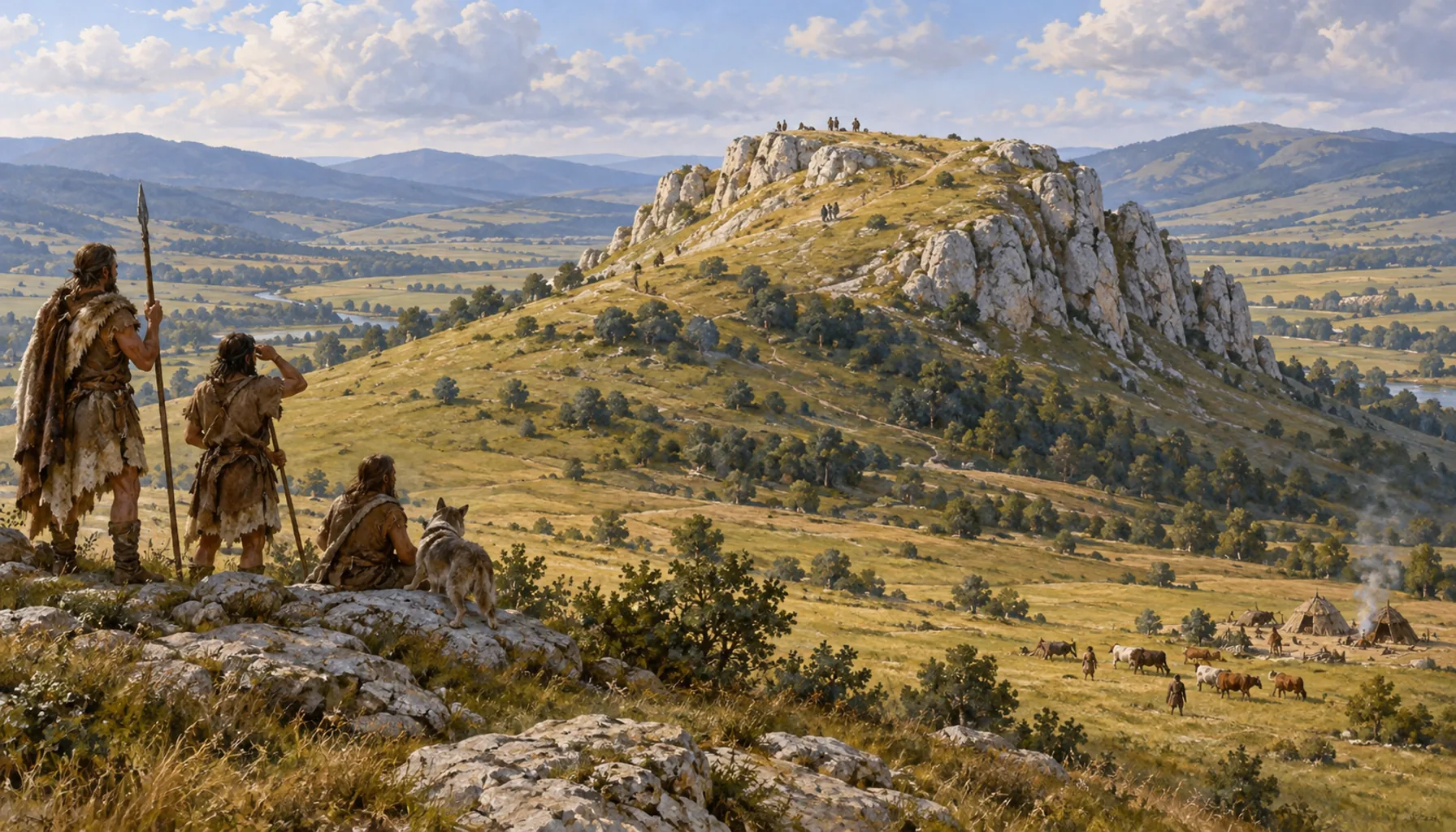
Long before anyone cut a stone for a castle, this bare travertine hummock was chosen for exactly the reasons the medieval builders would later take for granted. Neolithic pottery of the Bükk mountain culture has been found on it, and around the turn of our era there was a fortified settlement of the Púchov culture, whose people are usually identified with the Cotini — a Celtic tribe named by Roman writers. Be careful with that identification: what archaeologists actually dig up are pots and earth ramparts, and matching them to a name from a Roman book is an interpretation, not a fact. Nothing of these people is standing today; their defences were timber and earth, and after them the hill emptied for centuries.Dávno predtým, než tu niekto otesal prvý kameň pre hrad, si ľudia tento holý travertínový hrb vybrali presne z tých dôvodov, ktoré stredovekým staviteľom neskôr pripadali samozrejmé. Našla sa na ňom neolitická keramika bukovohorskej kultúry a okolo prelomu letopočtu tu stálo opevnené sídlisko púchovskej kultúry, ktoré sa zvyčajne spája s Kotínmi — keltským kmeňom, ktorého meno poznáme od rímskych autorov. S tým stotožnením však opatrne: archeológ vykope črepy a hlinené valy, nie mená, a spojiť jedno s druhým je výklad, nie fakt. Z tých ľudí tu dnes nestojí nič — ich opevnenie bolo z dreva a hliny — a po nich kopec na stáročia opustel.