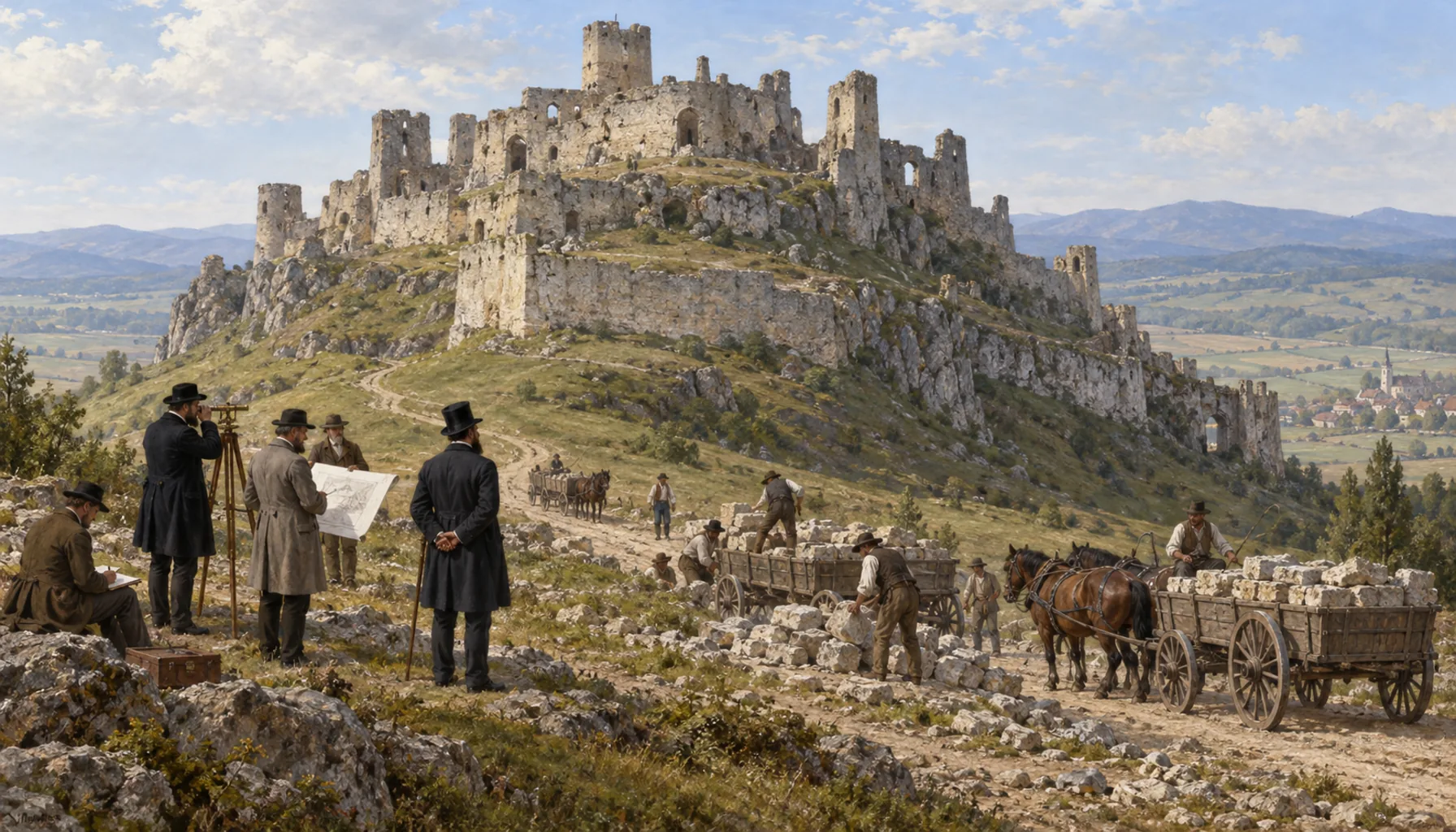
In 1865 the imperial-royal commission in Vienna for the study and preservation of built monuments turned its attention to Spiš as a fortification of the first rank. It concluded that the destruction was too far gone for conservation work and settled for gathering written and material evidence instead. While the scholars collected, the neighbours helped themselves: loose masonry from a ruin nobody was guarding is free building material, and stone from the castle went into houses below. Decay continued through the whole nineteenth century, and what saved most of Spiš was simply that there was far too much of it to carry away.V roku 1865 sa Spišský hrad ako prvotriedna fortifikačná pamiatka dostal do pozornosti cisársko-kráľovskej komisie pre výskum a záchranu stavebných pamiatok vo Viedni. Tá usúdila, že deštrukcia je už príliš rozsiahla na konzervovanie, a uspokojila sa so zbieraním písomných a hmotných prameňov. Kým učenci zbierali, susedia si brali: uvoľnené murivo zo zrúcaniny, ktorú nikto nestrážil, je stavebný materiál zadarmo, a kameň z hradu skončil v domoch pod ním. Chátranie pokračovalo celé 19. storočie a väčšinu Spišského hradu zachránilo v podstate len to, že ho bolo priveľa na odvezenie.