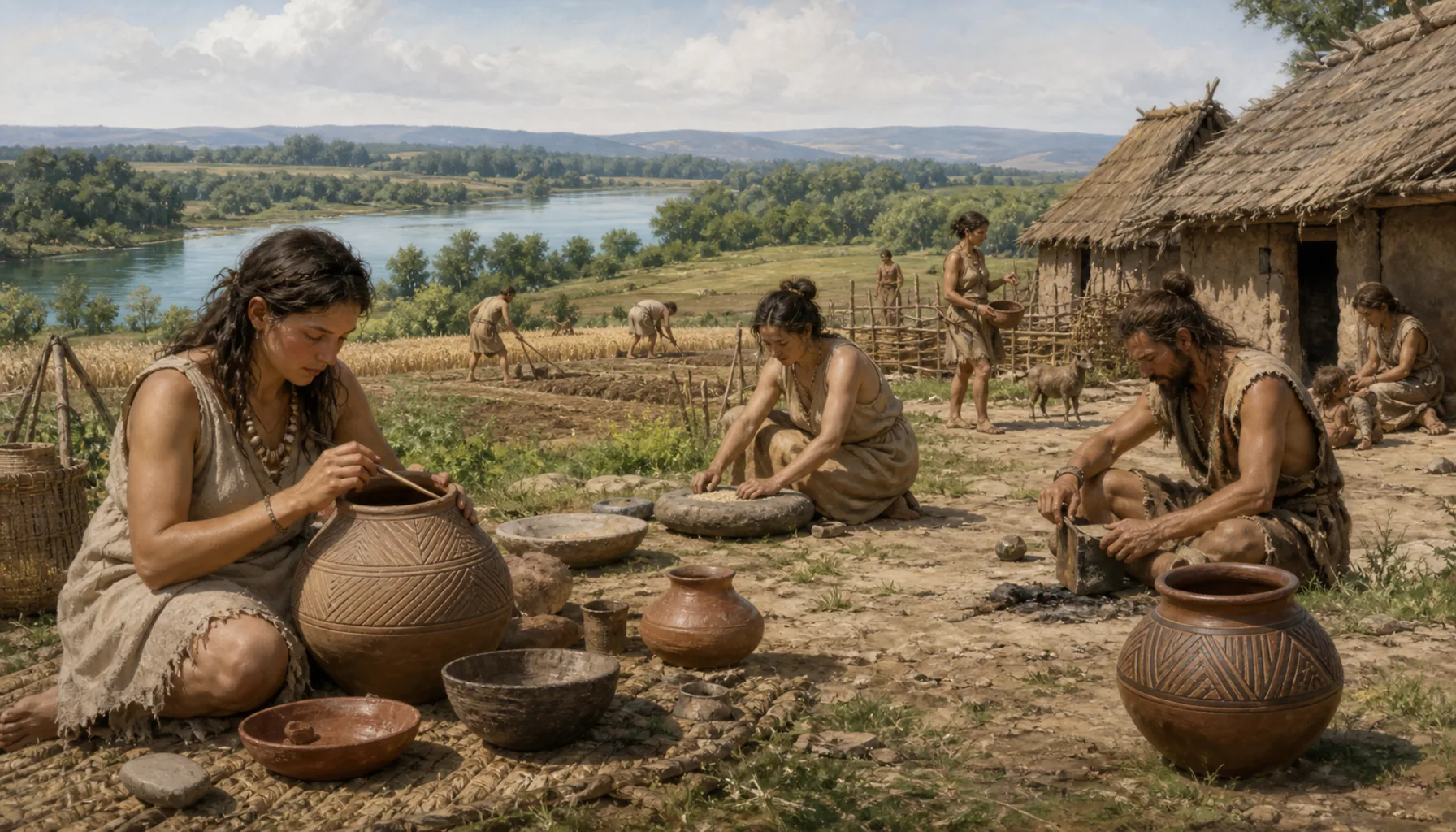
The first farmers of central Europe made pots decorated with incised lines; archaeologists call the whole culture the Linear Pottery culture and date it roughly to 5500–4500 BC. In its later centuries a distinctive way of decorating vessels appears along the middle Danube, and because it was first recognised from finds dug out of the fields around this town it is called the Želiezovce group. So the name of a small Slovak town sits in archaeology textbooks written in half a dozen languages. The warm, level, well-watered land that drew those first farmers is the same land being farmed here now.Prví roľníci strednej Európy vyrábali nádoby zdobené rytými líniami; archeológia celú túto kultúru nazýva kultúrou s lineárnou keramikou a datuje ju zhruba do rokov 5500 – 4500 pred Kristom. V jej neskorších storočiach sa v strednom Podunajsku objavuje osobitý spôsob výzdoby nádob, a keďže ho rozpoznali podľa nálezov z polí okolo tohto mesta, volá sa želiezovská skupina. Meno malého slovenského mesta sa tak dostalo do archeologických učebníc v celom rade jazykov. A tá teplá, rovná a dobre zavlažená pôda, ktorá sem pritiahla prvých roľníkov, sa obrába dodnes.