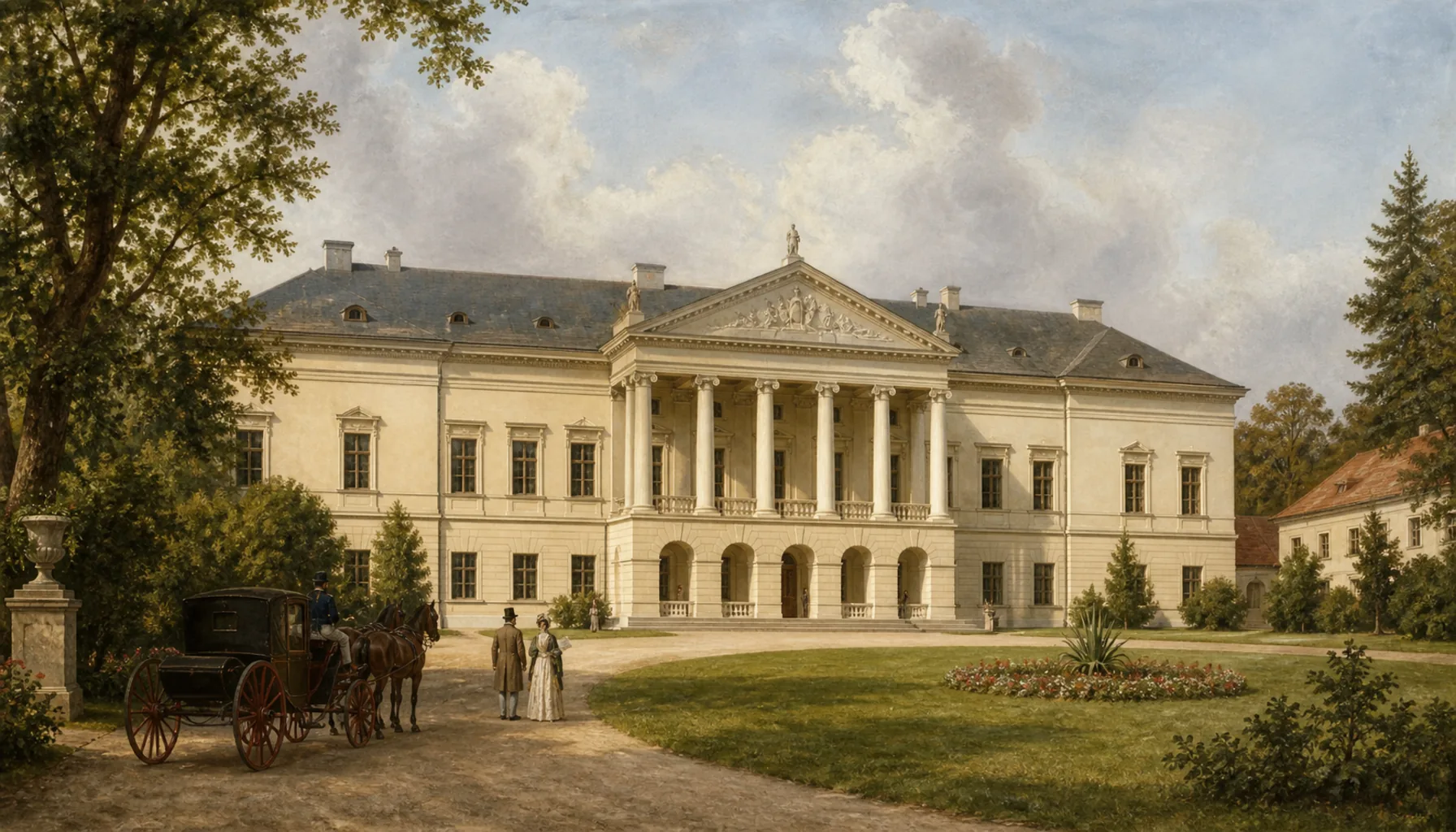
Count Ján Keglevich did not restore the old house — he demolished its southern wing and built a new one across the front in the classicist manner, between 1818 and 1825, to the design of the builder L. Pichl. Behind the columns and under the dome went a ballroom, a dining room and a library: rooms for receiving people, not for keeping them out. The English park was cultivated in the same years, and the statue of St John Nepomuk that still stands in the village dates from 1805. The result is the building you see today — an Enlightenment palace bolted onto a Renaissance fortress-house, two ages of taste back to back, and the quickest architecture lesson in the Nitra region.Gróf Ján Keglevich starý dom neobnovil — dal zbúrať jeho južné krídlo a v rokoch 1818 – 1825 postavil pred kaštieľ nové, klasicistické, podľa návrhu staviteľa L. Pichla. Za stĺporadím a pod kupolou vznikla tanečná sála, jedáleň a knižnica: miestnosti na prijímanie ľudí, nie na ich odrážanie. V tých istých rokoch sa upravoval anglický park a socha svätého Jána Nepomuckého stojí v obci od roku 1805. Výsledkom je budova, akú vidíte dnes — osvietenský palác pristavaný k renesančnému opevnenému domu, dve epochy vkusu chrbtom k sebe a najrýchlejšia hodina architektúry v Nitrianskom kraji.