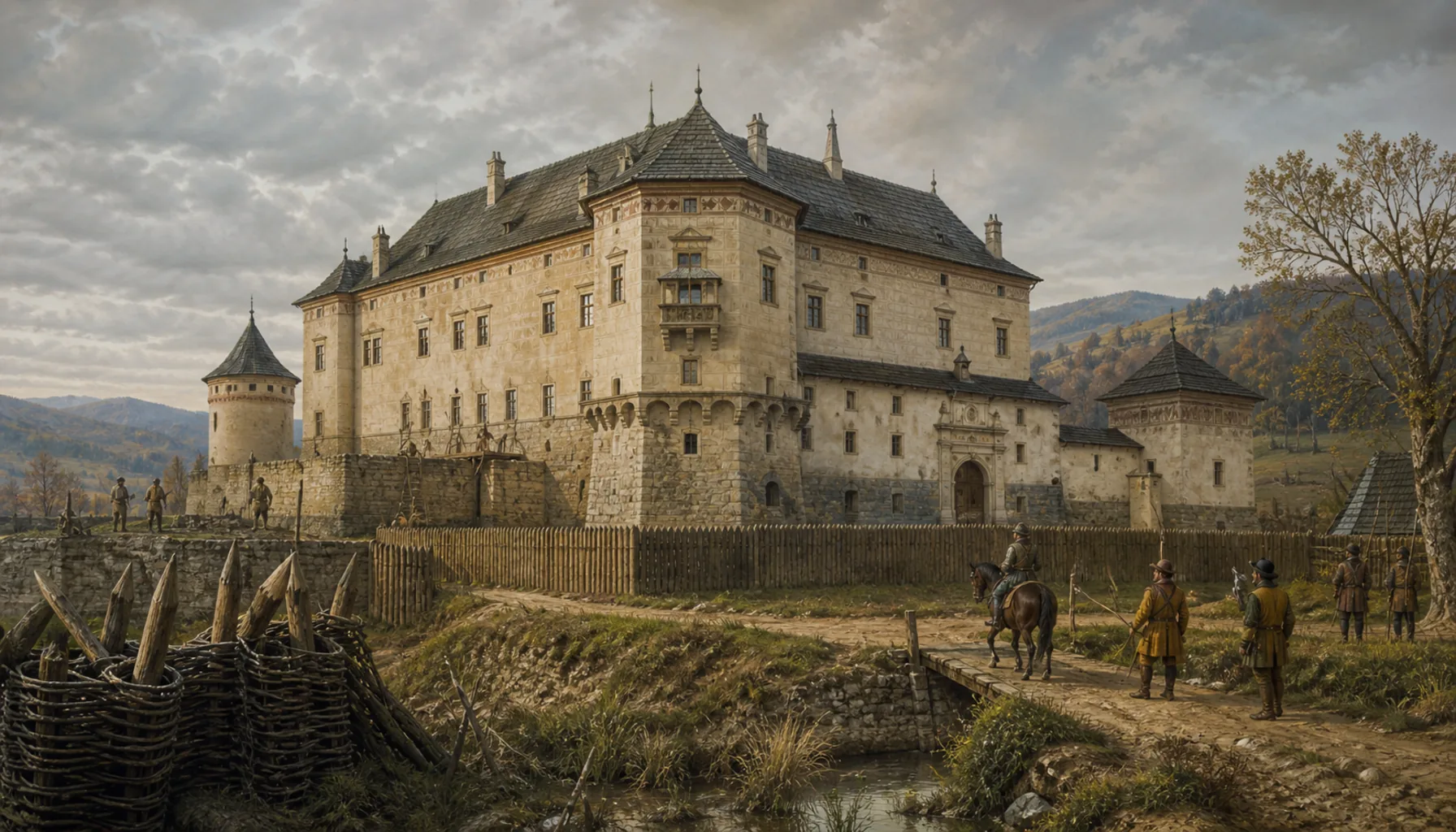
After the Ottomans destroyed the Hungarian royal army at Mohács in 1526 the frontier crept north for a century and a half, and this house was rebuilt for it. The man who did it was Ján Topoľčiansky, remembered by the nickname turkobijec, the Turk-fighter: he raised a new fortified house on fresh foundations, with barracks and quarters for officers, and even moved a stream to serve it. In 1561 the village is recorded as the seat of Tekov County — the stolica, the kingdom's district of local government — and three years later there is a school here. The four-winged house with the arcaded courtyard that still hides behind the pale classicist front dates from around and after 1598: arcades to live behind, walls to survive behind.Keď Osmani v roku 1526 pri Moháči rozdrvili uhorské kráľovské vojsko, hranica sa na poldruha storočia posunula na sever — a toto sídlo sa prestavalo práve pre ňu. Urobil to Ján Topoľčiansky, ktorému ostala prezývka turkobijec: na nových základoch postavil nové opevnené sídlo s kasárňami a bytmi pre dôstojníkov a dokonca preložil potok. V roku 1561 sa obec uvádza ako sídlo Tekovskej stolice — stolica bola v kráľovstve jednotkou správy — a o tri roky neskôr sa tu spomína škola. Štvorkrídlová budova s arkádovým nádvorím, ktorá sa dodnes skrýva za svetlým klasicistickým priečelím, pochádza z čias okolo a po roku 1598: arkády na bývanie, múry na prežitie.