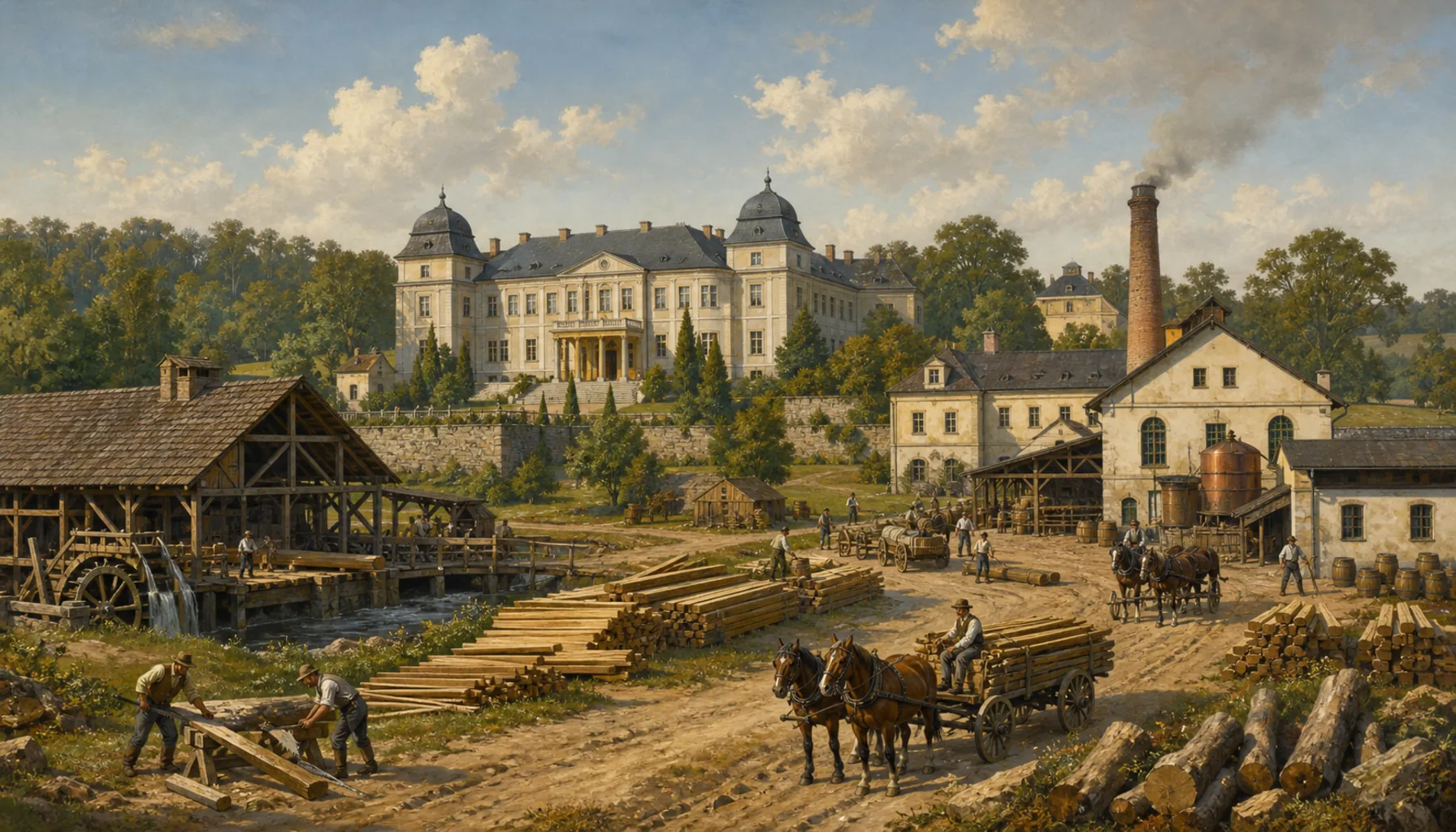
Once the uprising was over Count Karol Zichy repaired the war damage and put the estate to work: a sawmill, a timber yard, a brewery. The village lost something as well — in 1723 the county seat moved away to Zlaté Moravce, and Topoľčianky went back to being an estate village. The Keglevich family took over in 1742, and Count Karol Keglevich pulled down the old Gothic church and built a Baroque one up on the hill, carrying the Turk-fighter's stone tomb into it. This is what the eighteenth century looked like almost everywhere in Slovakia: defence giving way to farming, garrisons to granges, and the lord's house turning slowly into a country residence.Po skončení povstania dal gróf Karol Zichy opraviť vojnové škody a panstvo zamestnal: píla, drevosklad, pivovar. Obec však aj o čosi prišla — v roku 1723 sa sídlo stolice presťahovalo do Zlatých Moraviec a z Topoľčianok sa znova stala panská dedina. Od roku 1742 tu hospodárili Keglevichovci a gróf Karol Keglevich dal zbúrať starý gotický kostol a hore na kopci postavil barokový, do ktorého preniesli kamennú tumbu turkobijca. Tak vyzeralo osemnáste storočie takmer všade na Slovensku: obranu vystriedalo hospodárstvo, posádky majere a panské sídlo sa pomaly menilo na vidiecke bývanie.