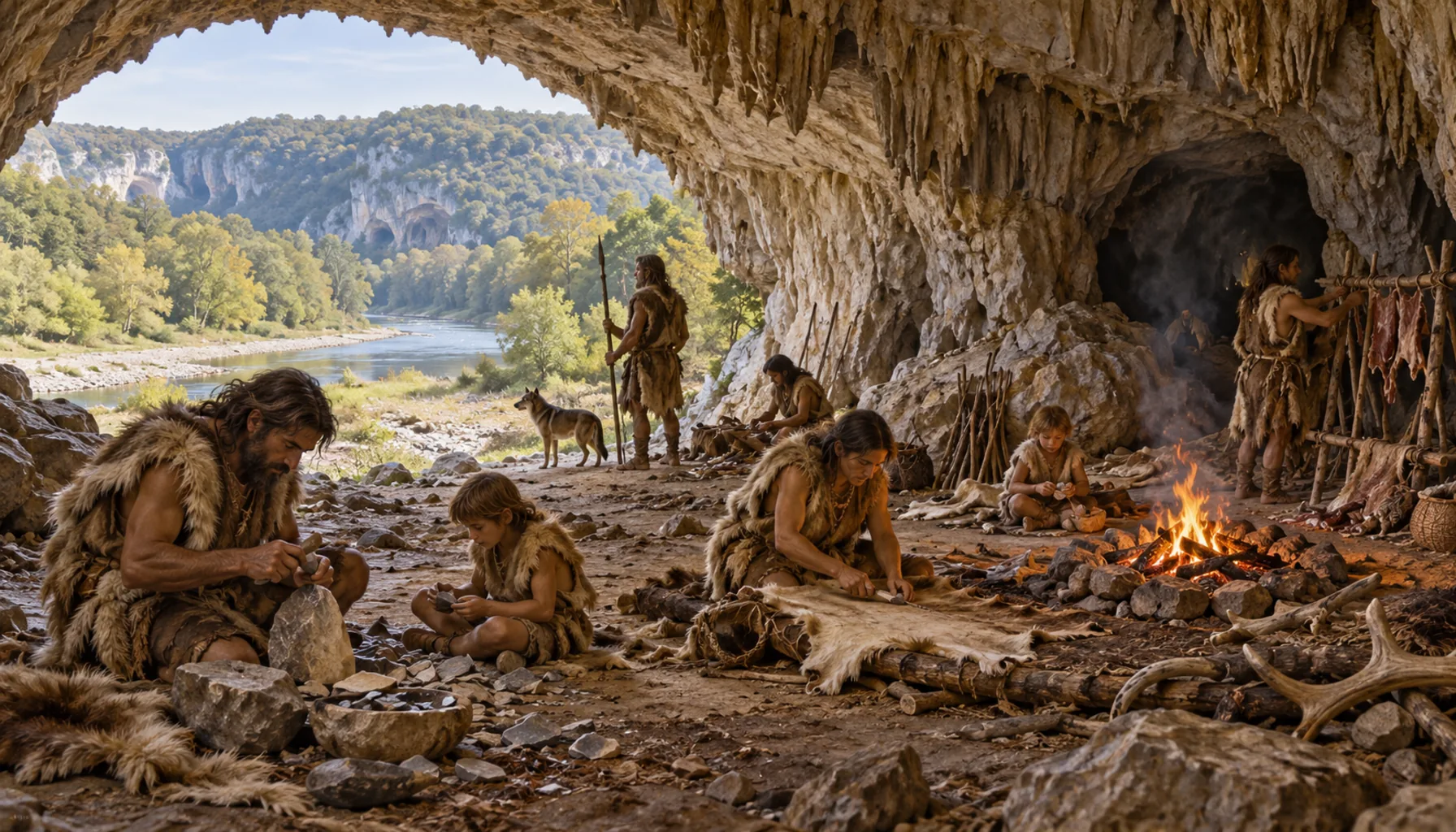
Long before anybody came to Domica to look at it, people lived in its entrance halls. They belonged to the Bükk culture, Neolithic farmers named after the hills just over today's Hungarian border, and they were here roughly seven thousand years ago. What they left is not treasure but household rubbish, which tells an archaeologist far more: hearths, animal bones and something like forty-five thousand pieces of decorated pottery. Domica holds one of the richest records of that culture anywhere, which is why the cave matters to archaeology quite as much as it does to tourism.Dávno predtým, než sa na Domicu začalo chodiť pozerať, ľudia v jej vstupných sieňach bývali. Patrili k bukovohorskej kultúre, mladokamenným roľníkom pomenovaným podľa pohoria hneď za dnešnou maďarskou hranicou, a žili tu asi pred siedmimi tisícročiami. Nezostal po nich poklad, ale obyčajný domový odpad — a ten archeológovi povie oveľa viac: ohniská, zvieracie kosti a asi štyridsaťpäťtisíc kusov zdobenej keramiky. Domica tak uchováva jeden z najbohatších dokladov tejto kultúry vôbec, a preto je pre archeológiu rovnako dôležitá ako pre turistiku.