The Best Surroundings of Any Mall in SlovakiaNajlepšie okolie zo všetkých centier na Slovensku
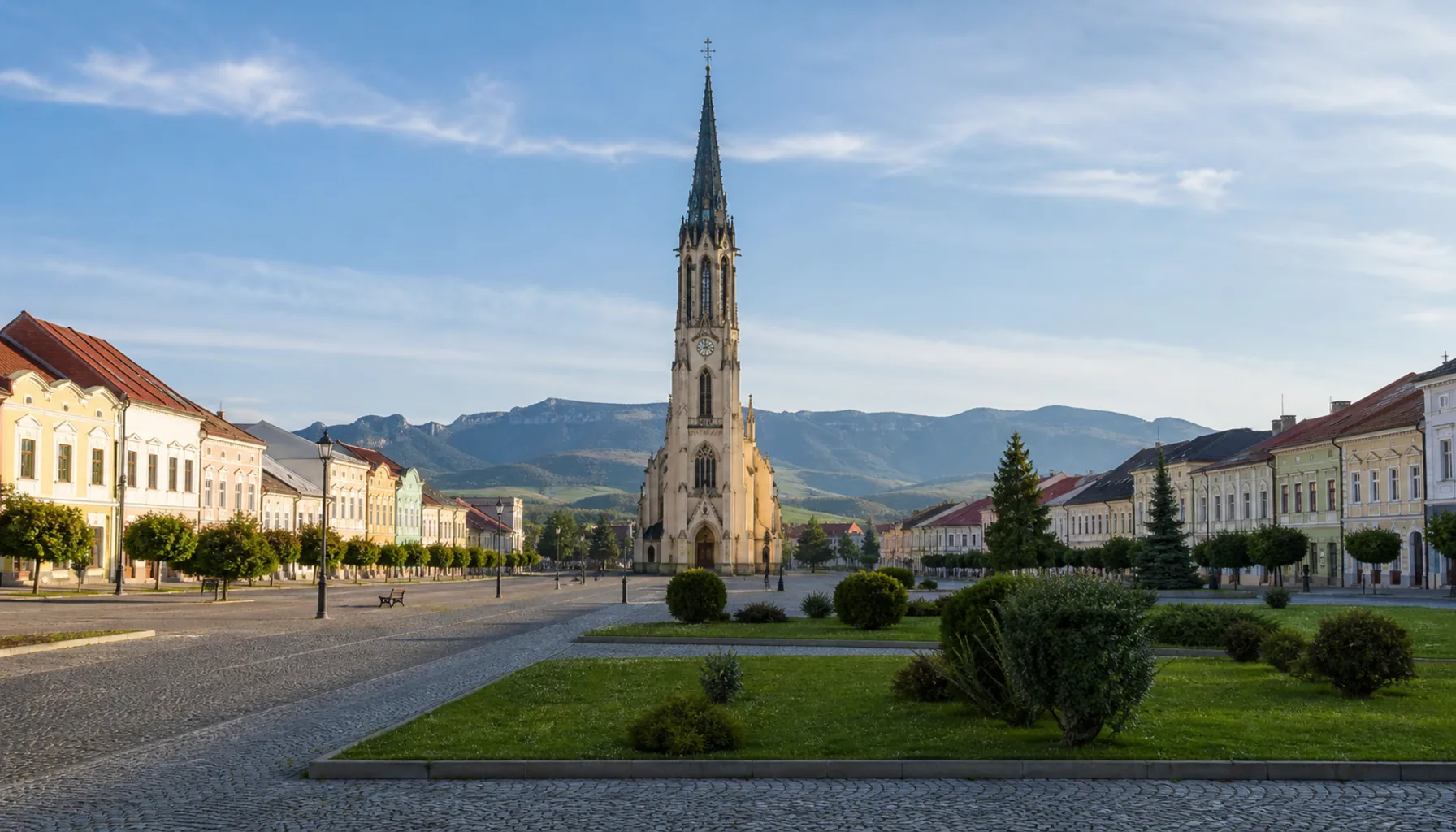
Start in the town. Spišská Nová Ves is built around a lens-shaped square so long that it is generally described as the longest of its kind in Europe — a slow swelling of pavement lined with low burgher houses, with the buildings that matter standing in the middle of it rather than around the edge. Chief among them is the Gothic Church of the Assumption of the Virgin Mary, whose tower rises about 87 metres: the tallest church tower in Slovakia, its neo-Gothic upper stage rebuilt in the 1890s and credited to Imre Steindl, the architect of the Hungarian parliament building. Beside it stand the town hall and the Reduta, the theatre and concert building that gives the square its evening life.Začnite v meste. Spišská Nová Ves je postavená okolo šošovkovitého námestia takého dlhého, že sa bežne označuje za najdlhšie svojho druhu v Európe — pomaly sa rozširujúca dlažba lemovaná nízkymi meštianskymi domami, pričom najdôležitejšie stavby stoja uprostred, nie po okrajoch. Prvou z nich je gotický Kostol Nanebovzatia Panny Márie, ktorého veža sa dvíha do výšky asi 87 metrov: najvyššia kostolná veža na Slovensku, s novogotickým vrcholom prestavaným v deväťdesiatych rokoch 19. storočia, ktorý sa pripisuje Imrichovi Steindlovi, architektovi budovy uhorského parlamentu. Vedľa stoja radnica a Reduta, divadelná a koncertná budova, ktorá dáva námestiu večerný život.
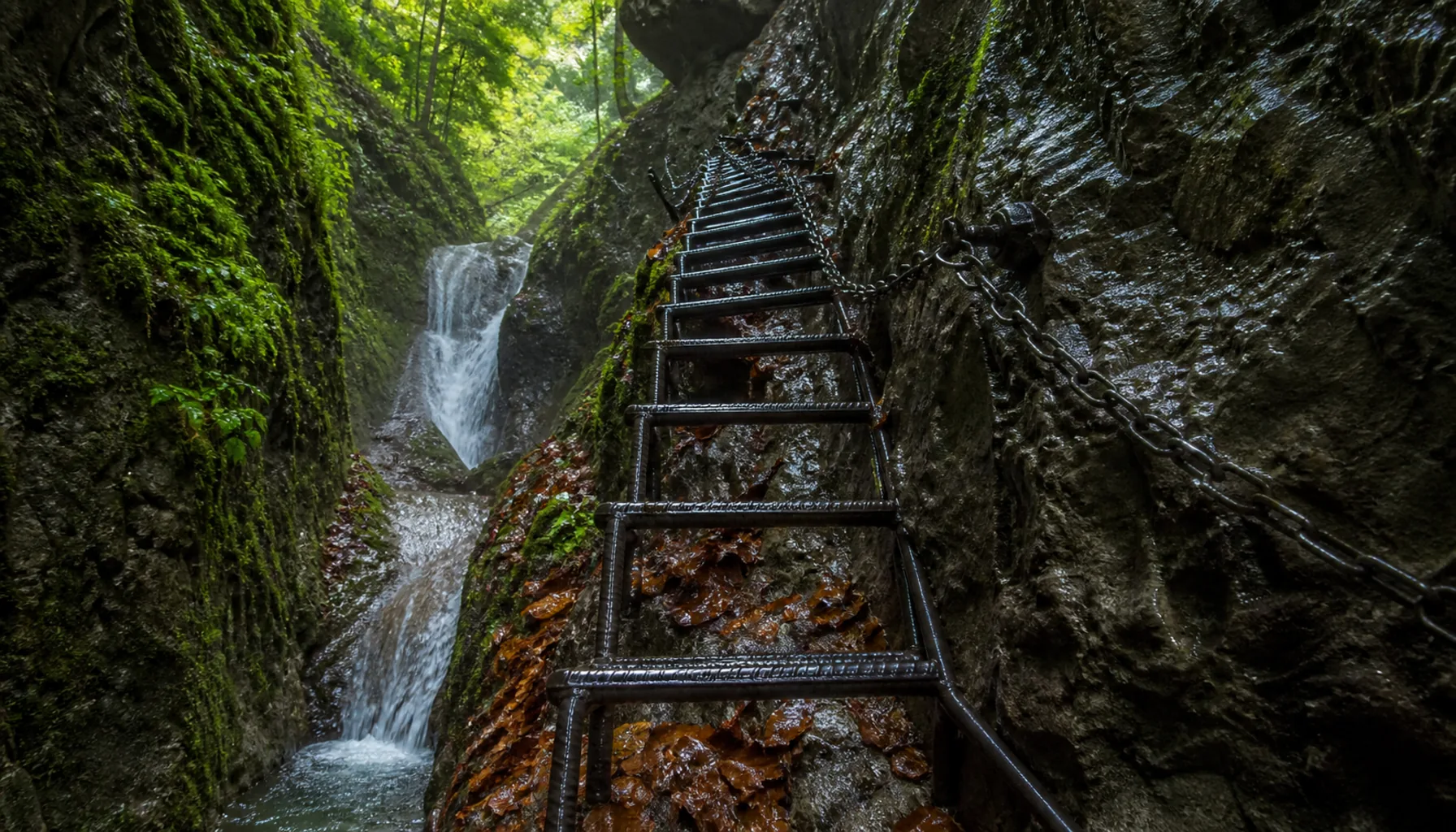
Then leave it. Twenty minutes south the ground drops into Slovenský raj — Slovak Paradise — a national park of limestone gorges where the trails do not go round the obstacles but straight up them, on ladders, ramps and chains bolted into the rock beside the waterfalls. Suchá Belá, Piecky, Kyseľ and the Hornád gorge are the names to know; most of the ladder routes are one-way, uphill only, and that rule exists for a very good reason. Nearby, the Tomášovský výhľad is a flat rock shelf over the valley that costs almost no effort and returns one of the great views in Slovakia.Potom odíďte. Dvadsať minút na juh sa terén prepadá do Slovenského raja — národného parku vápencových roklín, kde chodníky prekážky neobchádzajú, ale idú rovno cez ne, po rebríkoch, lávkach a reťaziach ukotvených do skaly vedľa vodopádov. Suchá Belá, Piecky, Kyseľ a Prielom Hornádu sú mená, ktoré treba poznať; väčšina rebríkových trás je jednosmerná, iba smerom nahor, a to pravidlo má veľmi dobrý dôvod. Neďaleko je Tomášovský výhľad, plochá skalná terasa nad dolinou, ktorá nestojí takmer žiadnu námahu a vracia jeden z najkrajších pohľadov na Slovensku.
Spiš CastleSpišský hrad
One of the largest castle complexes in Central Europe, roofless since 1780 and riding a bare travertine hill east of the town. It is the single most recognisable silhouette in Slovakia, and it is on the same day out as everything else here.Jeden z najväčších hradných komplexov strednej Európy, od roku 1780 bez striech, nesúci sa na holej travertínovej kope východne od mesta. Je to najznámejšia silueta Slovenska a leží v tom istom výletnom dni ako všetko ostatné.
MarkušovceMarkušovce
A short way from Spišská Nová Ves, with a manor house and the rococo summer pavilion known as Dardanely in its terraced garden — a complete change of register after a day of gorges and ruins, and easy to add on.Kúsok od Spišskej Novej Vsi, s kaštieľom a rokokovým letohrádkom Dardanely v terasovej záhrade — úplná zmena registra po dni plnom roklín a zrúcanín a ľahko sa dá pridať.
The mountains of SlovakiaSlovenské hory
Spišská Nová Ves is one of the best bases in the country for mountain walking: Slovenský raj on the doorstep, the High Tatras within an hour, and the Slovak Ore Mountains on the other side of the basin.Spišská Nová Ves je jednou z najlepších základní na horskú turistiku v krajine: Slovenský raj hneď za rohom, Vysoké Tatry do hodiny a Slovenské rudohorie na druhej strane kotliny.