Slovakia · folklore festivalSlovensko · folklórny festival
Detva — The Festival Under PoľanaDetva — Folklórne slávnosti pod Poľanou
Every July since 1966 the amphitheatre below Detva has filled for the Folklórne slávnosti pod Poľanou — shepherds' dances, carved oak and the fujara, in the one region of Slovakia that produced all three.Amfiteáter pod Detvou sa každý júl od roku 1966 zapĺňa na Folklórne slávnosti pod Poľanou — pastierske tance, vyrezávaný dub a fujara v jedinom kraji Slovenska, ktorý priniesol všetky tri.
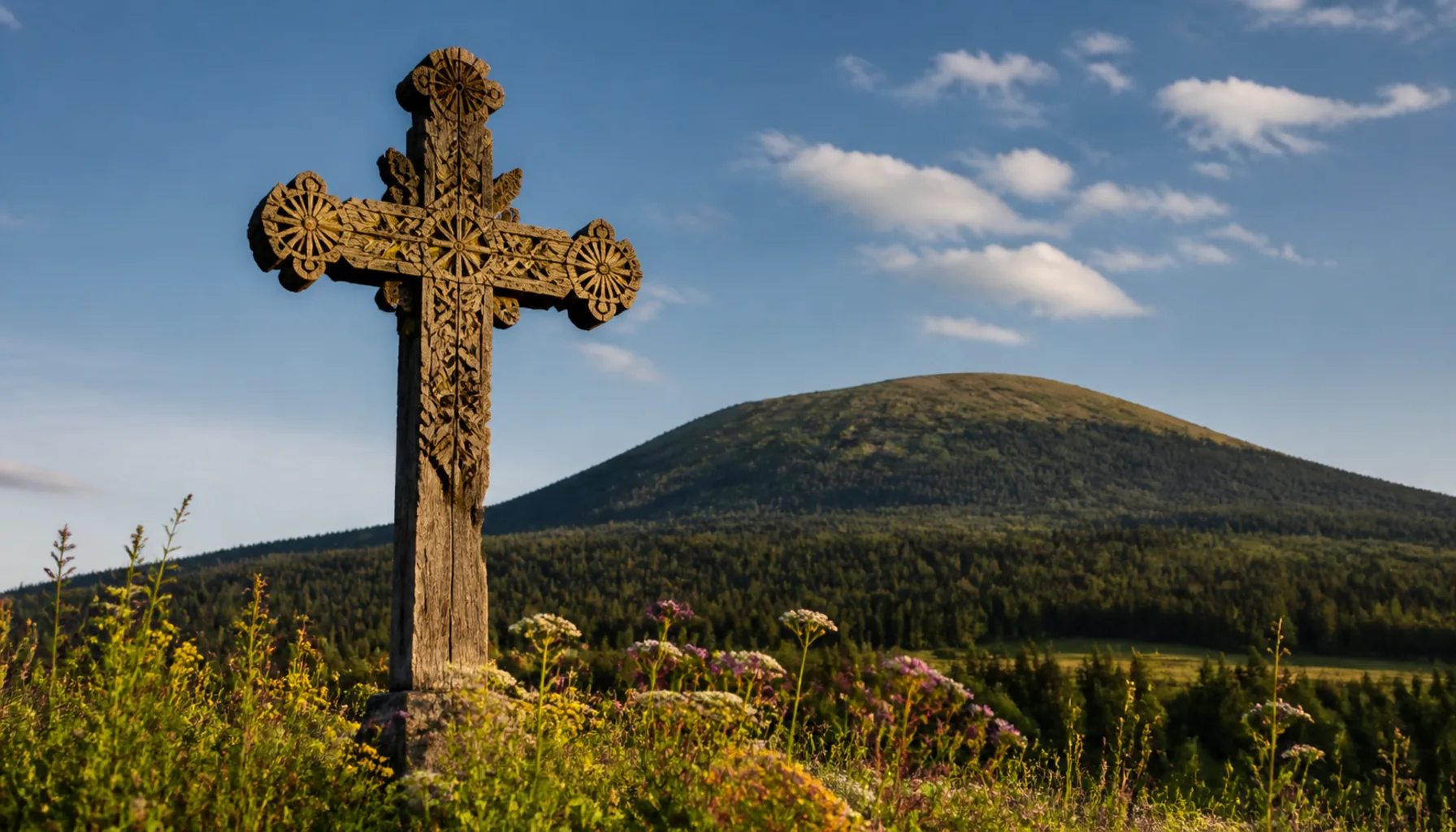
A carved Detva cross against the volcanic bulk of Poľana.Vyrezávaný detviansky kríž proti sopečnému masívu Poľany.
The gathering under PoľanaStretnutie pod Poľanou
The Folklórne slávnosti pod Poľanou have been held at Detva since 1966, each July, in an amphitheatre on the slope below the town, with the volcanic dome of Poľana closing the skyline behind the stage. It is one of the two or three folklore festivals in Slovakia that genuinely matter.Folklórne slávnosti pod Poľanou sa v Detve konajú od roku 1966, každý júl, v amfiteátri na svahu pod mestom, kde obzor za pódiom uzatvára sopečná klenba Poľany. Patria k dvom-trom folklórnym slávnostiam na Slovensku, na ktorých naozaj záleží.
What sets them apart from Východná, the older national festival under the Tatras, is that they grew out of one region rather than assembling the whole country. Village groups from the Podpoľanie hold the centre of the programme, and the tradition here has a harder edge — shepherds' dances, the twirled valaška axe, playing closer to the pasture than to the stage.Od Východnej, staršieho celoslovenského festivalu pod Tatrami, sa líšia tým, že vyrástli z jedného kraja, nie z prehliadky celej krajiny. Ťažisko programu držia dedinské skupiny z Podpoľania a tunajšia tradícia má drsnejší okraj — pastierske tance, krútená valaška, hra bližšia pasienku než pódiu.
The country under the mountainKraj pod horou
Podpoľanie is the country under Poľana, the highest volcanic mountain range in Slovakia and one of the largest extinct volcanoes in Europe, a UNESCO biosphere reserve since 1990, its forested rim ringing an inner basin like a crater. The Vígľaš estate settled Detva in 1638; the people who came were herders and woodsmen clearing the slopes.Podpoľanie je kraj pod Poľanou — pod najvyšším sopečným pohorím na Slovensku, jednou z najväčších vyhasnutých sopiek v Európe a biosférickou rezerváciou UNESCO od roku 1990, ktorej zalesnený okraj obopína vnútornú kotlinu ako kráter. Detvu osadilo vígľašské panstvo v roku 1638; prišli pastieri a drevorubači, ktorí klčovali jej svahy.
They lived on lazy — single farmsteads scattered high on the hillsides, many still lived in — and that distance is part of why the costume, the instruments and the carving survived here so fully. The festival is that inheritance brought down into one valley for a weekend.Žili na lazoch — samotách roztrúsených vysoko po svahoch, mnohé sú obývané dodnes — a práve tá vzdialenosť je časťou dôvodu, prečo sa tu kroj, nástroje aj rezbárstvo zachovali v takej úplnosti. Slávnosti sú toto dedičstvo znesené na jeden víkend dolu do jednej doliny.
The fujaraFujara
The fujara is the sound of this district: a shepherd's overtone flute nearly as tall as the player, hollowed from elder, with three finger holes and a slim separate tube carrying the breath to the mouthpiece. It sounds the natural harmonic series rather than a scale, which is why its low register pulses instead of stepping.Fujara je zvukom tohto kraja: pastierska alikvotná píšťala takmer taká vysoká ako hráč, vyhĺbená z bazy, s tromi hmatovými otvormi a samostatnou tenkou rúrkou, ktorá privádza dych k píšťalke. Znie na prirodzenom alikvotnom rade, nie na stupnici — preto jej spodný register skôr pulzuje, než by kráčal po tónoch.
UNESCO proclaimed the fujara and its music a Masterpiece of the Oral and Intangible Heritage in 2005 and folded it into the Representative List in 2008 — the first of Slovakia's ten entries. It is still made as well as played in the villages around Detva, above all in Očová, by craftsmen working at home and to order.UNESCO vyhlásilo fujaru a jej hudbu v roku 2005 za Majstrovské dielo ústneho a nehmotného dedičstva a v roku 2008 ju zaradilo do Reprezentatívneho zoznamu — je prvým z desiatich slovenských zápisov. V obciach okolo Detvy, predovšetkým v Očovej, sa dodnes nielen hrá, ale aj vyrába; remeselníci pracujú doma a na objednávku.
Detva is a town of carvers. The tall oak grave crosses in its cemetery are a local craft with no real parallel in Slovakia — flat-fronted, cut with sun discs, hearts and birds, every one different, the oldest weathered to silver-grey. The same hand shows on the fujaras, engraved and etched into the body of the pipe rather than painted.Detva je mesto rezbárov. Vysoké dubové kríže na jej cintoríne sú miestnym remeslom bez skutočnej obdoby na Slovensku — s plochým čelom, zdobené slnečnými kotúčmi, srdcami a vtákmi, každý iný, tie najstaršie ošľahané do striebrosivej. Tá istá ruka je vidieť aj na fujarách: ornament je do tela píšťaly vyrytý a vyleptaný, nie namaľovaný.
The costume of this district is among the most heavily embroidered in the country, and here it is the men's that carries the most work: shirts covered across chest and sleeves in dense coloured stitching, worn with a broad studded belt. At the festival it is worn rather than displayed, by people who own it and will wear it again.Kroj tohto kraja patrí k najhustejšie vyšívaným v krajine a najviac práce nesie tu ten mužský: košele husto vyšité farebnou niťou cez hruď aj rukávy, k tomu široký kožený opasok s kovaním. Na slávnostiach sa nosí, nevystavuje — ľuďmi, ktorým patrí a ktorí si ho oblečú znova.
The town, and getting thereMesto a cesta zaň
Detva itself is a working town with a heavy engineering works on its edge, not a stage set that empties when the festival ends; its own page covers the cemetery, the trails onto Poľana and the lazy. Očová, Hriňová and Zvolenská Slatina are all a short drive.Samotná Detva je fungujúce mesto s ťažkým strojárskym závodom na okraji, nie kulisa, ktorá sa po slávnostiach vyprázdni; jej vlastná stránka opisuje cintorín, chodníky na Poľanu aj lazy. Očová, Hriňová a Zvolenská Slatina sú odtiaľ na krátku cestu autom.
Zvolen, twenty kilometres west, is the practical base: buses run down the valley road, and the Zvolen–Lučenec railway keeps to the Slatina below the town. Festival weekend fills roads and beds for a wide radius, so settle where you are sleeping early — and ask before photographing anyone in costume.Zvolen dvadsať kilometrov na západ je praktickou základňou: autobusy premávajú po ceste dolinou a železnica Zvolen – Lučenec vedie po Slatine pod mestom. Cez víkend slávností sú cesty aj ubytovanie v širokom okolí plné, preto si nocľah zabezpečte včas — a pred fotografovaním človeka v kroji sa spýtajte.