Banská Bystrica region · TownsBanskobystrický kraj · Mestá
ZvolenZvolen
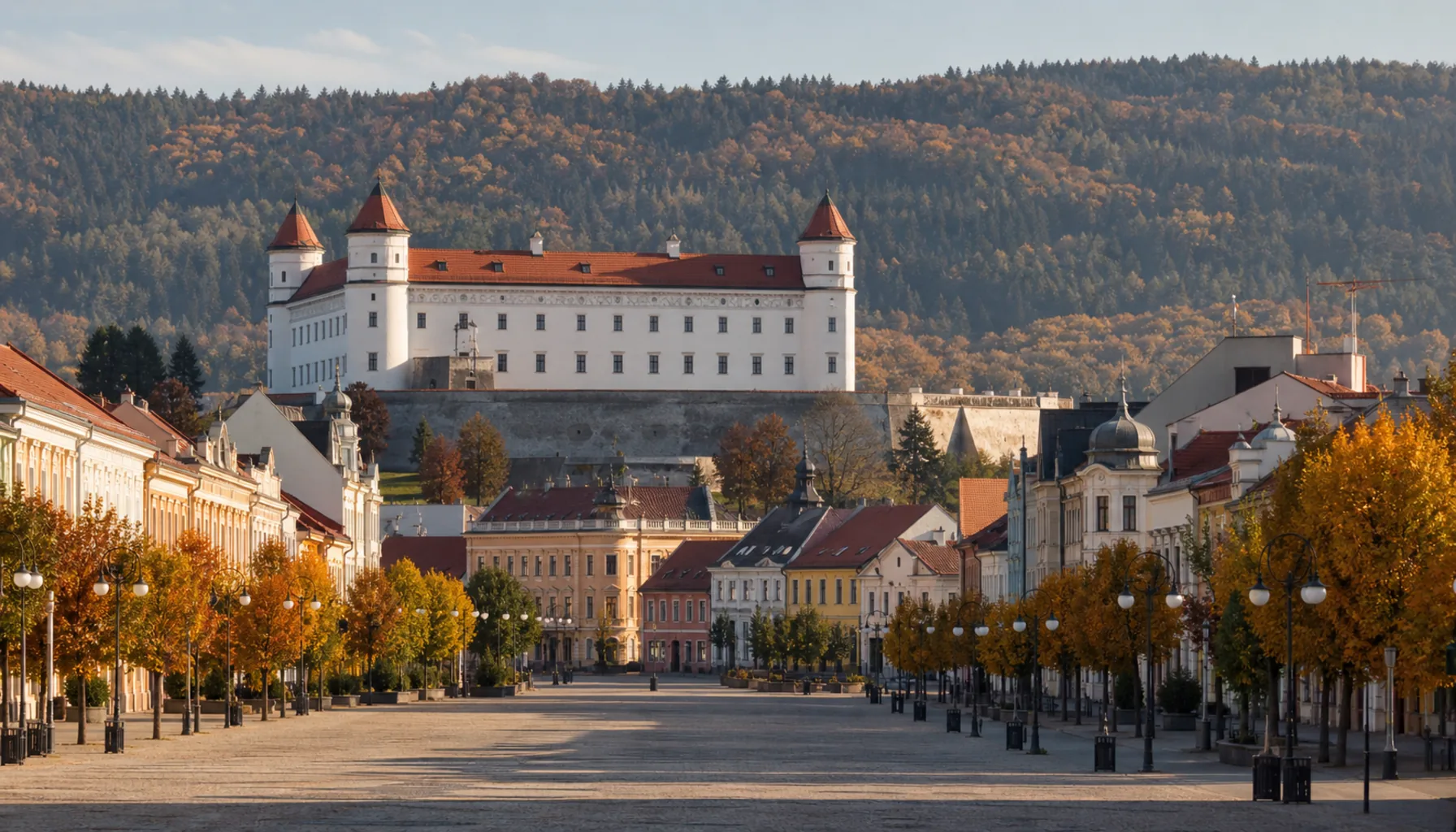
A working town where the Slatina runs into the Hron, gathered around a Gothic royal castle at the head of one of the largest squares in Slovakia, with the enormous ruins of Pustý hrad on the wooded hill opposite.Pracovité mesto tam, kde sa Slatina vlieva do Hrona, zhromaždené okolo gotického kráľovského zámku v čele jedného z najväčších námestí na Slovensku, s rozľahlými rozvalinami Pustého hradu na zalesnenom kopci oproti.
Zvolen Castle closing the lower end of the town's long main squareZvolenský zámok uzatvára dolný koniec dlhého zvolenského námestia
Where it standsKde leží
Zvolen sits in a broad basin at the confluence of the Slatina and the Hron, about twenty kilometres south of Banská Bystrica. Hills close it on every side — the Kremnica Mountains to the west, the Poľana massif to the east, the Štiavnica hills to the south — and the gaps between them are what made the place: four valleys meet here, and so do the roads and railways that use them.Zvolen leží v širokej kotline na sútoku Slatiny a Hrona, asi dvadsať kilometrov južne od Banskej Bystrice. Zo všetkých strán ho uzatvárajú vrchy — na západe Kremnické, na východe masív Poľany, na juhu Štiavnické — a práve medzery medzi nimi mesto stvorili: schádzajú sa tu štyri doliny a s nimi cesty i železnice, ktoré nimi vedú.
That position, more than the castle, is why Zvolen matters today. It is the road and rail crossroads of central Slovakia, and anyone travelling between Bratislava, Košice and the north passes through it whether they mean to or not.Práve poloha, viac než zámok, je dôvodom, prečo Zvolen dnes znamená to, čo znamená. Je cestnou a železničnou križovatkou stredného Slovenska a kto cestuje medzi Bratislavou, Košicami a severom, prejde ním, či chce, alebo nie.
The storyHistória
The first Zvolen was not down here at all. Pustý hrad — the Deserted Castle — stood on the wooded hill between the two rivers, and at its greatest extent it covered one of the largest castle sites in Slovakia: an upper and a lower castle the better part of a kilometre apart, joined by walls along the ridge. It was the seat of a royal county that once reached far into the mountains, and it was abandoned in the later Middle Ages.Prvý Zvolen nestál dole v meste. Pustý hrad sa dvíhal na zalesnenom kopci medzi oboma riekami a vo svojej najväčšej podobe zaberal jednu z rozlohou najväčších hradných lokalít na Slovensku: horný a dolný hrad takmer kilometer od seba, pospájané múrmi po hrebeni. Bol sídlom kráľovskej stolice, ktorá kedysi siahala hlboko do hôr, a v neskorom stredoveku ho opustili.
What replaced it is the castle in the town. Ľudovít I of the Anjou dynasty had it built in the second half of the fourteenth century as a royal hunting seat, on the model of the Italian urban castles he knew — a compact rectangular block round a courtyard, standing at the head of the square rather than on a crag. Two centuries later, with the Ottoman frontier not far to the south, it was wrapped in Renaissance defences and given the corner towers it still has.Nahradil ho zámok priamo v meste. Dal ho v druhej polovici štrnásteho storočia postaviť Ľudovít I. z rodu Anjou ako kráľovské poľovnícke sídlo podľa vzoru talianskych mestských hradov, ktoré poznal — kompaktný obdĺžnikový blok okolo nádvoria, postavený v čele námestia, nie na brale. O dve storočia neskôr, keď osmanská hranica nebola ďaleko na juh, ho obopli renesančné opevnenie a nárožné veže, ktoré má dodnes.
The town below lived off the estate, off timber floated down the Hron on rafts and off its market. Its modern shape dates from the railway age and from the twentieth century, when wood processing and then engineering turned a small county town into an industrial one.Mesto pod ním žilo z panstva, z dreva plaveného po Hrone na pltiach a z trhu. Dnešnú podobu mu dala železnica a dvadsiate storočie, keď z malého stoličného mestečka urobilo drevárstvo a neskôr strojárstvo priemyselné mesto.
What to seeČo vidieť
The castle is furnished and open, and it holds a permanent collection of the Slovak National Gallery — old European painting in a medieval royal house, a stranger and better combination than it sounds. The arcaded courtyard and the King's Hall, with its coffered ceiling of painted Roman emperors, are what people remember.Zámok je zariadený a prístupný a sídli v ňom stála zbierka Slovenskej národnej galérie — staré európske maliarstvo v stredovekom kráľovskom dome, čo je čudnejšia a lepšia kombinácia, než znie. Arkádové nádvorie a Kráľovská sieň s kazetovým stropom s maľovanými rímskymi cisármi sú to, čo si ľudia zapamätajú.
Pustý hrad is the other half of the visit and takes a half day. It is a free open-air ruin on a steep wooded hill, uncovered slowly by an excavation that has run for decades; there is no ticket desk and no collection, only walls, cisterns and tower stumps among the trees, and the view down onto the town from the top.Pustý hrad je druhou polovicou návštevy a zaberie pol dňa. Je to voľne prístupná zrúcanina na strmom zalesnenom kopci, ktorú pomaly odkrýva výskum bežiaci už desaťročia; niet tu pokladnice ani zbierky, len múry, cisterny a pahýle veží medzi stromami — a zhora výhľad na mesto.
The square is long, wide and among the largest in the country, with the Gothic Church of St Elizabeth at its upper end and the castle closing the lower one. In summer the castle courtyard becomes an open-air stage for the town's theatre festival, which has run for decades.Námestie je dlhé, široké a patrí k najväčším v krajine; v hornej časti ho uzatvára gotický Kostol svätej Alžbety, v dolnej zámok. V lete sa nádvorie zámku mení na letnú scénu divadelného festivalu, ktorý tu beží už desaťročia.
Work and industryPráca a priemysel
Wood is the town's trade. Zvolen has processed timber from the surrounding forests for a century, and it is also the country's forestry capital in the institutional sense: the Technical University in Zvolen teaches forestry and wood science, and the National Forest Centre, the state forestry research and advisory body, has its seat here.Remeslom mesta je drevo. Zvolen spracúva drevo z okolitých lesov už storočie a je aj lesníckym hlavným mestom krajiny v inštitucionálnom zmysle: Technická univerzita vo Zvolene učí lesníctvo a drevárstvo a sídli tu Národné lesnícke centrum, štátna lesnícka výskumná a odborná inštitúcia.
Around that sit engineering, heat and power generation, and the railway itself, which employs a great many people in a junction town of this size. Sliač airport, between Zvolen and Banská Bystrica, is mainly a military field with occasional civilian traffic.Okolo toho stojí strojárstvo, výroba tepla a elektriny a samotná železnica, ktorá v uzlovom meste takejto veľkosti zamestnáva veľa ľudí. Letisko Sliač medzi Zvolenom a Banskou Bystricou je predovšetkým vojenské, s občasnou civilnou prevádzkou.
Getting thereAko sa tam dostať
Zvolen is the rail hub of central Slovakia: lines run north to Banská Bystrica and Vrútky, east to Lučenec and Košice, south towards Šahy and west down the Hron towards Levice, and they meet in one station. The R1 expressway from Bratislava and Nitra passes the town on its way to Banská Bystrica, and buses reach every town in the region.Zvolen je železničným uzlom stredného Slovenska: trate vedú na sever do Banskej Bystrice a Vrútok, na východ do Lučenca a Košíc, na juh smerom na Šahy a na západ dolu Pohroním k Leviciam — a stretávajú sa v jednej stanici. Mesto míňa rýchlostná cesta R1 z Bratislavy a Nitry do Banskej Bystrice a autobusy odtiaľto dosiahnu každé mesto kraja.
Explore ZvolenObjavujte Zvolen
Every part of this place with a page of its own.Každá časť tohto miesta, ktorá má vlastnú stránku.