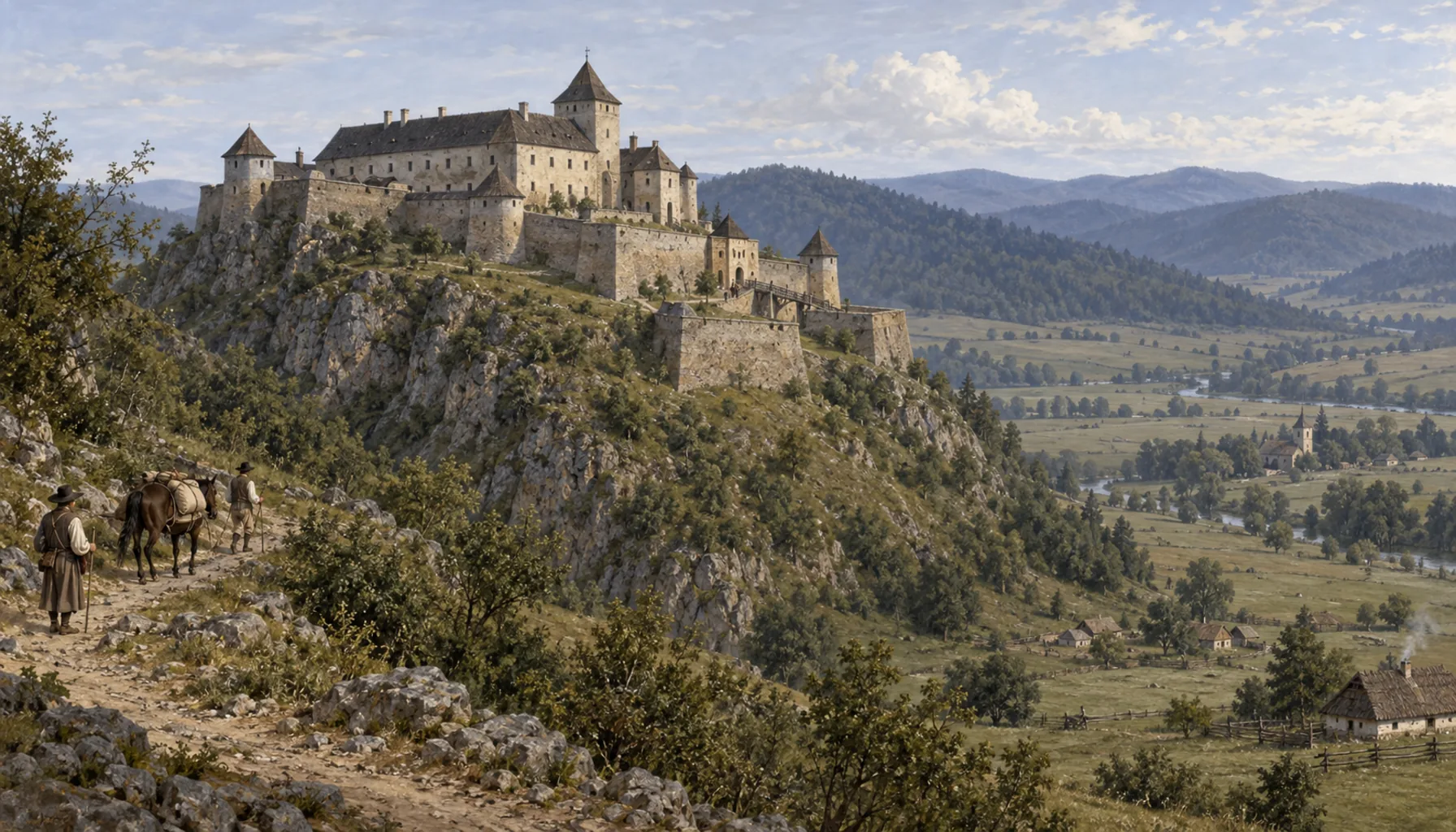
The wars ended, the frontier went back south, and a fortress in an empty valley turned into an expensive building nobody needed. Štefan Koháry, the head of the family and a Habsburg general, died at Čabraď in 1731. His heirs moved out and downhill, to the comfortable manor house they built at Svätý Anton below Sitno, in the mining country the castle had been rebuilt to protect. That is the pattern all over eighteenth-century Slovakia: the family leaves the hill for a house with big windows, a park and a road to the door. The castle was left with a caretaker, a granary and the weather.Vojny sa skončili, hranica sa vrátila na juh a z pevnosti v prázdnej doline sa stala drahá stavba, ktorú nik nepotreboval. Štefan Koháry, hlava rodu a habsburský generál, zomrel na Čabradi roku 1731. Jeho dedičia sa presťahovali dole do pohodlného kaštieľa, ktorý si postavili vo Svätom Antone pod Sitnom — teda práve v tom banskom kraji, kvôli ktorému hrad kedysi prestavali. Taký je vzorec celého 18. storočia na Slovensku: rodina opúšťa kopec pre dom s veľkými oknami, parkom a cestou až k dverám. Hradu ostal správca, sýpka a počasie.