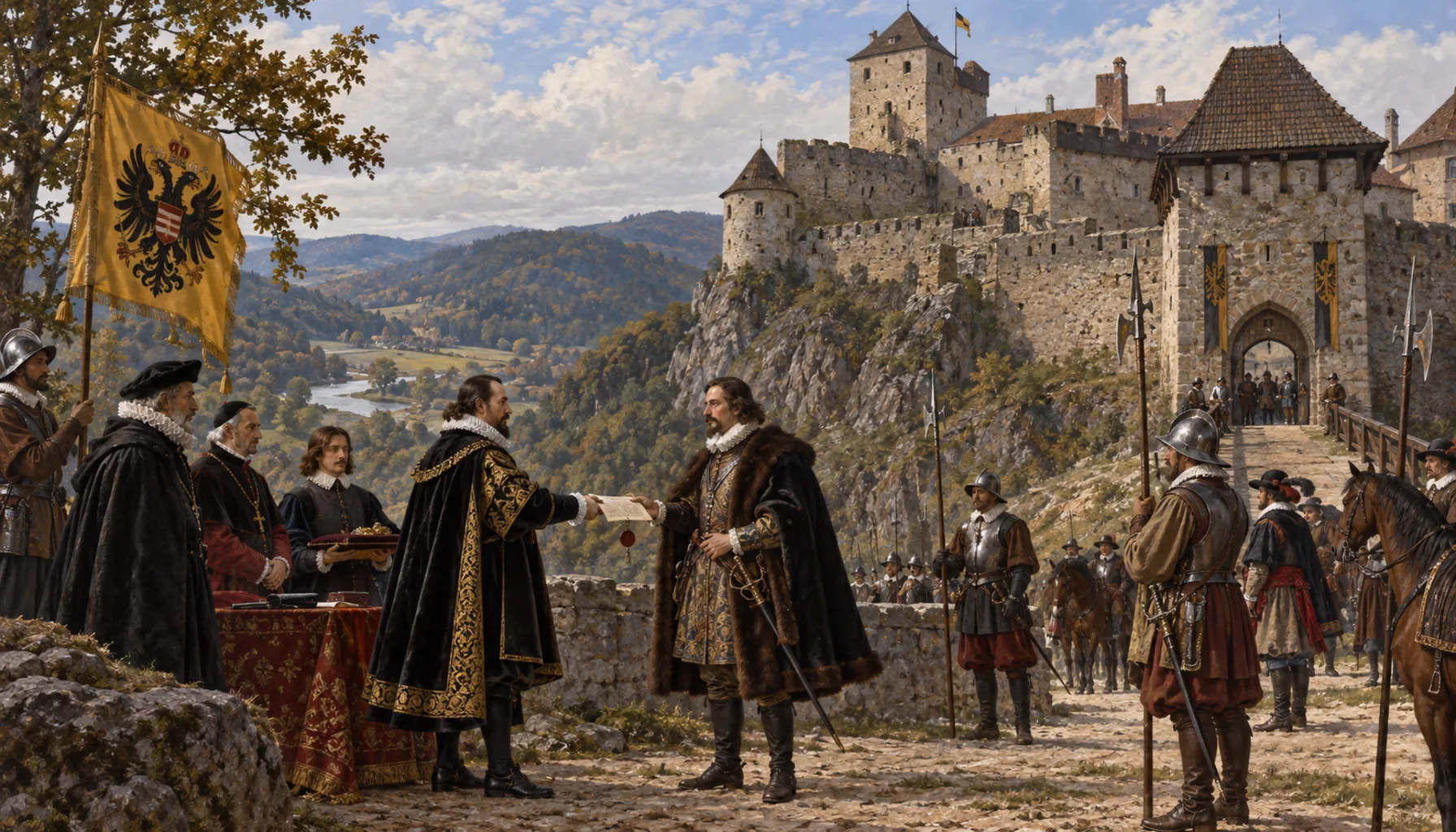
In 1622 Emperor Ferdinand II granted the castle to Baron Peter Koháry, and the Koháry family held Čabraď for the rest of its working life. The seventeenth century and the beginning of the eighteenth brought a different enemy: a series of risings by Hungarian nobles against the Habsburgs. Their soldiers were called kuruc, and in 1703, at the start of Francis II Rákóczi's rising, they took Čabraď. An imperial army under Count Ján Pálffy got it back in August 1709 — by a stratagem rather than a siege, the accounts say. Remember this the next time somebody tells you a Slovak castle was "destroyed by the Turks": far more often the damage was done in these Hungarian civil wars.Roku 1622 daroval cisár Ferdinand II. hrad barónovi Petrovi Kohárymu a Koháriovci držali Čabraď po zvyšok jej vojenského života. Sedemnáste storočie a začiatok osemnásteho priniesli iného nepriateľa: sériu povstaní uhorskej šľachty proti Habsburgovcom. Ich vojakom sa hovorilo kuruci a roku 1703, na začiatku povstania Františka II. Rákóciho, Čabraď obsadili. Cisárske vojsko grófa Jána Pálfiho ju v auguste 1709 získalo späť — podľa zápisov skôr lsťou než obliehaním. Spomeňte si na to vždy, keď niekto povie, že slovenský hrad „zničili Turci“: oveľa častejšie škody napáchali práve tieto uhorské občianske vojny.