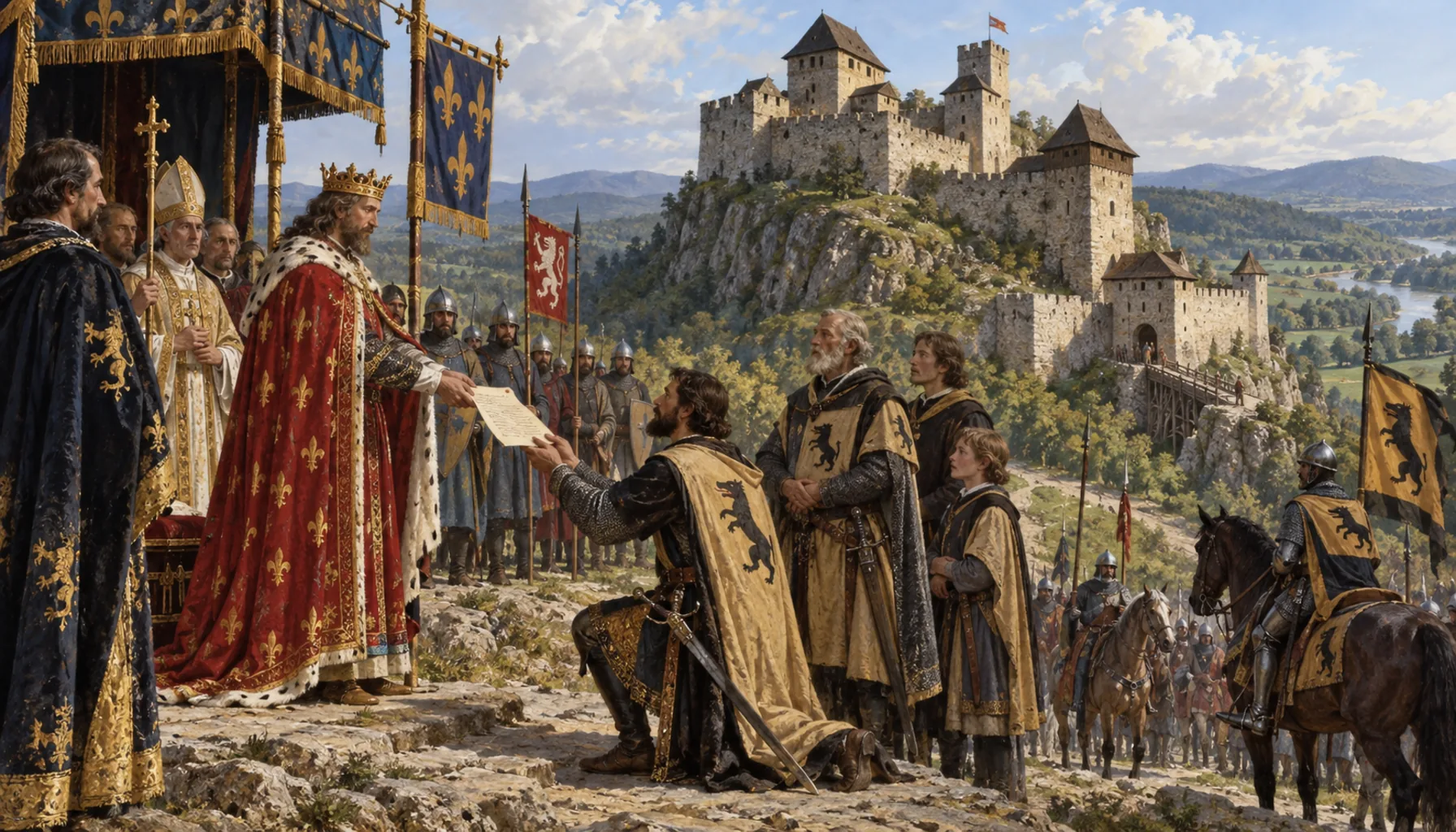
After the death of the oligarch Matúš Čák in 1321 the king got this country back under control, and in 1335 the castle was granted to a noble family, the Dobrakutya. It did not last. In 1342 the crown confiscated it from their heirs for treason, and the record of that confiscation shows how big the lordship was: twenty-six villages and six toll stations went with the walls. A medieval castle was not a house — it was the office from which a whole district was taxed and policed. By 1394 documents were calling the place Pusztalitva, "deserted Litava", so at some point in that century the old castle stood empty.Po smrti oligarchu Matúša Čáka roku 1321 sa kráľ vrátil k moci aj v tomto kraji a roku 1335 dostal hrad šľachtický rod Dobrakutya. Dlho im nevydržal. Roku 1342 ho koruna ich dedičom pre zradu skonfiškovala a zápis o konfiškácii ukazuje, aké veľké panstvo k múrom patrilo: dvadsaťšesť dedín a šesť mýt. Stredoveký hrad nebol dom, ale úrad, z ktorého sa celý okrsok zdaňoval a strážil. Roku 1394 už listiny hovoria o Pusztalitve, teda o „pustej Litave“ — niekedy v priebehu toho storočia teda starý hrad ostal prázdny.