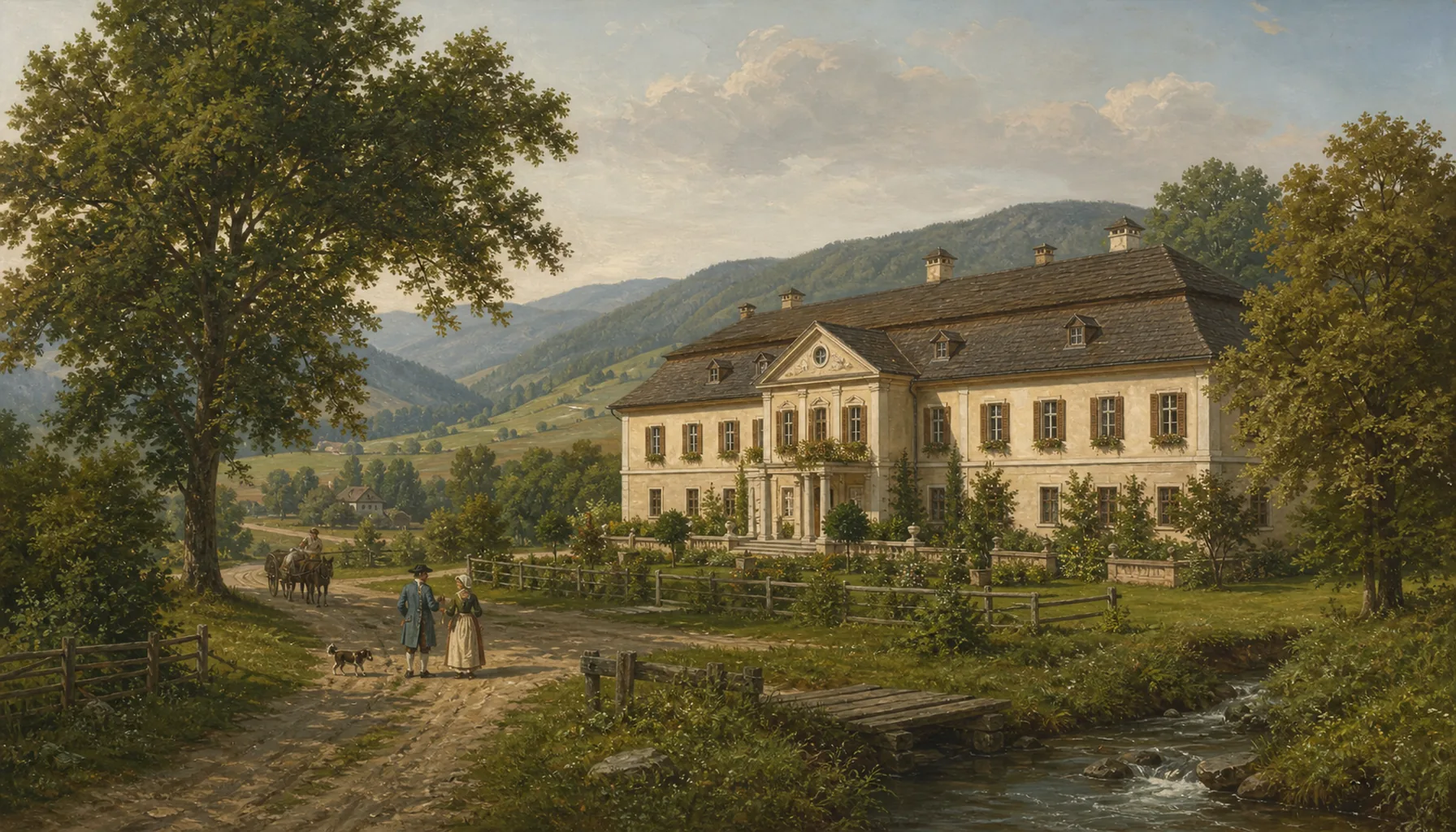
The second manor house, the upper one, went up in the second half of the eighteenth century — the calm, building century, when the wars of the risings were over and the gentry spent their money on comfort instead of walls. In 1778 the village had 455 inhabitants, most of them farming the terraces and grazing the slopes under the crags. Up the valley the story was going the other way: in 1800 a spark from a chimney set Orava Castle alight, and the seat of the whole estate burned. A village of this size with two noble houses tells you what Orava was — a place of many small lords, none of them grand.Druhá kúria, tá horná, vyrástla v druhej polovici 18. storočia — v pokojnom, stavebnom storočí, keď sa vojny povstaní skončili a zemania míňali peniaze na pohodlie namiesto na múry. Roku 1778 mala obec 455 obyvateľov, väčšina obrábala terasy nad riekou a pásla na svahoch pod bralami. Vyššie v údolí sa dialo niečo opačné: roku 1800 podpálila iskra z komína Oravský hrad a sídlo celého panstva zhorelo. Obec tejto veľkosti s dvoma panskými domami hovorí presne to, čím Orava bola — krajinou mnohých malých pánov, z ktorých ani jeden nebol veľký.