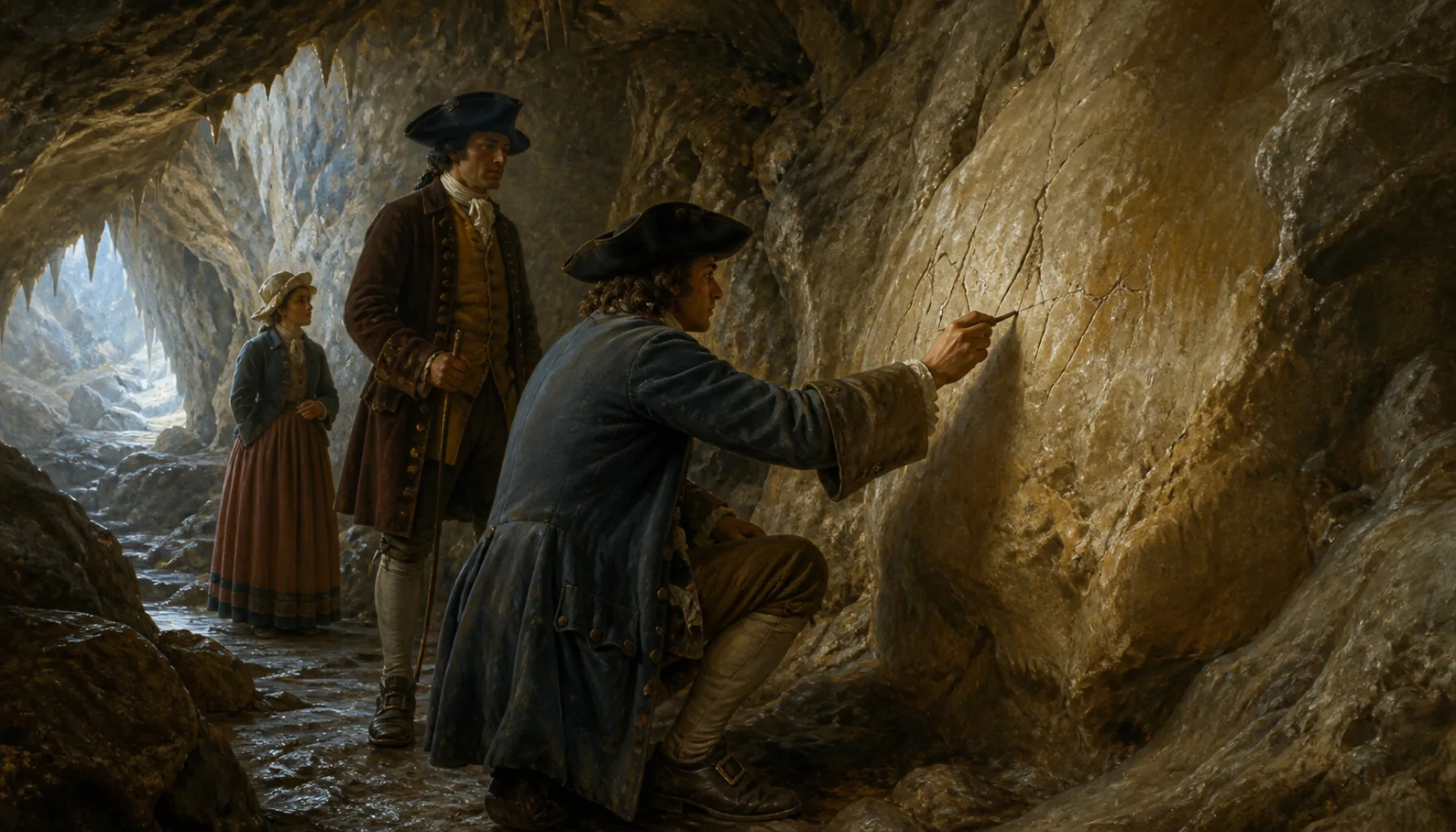
The oldest signature carved into the sinter wall of the Ice Cave is dated 1714 — three hundred years of visitors, and the first of them left graffiti. In those days the cave was famous for its bones, which were taken for the remains of a dragon and were written about as such; they are the bones of the cave bear, an Ice Age animal that used caves like this one to hibernate and often died in them. Permanent settlement in the valley itself came only in the eighteenth and nineteenth centuries, and it was thin: miners and herdsmen, not farmers. The valley floor is too high and too cold to grow anything worth the effort.Najstarší podpis vyrytý do sintrovej steny Ľadovej jaskyne má letopočet 1714 — tristo rokov návštevníkov, a hneď ten prvý po sebe nechal nápis. Vtedy bola jaskyňa známa svojimi kosťami, ktoré pokladali za pozostatky draka a tak o nich aj písali; sú to kosti jaskynného medveďa, zvieraťa z doby ľadovej, ktoré v takýchto jaskyniach zimovalo a často v nich aj uhynulo. Trvalé osídlenie samotnej doliny prišlo až v 18. a 19. storočí a bolo riedke: baníci a pastieri, nie roľníci. Dno doliny je príliš vysoko a príliš chladné na to, aby sa tu oplatilo čokoľvek pestovať.