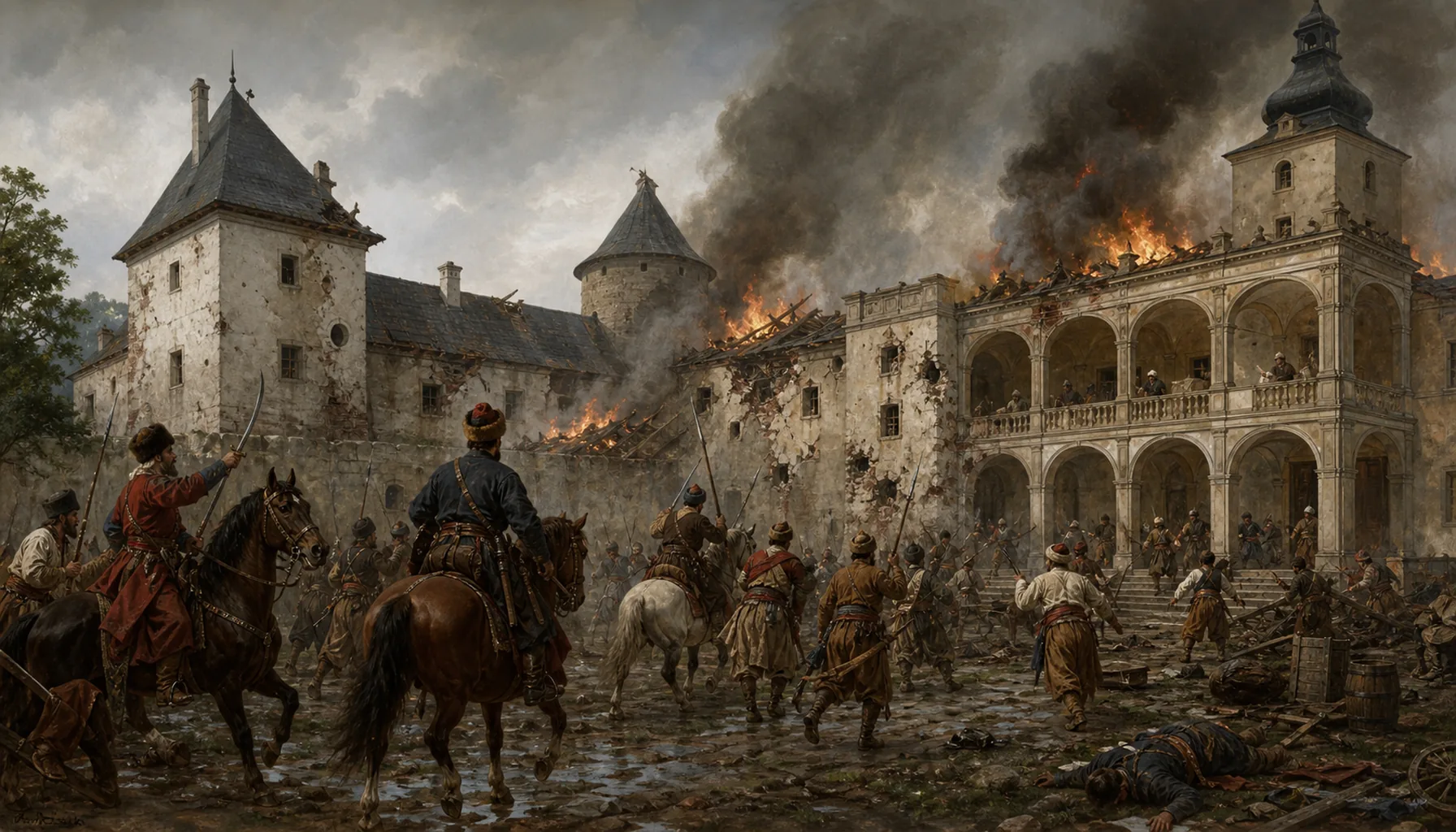
In 1605, during Štefan Bocskai's rising against the Habsburgs, hajdúk irregulars — the light troops of the Hungarian plain — sacked Bytča, and the château and the new wedding palace had to be repaired over the following years by the builder Pocabello. Juraj Thurzó came out of that war on the winning side of the settlement, and in 1609 the diet elected him palatine of Hungary: the highest office below the king, the man who stood in for the monarch and presided over the highest court. For seven years the second man in the kingdom ran his household, his court and his archive from this house on the Váh, and couriers, lawyers and petitioners came up the valley to find him. He died here on 24 December 1616.Roku 1605, počas povstania Štefana Bočkaja proti Habsburgovcom, vyplienili Bytču hajdúsi — ľahké vojsko z uhorskej nížiny — a zámok aj nový Sobášny palác musel v ďalších rokoch opravovať staviteľ Pocabello. Juraj Turzo vyšiel z tej vojny na víťaznej strane dohody a roku 1609 ho snem zvolil za uhorského palatína: to je najvyšší úrad hneď po kráľovi, zástupca panovníka a predseda najvyššieho súdu. Sedem rokov riadil druhý muž kráľovstva svoju domácnosť, dvor aj archív z tohto domu na Váhu a poslovia, právnici i prosebníci chodili za ním hore dolinou. Zomrel tu 24. decembra 1616.