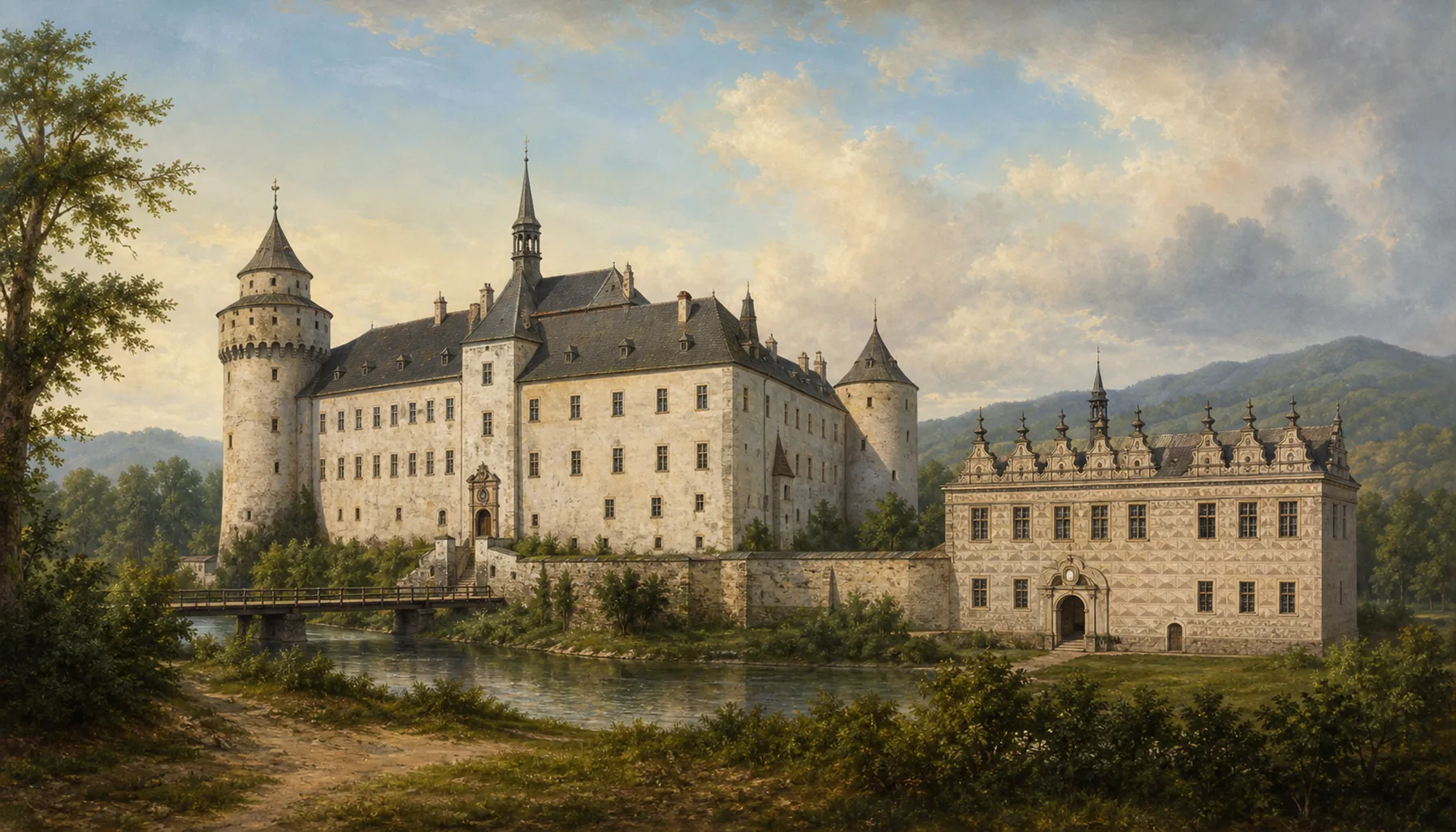
František's son Juraj Thurzó was born at Lietava on 2 September 1567 and grew into the most expensive kind of problem an architect can have: a man with a great many daughters and a position to keep up. In 1601 he had a separate building put up beside the château — one great hall over a lower storey, its walls painted with the family's own ancestors, raised for no purpose except marrying his daughters off in front of them. Towns in Germany built municipal wedding houses; a private wedding palace at a noble seat is a rarity anywhere in Europe, and it is why Bytča appears in architectural histories at all. Read it as advertising in stone: a family that had been in trade two generations earlier was painting itself a lineage.Františkov syn Juraj Turzo sa narodil na Lietave 2. septembra 1567 a vyrástol z neho pre staviteľa ten najdrahší druh problému: muž s množstvom dcér a s postavením, ktoré bolo treba udržať. Roku 1601 dal vedľa zámku postaviť samostatnú budovu — jednu veľkú sálu nad nižším podlažím, so stenami pomaľovanými vlastnými predkami, určenú na jediné: vydávať pred nimi dcéry. Nemecké mestá si stavali mestské svadobné domy, no súkromný sobášny palác pri šľachtickom sídle je v Európe vzácnosťou — a práve preto sa Bytča vôbec dostala do dejín architektúry. Čítajte to ako reklamu v kameni: rod, ktorý ešte dve generácie predtým obchodoval, si tu maľoval rodokmeň.