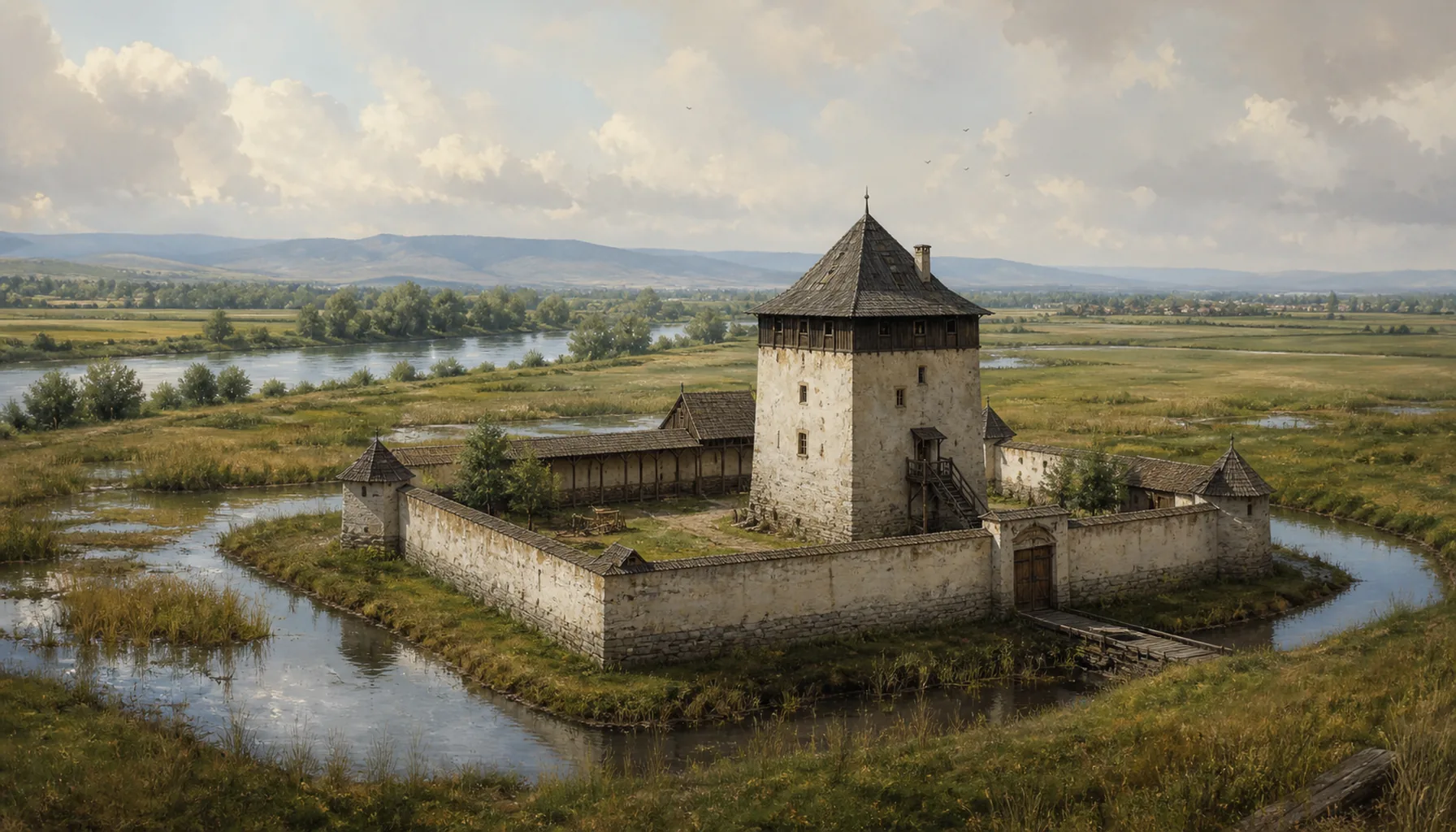
Before the château there was a smaller fortified seat on this flat ground beside the Váh: a residential tower inside a walled yard, defended by wet ditches rather than by height. That makes it a water castle, a completely different animal from the rock-top castles the kingdom built after the Mongol invasion of 1241 — down here the river did the work a cliff did elsewhere. Who put it up is genuinely disputed: Slovak accounts attach the site to the bishops of Nitra, English ones to the magnate Pongrác of Svätý Mikuláš. What matters for everything that follows is the shape — a rectangle with a gate, standing in wet ground, and that is exactly the footprint the Renaissance builders later reused.Pred zámkom stálo na tejto rovine pri Váhu menšie opevnené sídlo: obytná veža vo vnútri ohradeného dvorca, chránená mokrými priekopami, nie výškou. To z neho robí vodný hrad — celkom iný druh stavby než skalné hrady, ktoré kráľovstvo stavalo po vpáde Mongolov roku 1241. Tu robila prácu útesu rieka. Kto ho postavil, je naozaj sporné: slovenské pramene spájajú miesto s nitrianskym biskupstvom, anglické s magnátom Pongrácom zo Svätého Mikuláša. Pre všetko ďalšie je však podstatný tvar — obdĺžnik s bránou v mokrine, presne ten pôdorys, ktorý renesanční stavitelia neskôr použili znova.