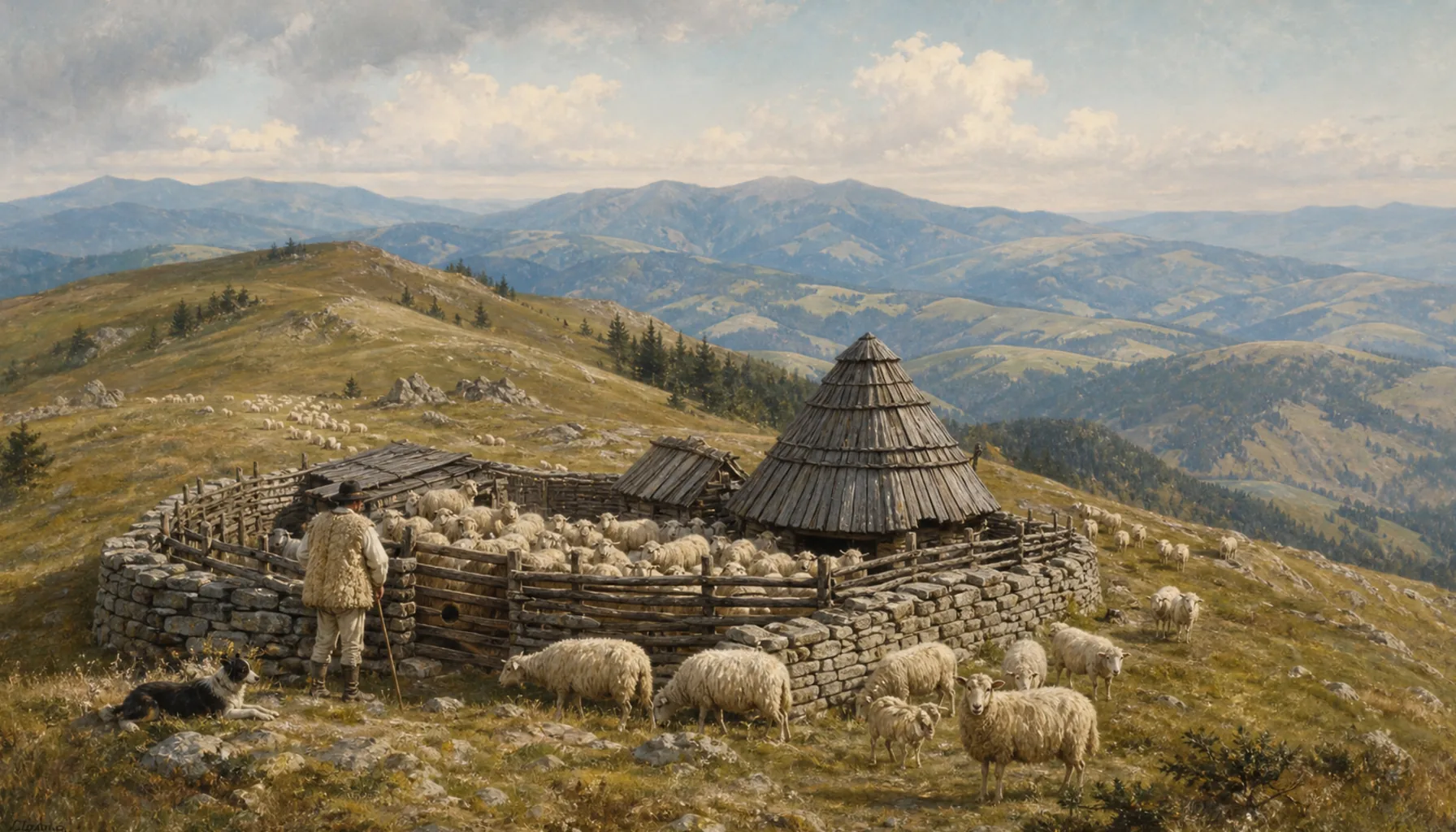
The name records what the place was for: a košiar is a sheepfold. These grassy ridges under the White Carpathians were cleared and grazed during the settlement of the uplands in the sixteenth and seventeenth centuries, an age when war on the Ottoman frontier and religious exile were pushing people about the kingdom and hill country that had been left alone began to fill up. What grew here were kopanice — single farmsteads spread over the slopes instead of a village street, each family working the ground it had cleared. There was never good arable land, so the living came from sheep, plums, timber and going away to work, and that last item has never really stopped.Meno hovorí, načo miesto slúžilo: košiar je ohrada pre ovce. Tieto trávnaté chrbty pod Bielymi Karpatmi vyklčovali a spásali pri osídľovaní kopaníc v šestnástom a sedemnástom storočí, v čase, keď vojna na osmanskej hranici aj náboženské vyhnanstvo posúvali ľudí po krajine a hornatý kraj, ktorý dovtedy ležal bokom, sa začal zapĺňať. Vznikali tu kopanice — samoty roztratené po svahoch namiesto dedinskej ulice, každá rodina na pôde, ktorú si sama vyklčovala. Dobrá orná pôda tu nikdy nebola, a tak sa žilo z oviec, sliviek, dreva a z odchodu za prácou — a to posledné sa vlastne nikdy neskončilo.